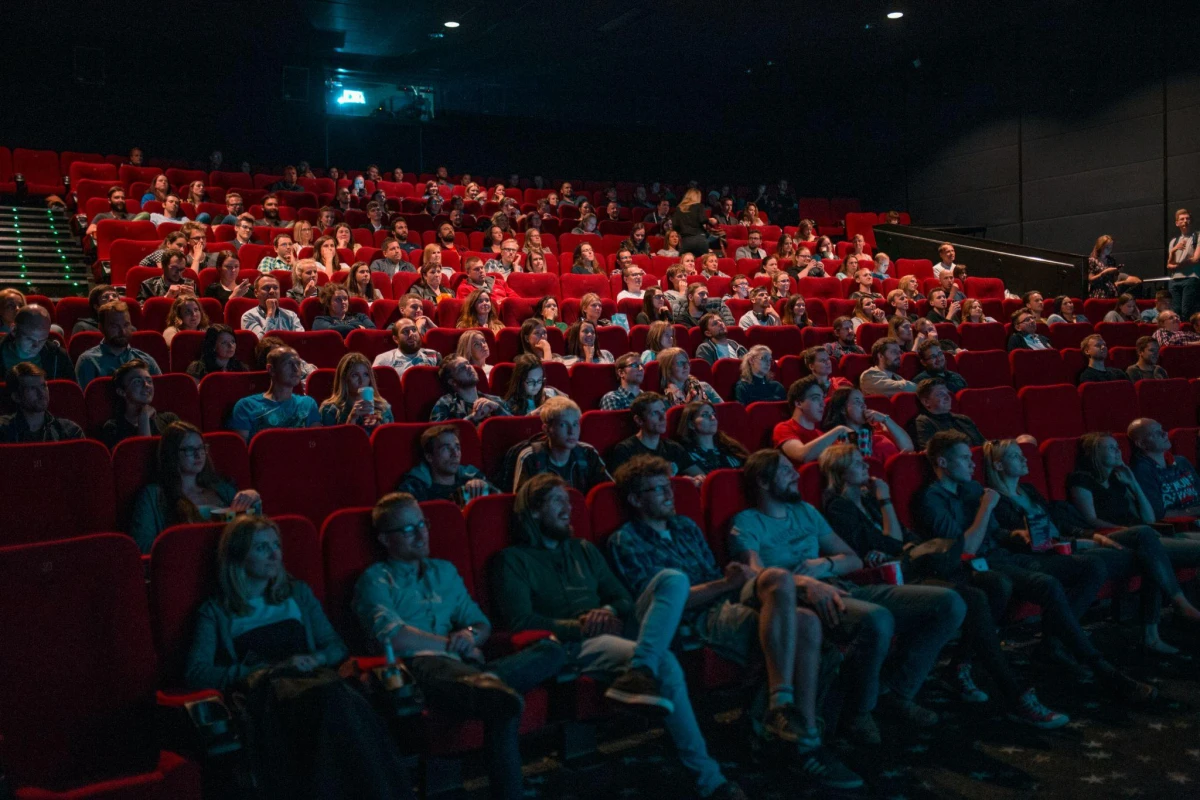
Voice technology could revolutionize movie theaters by enabling hands-free ticketing, improving accessibility, and enhancing customer service through AI-powered conversational systems.
- September 8, 2026
AceShowbiz - Voice tech has been disrupting industries for years, from your favorite software apps to consumer products. It's even making its way into your own home with popular AI assistants like Alexa. Could movie theaters be the next sector to integrate voice tech across multiple touchpoints?
While you ask your own AI voice assistant to find showtimes for the latest Keanu Reeves movie, your local theater could be using voice tech to streamline moviegoer inquiries, improve accessibility, and deliver immersive audio experiences with acoustic intelligence in the near future. Here's a deeper look into the possibilities of these advancements for modern movie theaters.
The Future of the "Hands-Free" Box Office
When you ponder the uses of voice tech, like conversational AI, a movie theater may not be the first application that springs to mind. After all, movie theaters are somewhat framed as relics of the past in the age of digital streaming. But this isn't the case with large multiplexes.
According to recent data from Media Play News, multiplexes like AMC Theatres still draw over 155 million moviegoers worldwide. With the growing adoption of AI across industries, multiplexes may soon be following suit by integrating voice technologies to streamline customer service and ticketing. In fact, Forbesrecently reported that AMC Theatres do employ AI algorithms to suggest movie titles based on past viewing data.
Currently, most theaters still provide digital "self-service" options. When moviegoers have a question, they call a hotline and choose from a list of customer service options, pressing "1" for showtimes, "2" to purchase tickets, or "3" to speak to a representative. Online ticketing and support offer more convenience, but even they can't provide the personalized service of a live human.
On the other hand, AI agents can be trained to assess the intent of a moviegoer's inquiry and respond with a high level of detail and personalized support.
This innovation would allow multiplexes to handle large customer call volumes more quickly without human intervention. However, when intervention is needed, the agent would escalate (or hand off) the call to a live human, like a shift lead or general manager. This Telnyx guide to AI-to-human handoff processes explains how that transition can work while preserving the context of the customer’s conversation.
Voice-Powered Ticketing at Home
The "hands-free" box office is already underway in consumers' homes. Moviegoers can ask their voice assistants to perform the following:
- Summarize the plot of an action film
- List showtimes
- Purchase tickets
- Reserve seats
Voice assistants can do all this without a smartphone or laptop. They instantly connect to the movie theater's website to retrieve information and process payments. Paperless tickets are then sent to moviegoers' inboxes and scanned at the theater.
Voice Tech and Accessibility
In the future, voice tech has the potential to enhance accessibility even further for moviegoers who have vision or hearing impairments. These advancements would complement current accommodations available. Currently, theaters issue devices to improve audio, provide closed captioning, and generate action narration.
All assistive devices must meet strict ADA standards, including any future voice tech-powered devices. Many theaters already have display units built into cup holders; these devices use Speech-to-Text (STT) technologies to accurately transcribe movie dialogue and narrate scenes without dialogue, like action scenes, facial expressions, and weather events.
Looking forward, voice tech could improve assistive technology efficiency through AI engines that track movie dialogue in real time and match audio waveforms to pre-loaded captions and sync cues. For example, intelligence tools could identify exactly who is speaking on screen and align descriptive narration with absolute precision.
Suppose a film momentarily speeds up or experiences a small latency delay. An AI-powered system could instantly adjust to maintain automated captioning and descriptions without falling out of sync.
Acoustic Intelligence
Have you ever watched a movie that was just too loud for comfort? Loud doesn't always mean clear, and as a moviegoer, you're paying for crystal-clear sound.
The problem usually boils down to dynamic range issues, where there is a large gap between the quietest and loudest sounds in a movie's sound mix. To fix these issues in the future, modern audio booths could use AI sound calibration and vocal lifting tools. More precise mapping of acoustic dead zones and sound reflections may create a more comfortable listening experience.
Suppose a movie character whispers an important line during a chaotic action scene. Acoustic intelligence tools could isolate the whisper's frequencies and "lift" them over the background noise, ensuring they're clearly heard.
Acoustic intelligence could also improve how sound moves through movie theaters.
Many movie theaters already use sound routing to create immersive audio environments. Sound routing is like a GPS for audio; it directs sounds to specific speakers in the theater to make moviegoers feel like they're in the movie.
Currently, movie theaters rely on pre-mixed spatial audio formats. However, intelligent sound routing could allow movie theaters to analyze audio signals in real time, instantly directing sounds to the right speakers and zones. This could solve the "bad seat" problem by adapting to real-time changes in acoustics, since acoustics change based on how many people are seated in the theater.
Stay Tuned
The potential of voice tech in movie theaters is an exciting concept. Already, the "hands-free" box office is becoming the new standard for moviegoers at home. Coupled with the possibilities for accessibility and immersive audio experiences, the industry may take bold steps toward intelligent technologies in the near future.
Make sure to follow us to track even more exciting trends in the industry!