Ditch the overpriced menus and canned experiences. Learn the real-world tactics to find authentic, delicious local food on any trip.
- August 9, 2026
AceShowbiz - You've landed in a new city, your stomach is growling, and you're surrounded by a dozen restaurants with laminated menus featuring pictures of food. The waiters are aggressively friendly, and the prices are suspiciously high. You know this is a trap. The real question is, how do you find the place where the locals actually eat—the one with the plastic stools, the handwritten specials board, and the queue of office workers at noon? It's not about luck; it's about changing your entire approach to the hunt. This is about ditching the guidebook's "Top 10" list and using a mix of digital savvy, social courage, and street-level observation to find meals you'll be talking about for years.
Redefining "Authentic" Beyond the Tourist Menu
Before you start hunting, you need to kill a myth. "Authentic" doesn't mean white tablecloths, a rustic farmhouse, or a restaurant with a Michelin star. In most cases, authenticity is found in places that prioritize feeding their regulars over photographing their plating. It's the pho shop where the broth has been simmering since 5 AM, the taco stand with three salsas and a line of construction workers, or the family-run trattoria where the menu is written in a dialect you don't understand.
The "so what?" here is simple: chasing the wrong definition of authentic leads you to places designed for people who want to watch a culture rather than participate in it. You end up paying $28 for a deconstructed version of a $4 street food staple. The goal is to find food that is a reflection of daily life, not a performance for tourists. That means looking for cues of local life: crowded tables, a lack of English signage, and a menu that doesn't have pictures.
Start by observing the flow of people. If you see a place that is completely empty at 1 PM on a Saturday, there's usually a reason. Conversely, if you see a line, don't immediately dismiss it as a tourist queue—check if the people in line are speaking the local language. A line of locals is the highest compliment a restaurant can receive. That line is a signal of quality, freshness, and fair pricing, because locals are the harshest critics of their own cuisine.
Finally, be wary of the "gimmick." A place that advertises "Traditional Grandma's Recipe" in English on a giant banner is usually the opposite. Real local spots don't need to advertise to you; they rely on word-of-mouth from the neighborhood. If you see a restaurant with a neon sign that says "Local Food," run the other way. It's a red flag that they're marketing to you, not to the neighborhood.
The Digital Arsenal: Using Apps to See Through the Noise
Your smartphone is your best tool, but only if you use it correctly. Google Maps and TripAdvisor are useful, but they are also the primary tools of the tourist herd. The trick is to filter out the noise. On Google Maps, skip the places with 4.5 stars and 2,000 reviews—that's a tourist spot. Instead, look for the places with 4.2 stars and 50 reviews. That lower volume usually indicates a place frequented by locals who don't feel the need to review their daily lunch spot.
Read the reviews, but read them critically. Look for keywords in the reviews. If a review mentions "hidden gem" or "off the beaten path," it's no longer hidden. Instead, look for reviews that mention specific dishes, the price of a beer, or the fact that the staff doesn't speak English. These are indicators that the place is operating for a local clientele. Also, check the photos; if the photos are mostly of the food on a plastic tray, that's a good sign. If they are of the ambiance and the interior, it might be a place more focused on the experience than the meal.
Beyond the big players, use local review apps. In China, it's Dianping; in Japan, it's Tabelog; in Southeast Asia, it's often local Facebook groups or specific foodie influencers. These platforms are not designed for international tourists, so they give you a raw, unfiltered look at what the locals are eating. You don't need to speak the language perfectly; you can use the visual interface and translate the reviews. The sheer volume of reviews on these platforms will point you to the neighborhood staples.
Another pro-tip: use Instagram and TikTok as a search engine, not a social feed. Search for the city name plus "food" or the specific dish you want to try in the local language. Look for videos posted by locals—you can often tell by the captions and the locations they tag. These quick videos often show the actual dish, the vibe of the place, and the price, giving you a real-time glimpse that no polished blog can offer. Save these posts to a dedicated "Eats" folder, and you have a custom, curated map.
Street Smarts: The Geography of Good Food
Location is everything. The best food is rarely found in the city center or main squares, where rent is high and the clientele is transient. You need to move to the residential neighborhoods, the university districts, or the industrial zones. These are the areas where people live and work, and they need to eat cheaply and well, every single day. The competition is fierce, and the margins are thin, which means they can't afford to serve bad food.
Look for the "comida corrida" in Mexico, the "set lunch" in Japan, or the "plat du jour" in France. These are the daily specials designed for workers. They are usually a fixed price, served quickly, and reflect the cook's best effort that day. If a place has a line of office workers at noon, they aren't there for the ambiance; they are there because the food is fast, cheap, and reliable. That is the ultimate test of a good local spot.
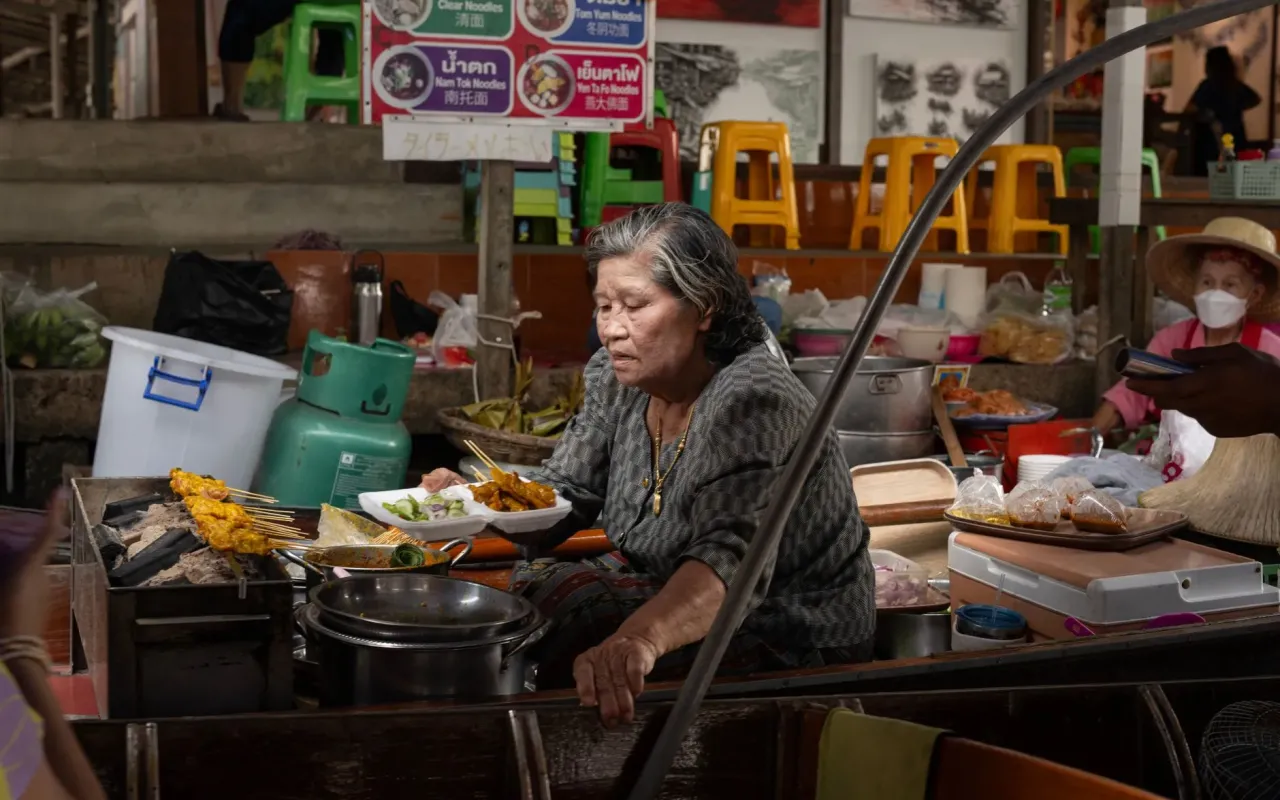
Don't be afraid to wander into a market hall or a street food alley. These are the beating hearts of local food culture. You'll find vendors who have been perfecting a single dish for decades. The key is to look at the stalls that are busy, but also to look at the stalls that are clean. A clean stall with a busy queue is the gold standard. This is where you find the most honest food, because the vendor is accountable to their regulars, not to a Yelp review.
Here's a practical tip: Follow the delivery drivers. In many cities, you'll see scooters with delivery boxes. If you see a bunch of them waiting outside a specific restaurant, that's a massive signal. It means the place is popular with locals who order in, which is a strong indicator of quality and consistency. It's a live, real-time data point that you can't fake.
Conversation as a Compass: Asking the Right Questions
Your hotel concierge is often the first person you ask, but they are also the most likely to send you to a tourist trap because they get a commission. Instead, ask the taxi driver, the barista at a local coffee shop, or the shopkeeper at a convenience store. These are people who live in the city and have no incentive to send you to a specific restaurant. The trick is to ask for specifics, not generalities. Don't ask "Where is the best food?" Instead, ask "Where do you go for dinner on a Tuesday night?" or "What is the best specific dish you know in this neighborhood?"
If you are traveling somewhere with a language barrier, use the universal language of pointing. You can point at a menu item you don't understand and ask "Is this good?" or simply look at what the table next to you is eating and point to it. This is a low-risk, high-reward strategy. You might end up with something you didn't expect, but that's exactly the point. The best travel stories often come from the meals you didn't plan.
Another strategy is to join a food tour, but not the kind that takes you to five different restaurants for a "tasting." Instead, look for small, hyper-local tours led by a food blogger or a retired chef. These are often walking tours that focus on a specific market or a single street. They are more expensive, but they offer a level of insight and access that you can't get on your own. They can tell you the history of the dish, the story of the vendor, and the proper way to eat it.
Finally, be brave. Walk into a place that looks intimidating. If the menu is in a language you can't read, just point at the table next to you. If the staff doesn't speak English, use hand gestures and a smile. The worst that can happen is you get a dish you don't like, but the best that can happen is you discover a family-run establishment where you are treated like a guest, not a customer. That human connection is what separates a meal from a memory.
Reading the Room: Visual Cues and the Art of the Queue
You can learn a lot about a restaurant before you even look at the menu. The visual cues are the most honest form of marketing. Look at the floor. Is it sticky? That's usually a good sign—it means there's high turnover and they don't have time for a deep clean between rushes. Look at the tables. Are they communal? Communal tables are a sign of a place that prioritizes volume and speed, which means the food is probably good. Look at the staff. Are they moving with purpose, or are they standing around looking bored? If they are busy, they are doing something right.
The menu itself is a treasure trove of information. If the menu is laminated or has pictures, it's for tourists. If it's a single sheet of paper, handwritten, or a blackboard, it's for regulars. A long menu is often a red flag; it usually means the food is frozen or pre-made. A short menu—maybe 10-15 items—means they are focusing on what they do best. Also, look for the "specials" board. These are dishes made with the freshest ingredients that day, and they are often the best thing on the table.
Observe the demographics of the diners. If you see families with children, multi-generational groups, and older couples, you've hit the jackpot. This is the sign of a neighborhood institution. If you see a bunch of people taking photos of their food before they eat, you might be in a place that's more about the 'gram than the taste. But remember, locals take photos too—the difference is they are photographing a specific dish they love, not a table full of colorful plates.
Here's a concrete rule: If a place is busy at 6 PM, it's for families. If it's busy at 9 PM, it's for couples and friends. Both are good, but they tell you different things about the vibe. If you want a quiet, authentic meal, go at 6 PM. If you want to see the city's nightlife, go at 9 PM. The key is to align your dining time with the local rhythm, not the tourist rhythm. Eating at 5:30 PM is a dead giveaway that you're a tourist, and you'll often get a different, more rushed experience.
The Price Check: When Cheap is Good and Expensive is a Trap
Price is a tricky signal. In many parts of the world, cheap food is incredible, and expensive food is bland. But this isn't a universal rule. The key is to understand the local economy. If you see a restaurant that is significantly more expensive than the surrounding options, ask yourself why. Is it the rent? Is it the ingredients? Or is it the marketing budget? Usually, it's the latter.
Look for the price of the national dish. In Vietnam, if a bowl of pho costs more than $3-4, it's probably overpriced. In Tokyo, if a bowl of ramen costs less than $8, it might be a chain. You need to do a quick "market rate" check. Look at the prices of a few different places before you commit. This gives you a baseline. If a place is charging double the baseline, you need a really good reason to go in. If it's charging half the baseline, you need to check the hygiene standards.
Be wary of the "tourist menu" phenomenon. This is a menu that is displayed outside with prices that are 50-100% higher than the regular menu. They often have pictures and English descriptions. The trick is to ask for the "local" menu or the "regular" menu. Sometimes, they will give you a different menu with lower prices. This isn't always a scam; sometimes it's just a way to filter out tourists who are willing to pay more. But it's always worth asking.
Finally, don't be afraid to spend money on the right things. If a local street vendor is selling a specific delicacy that only appears once a year, pay the premium. If a family-run restaurant has a signature dish that takes 24 hours to prepare, pay for it. The goal isn't to be cheap; it's to be smart. You want to avoid paying for the "experience" of eating in a tourist zone, but you should be willing to pay for the experience of eating something truly rare and delicious. The former is a waste; the latter is a souvenir you can taste.