We tested Le Creuset and Staub Dutch ovens side-by-side for browning, baking, and durability. Find out which one fits your cooking style and budget.
- August 6, 2026
AceShowbiz - You've saved up, done the research, and decided that a premium Dutch oven is the one kitchen purchase that will finally make you feel like a real adult. Then you hit the wall: Le Creuset or Staub? Both are French, both cost more than a nice dinner out, and both have cult followings that will argue until the coq au vin burns. After spending months cooking side-by-side with both in my own kitchen, I can tell you the answer isn't as simple as "buy this one." It depends on what you cook, how you handle a 12-pound pot, and whether you prioritize aesthetics or performance. Here's the honest breakdown.
The Quick Answer for the Impatient Cook
If you only have two minutes, here's the deal. Le Creuset is the better all-around choice for most home cooks because of its lighter weight, easier-to-clean light-colored interior, and more forgiving heat distribution. Staub is the better choice if you cook a lot of braised meats, love the look of a matte black interior, and don't mind a heavier pot that sears like a dream. Neither is "bad," but they excel in different areas.
I've owned a 5.5-quart Le Creuset round Dutch oven for four years and a 5.5-quart Staub for the last eight months. I've made everything from sourdough bread to 12-hour pork shoulder in both. The differences are real, but they might not be the ones you expect. For example, the Staub is noticeably heavier—about 2 pounds more—which sounds minor until you're draining a pot of pasta water with one hand.
The price difference is also a factor. Le Creuset typically retails around $400 for a 5.5-quart, while Staub is often $50-$100 less, especially during sales. If you're on a budget but want French quality, Staub is the value pick. But if you're buying one pot to last 20 years and want maximum versatility, Le Creuset's lighter weight wins for daily use.
Actionable takeaway: If you have wrist or shoulder issues, skip Staub. That extra weight is a real ergonomic burden, not just a marketing spec.
Interior Design: Light vs. Dark and Why It Matters
The most obvious visual difference is the interior. Le Creuset has a cream or sand-colored enamel interior, while Staub uses a matte black enamel. This isn't just a style choice—it fundamentally changes how you cook and clean. The light interior of Le Creuset makes it easy to see fond (the browned bits stuck to the bottom) and monitor caramelization. It also shows stains, which can be annoying but also reassuring because you know exactly when it's clean.
Staub's black interior is a double-edged sword. It's excellent for searing because it doesn't show scorch marks, and it seems to promote better browning. In my side-by-side test searing chicken thighs, the Staub produced a deeper, more even crust. The black enamel also hides the inevitable staining that comes with tomato sauces and turmeric-heavy curries. However, it's nearly impossible to see fond development, so beginners might accidentally burn things because they can't visually gauge the browning.
Cleaning is where the Staub's black interior shines. After a messy beef stew, the Staub wiped clean with almost no effort. The Le Creuset required a soak and some Bar Keepers Friend to remove the baked-on residue. However, the Le Creuset's light interior is more forgiving for delicate dishes like rice pudding or custards, where you need to see the color change to avoid overcooking.
Actionable takeaway: If you're a visual cook who relies on seeing browning, get Le Creuset. If you hate scrubbing and cook mostly braises and stews, Staub's black interior is your low-maintenance best friend.
Heat Retention and Browning Performance
Both pots are made of cast iron, but their construction differs subtly. Le Creuset uses a slightly thinner cast iron wall, which means it heats up faster and responds more quickly to temperature changes. Staub is thicker and heavier, so it retains heat longer but takes more time to reach temperature. For slow cooking, this makes Staub superior. A low simmer stays steady for hours without needing to adjust the burner, which is perfect for short ribs or a 24-hour bone broth.
For high-heat searing, the Staub again edges out Le Creuset. The heavier base creates a more stable surface that doesn't cool down as much when you add cold meat. In my test, I seared two identical steaks—the Staub produced a deeper crust with less oil splatter. The Le Creuset did a fine job, but I had to wait longer between batches to let it reheat. If you regularly cook for a crowd and sear in batches, this matters.
However, Le Creuset's faster response time is better for delicate cooking. When making a white wine reduction or a beurre blanc, the Le Creuset allowed me to lower the heat and see the sauce settle faster without overshooting. Staub's heat retention can cause sauces to continue cooking for a few minutes after you turn off the burner, which can break an emulsion if you're not careful.
Actionable takeaway: For braised meats, roasts, and anything that cooks low and slow, Staub wins. For sauces, risotto, and dishes that need quick temperature adjustments, Le Creuset is more forgiving.
Lid Design and Moisture Management
Here's a quirky difference that most reviews gloss over: the lids. Le Creuset has a flat, stainless steel knob and a smooth, flat lid. Staub has a heavy, rounded lid with a self-basting spike system on the inside. Those spikes are not just decorative—they collect condensation and drip it evenly back onto the food. This creates a self-basting effect that keeps meats moist without opening the lid.
In my braised lamb shank test, the Staub produced noticeably juicier results. The meat was fall-off-the-bone tender with a glossy, moist surface. The Le Creuset version was also excellent, but the top of the meat was slightly drier and required an extra splash of broth halfway through. If you're a set-it-and-forget-it cook, the Staub's lid is a game-changer.
However, the Staub lid has a downside: it's so heavy that lifting it with one hand is a workout. The Le Creuset lid is lighter and has a larger, easier-to-grip handle. Also, the Le Creuset knob is oven-safe up to 500°F (or 900°F if you buy the metal knob upgrade), while the Staub's stainless steel knob is safe to 500°F as well. Both are fine for bread baking, but the Le Creuset's lighter lid is easier to maneuver when you're loading a loaf of sourdough.
Actionable takeaway: If you cook a lot of meat with bones or whole chickens, the Staub's self-basting lid will noticeably improve moisture. If you bake bread frequently, the Le Creuset's lighter lid is easier to handle when placing and removing dough.
Durability, Chipping, and Everyday Use
Both brands have a lifetime warranty, but that doesn't mean they're indestructible. The enamel can chip if you drop them or hit them with a metal utensil. In my experience, Le Creuset's enamel is slightly more resistant to surface scratches from metal spoons, but it's more prone to chipping on the edges if you bang it against a sink. Staub's enamel is tougher overall—I've knocked it against the stove and it barely showed a mark.
The exterior colors also matter. Le Creuset offers a rainbow of colors, and their glossy finish is prone to showing fingerprints and water spots. Staub's matte exterior (they call it "majolique" for some colors) hides smudges better and feels more rugged. If you keep your pot on the stove as decor, Le Creuset is prettier. If you actually use it daily and don't want to polish it, Staub is more forgiving.
One real-world issue: Le Creuset's light interior stains easily. After one batch of tomato sauce, it looks like a crime scene. Staub's black interior looks the same after years of use. But the flip side is that Le Creuset's stains are visible, so you know when to clean. Staub's black interior can hide burnt residue that might affect flavor over time if you're not diligent.
Actionable takeaway: If you're clumsy or cook with metal utensils, Staub is the safer bet. If you want a pretty pot that you're willing to baby, Le Creuset is fine—just buy a bottle of Bar Keepers Friend.
Baking Bread and Oven Performance
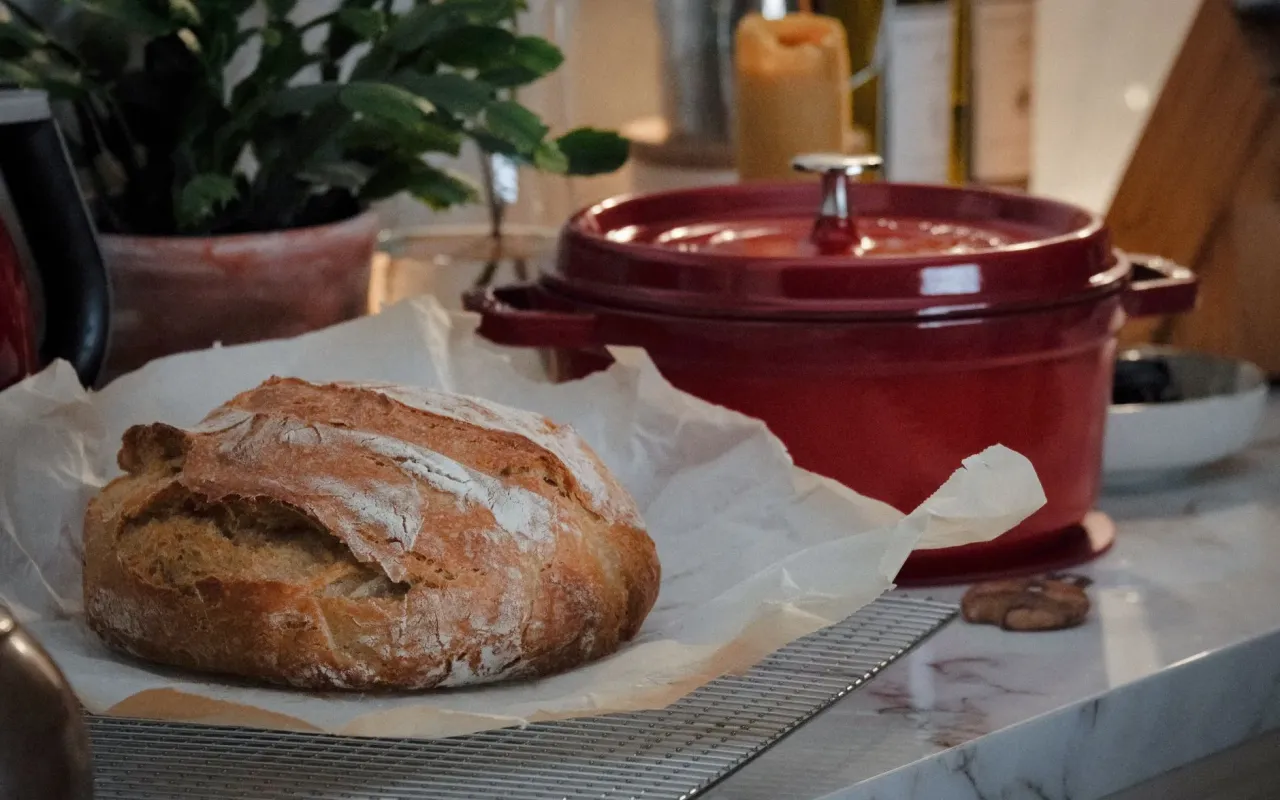
Dutch ovens are the gold standard for making crusty sourdough at home, and both brands perform excellently. The key is the pot's ability to trap steam. In my bread tests, the Le Creuset produced a slightly lighter, more open crumb because its thinner walls allowed the dough to spring more during the initial bake. The Staub produced a thicker, darker crust with a more even color, thanks to its superior heat retention.
The Staub's heavier lid is actually a benefit here—it seals better, trapping more steam. However, the Le Creuset's lighter lid is easier to remove when you need to add a scored loaf or check the color. If you bake bread weekly, I'd actually recommend the Le Creuset for the ergonomics alone. The Staub's lid is a hazard when your hands are covered in dough.
Both pots can handle the 450°F-500°F temperatures required for bread. Just remember to preheat the empty pot for at least 30 minutes. The Staub takes longer to preheat but holds the heat better when you open the lid to add the dough. The Le Creuset loses more heat when opened, so you might need to extend the bake time by a few minutes.
Actionable takeaway: For bread, use parchment paper to lower the dough into either pot. It prevents sticking and makes cleanup trivial. And never put a cold pot into a hot oven—thermal shock can crack the enamel.
Price, Value, and When to Buy
Let's talk money because this is where most people get stuck. A 5.5-quart Le Creuset retails for $400-$450, but you can often find it on sale for $300 during the holidays. Staub's equivalent is usually $300-$350, with frequent sales dropping it to $250. If you're patient, both are worth waiting for—sign up for email alerts from Sur La Table, Williams Sonoma, and the brands' own sites.
Here's a trick: buy seconds or factory outlets. Le Creuset has outlet stores that sell pots with minor cosmetic flaws for 30-50% off. Staub also has outlet deals, and their black interior hides flaws better, so you're more likely to get a "perfect" pot at a discount. I got my Staub for $180 at an outlet sale, and I can't find the flaw they marked it for.
Consider your cooking frequency. If you cook 3-4 times a week, the price per use drops to pennies within a year. If you only cook on weekends, a cheaper enameled cast iron pot from Lodge ($70) might be a better starting point. But if you're committed to one pot for life, the premium brands are worth it because the enamel won't degrade like cheaper options.
Actionable takeaway: Never pay full price. Set a price alert on CamelCamelCamel or wait for the Black Friday sales, which usually start in October. And check local Facebook Marketplace—people sell barely-used Le Creuset for half price because they bought it for the aesthetic and never cooked.
The Verdict: Which One Should You Buy?
After all this testing, here's my honest recommendation. Buy the Le Creuset if you want a do-everything pot that's easier to lift, easier to monitor for browning, and looks gorgeous on your table. It's the best choice for beginners, bakers, and anyone who cooks a variety of dishes. The lighter weight and light interior are worth the extra cost and cleaning effort.
Buy the Staub if you're a meat-forward cook, hate scrubbing, and want a pot that feels indestructible. The black interior, self-basting lid, and superior heat retention make it perfect for braises, stews, and anything that needs hours of gentle cooking. It's also the better value if you can find it on sale.
If you're still torn, here's a tiebreaker: go to a store and lift both pots. The weight difference is the deciding factor for many people. I kept my Le Creuset as my daily driver and use the Staub for weekend braises. Both are excellent—you're not making a wrong choice, just a different one. Just don't buy a cheap knockoff. You'll regret it when the enamel chips after a year.
Final tip: Whichever you choose, never use metal utensils, never heat it empty on high, and always let it cool before washing. With proper care, either pot will outlive you and become the family heirloom you pass down.