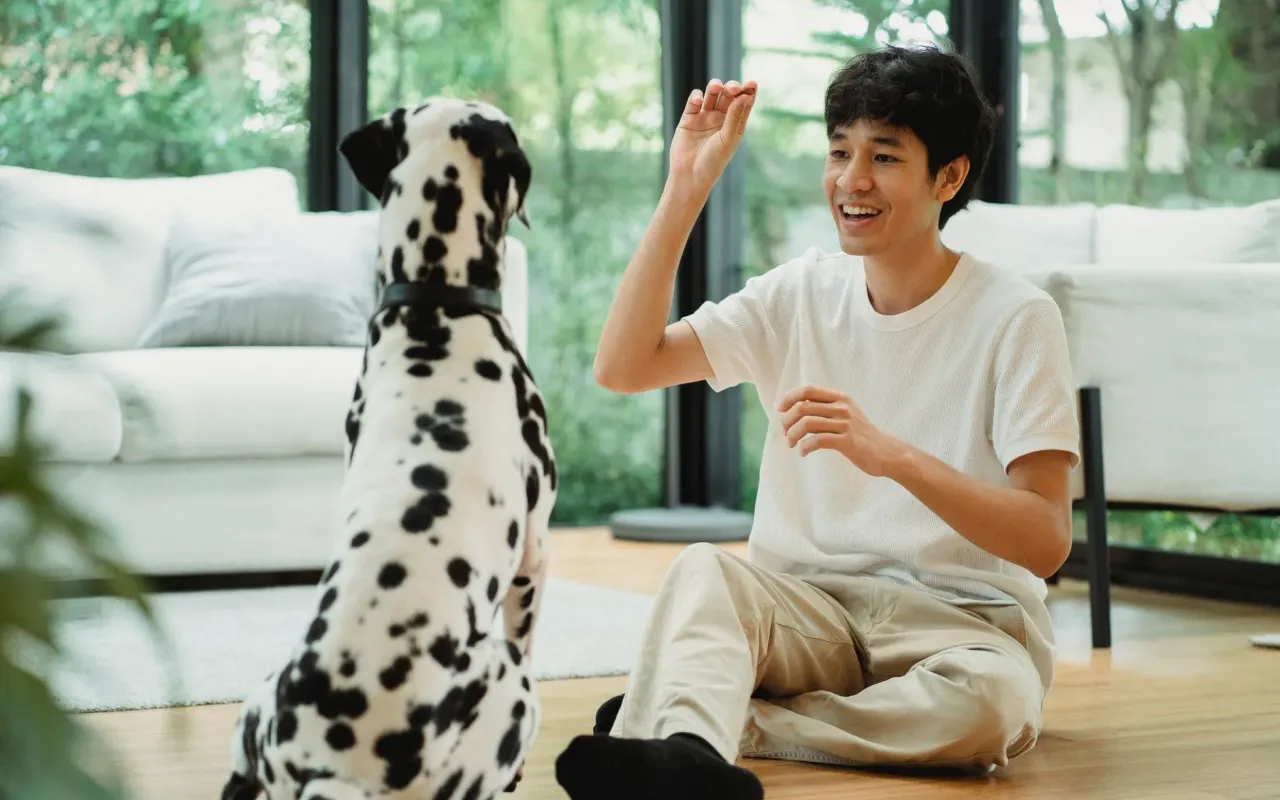
Stop struggling with your pup. Learn simple, effective dog training basics at home with practical advice from a real owner. No fluff, just results.
- July 31, 2026
AceShowbiz - You've probably seen those Instagram videos where a perfectly behaved golden retriever sits, stays, and rolls over on command while its owner calmly sips coffee. Meanwhile, your own dog has just discovered that the trash can is a treasure chest, and the living room carpet is now a Jackson Pollock painting of mud and slobber. I've been there—standing in the middle of my kitchen, covered in kibble, wondering if my dog was secretly plotting against me. But here's the truth nobody tells you: dog training at home isn't about achieving perfection. It's about building a language between you and your pup, one small, messy win at a time.
I'm not a professional trainer. I'm just a person who spent weeks researching, failing, and finally figuring out what actually works for the average household. No clicker wizardry, no expensive classes required. Just you, your dog, and a few basic principles that can turn chaos into calm. By the end of this article, you'll have a clear roadmap to teach your dog the essentials—sit, stay, come, and loose-leash walking—without losing your sanity. Let's dive in.
Why Your Dog Ignores You (And How to Fix It)
You call your dog's name. Nothing. You try again, louder. Your dog glances at you, then returns to sniffing a particularly interesting patch of grass. It's frustrating, but here's the reality: your dog isn't being stubborn. They're just not motivated enough to listen. Dogs are masters of the "what's in it for me?" mindset. If the reward for coming to you is a boring pat on the head, but the reward for ignoring you is the thrilling scent of a squirrel, guess which one wins every time.
The fix is simple: make yourself more interesting than the environment. This means using high-value treats—think tiny pieces of boiled chicken, cheese, or freeze-dried liver—especially in distracting situations. I learned this the hard way when my dog, Cooper, ignored me for a full five minutes at the park because I was offering dry kibble while a jogger passed by. Once I switched to chicken, he was glued to my side. The key is to pair your cue words with rewards that your dog truly loves, not just what's convenient for you. Start indoors with zero distractions, then gradually add challenges like a squeaky toy or a family member walking by.
Another common mistake is repeating commands. If you say "sit" five times without enforcing it, your dog learns that "sit-sit-sit-sit-sit" is the actual command. Instead, say the cue once, wait three seconds, then gently guide your dog into position. Reward immediately. This teaches your dog that listening on the first try pays off, while ignoring you gets them nothing. It takes consistency, but within a week, you'll notice a huge difference in their responsiveness.
Setting Up Your Home for Training Success
Your living room isn't just a place for Netflix and naps—it's a training arena. But most people accidentally set their dogs up for failure by expecting focus in a chaotic environment. Think about it: if you were trying to study for an exam in the middle of a rock concert, you'd struggle too. Dogs are the same. Before you start any training session, take a minute to assess the space. Are there kids running around? Is the TV blaring? Is the mailman about to ring the bell? Minimize these distractions, especially in the beginning.
I recommend designating a specific "training zone" in your home. It could be a corner of the living room with a mat or a quiet spot in the kitchen. Keep a pouch of treats nearby, and always have a leash handy for impulse control exercises. The goal is to create a predictable environment where your dog can focus on you without competing stimuli. For example, I trained Cooper in our hallway for the first two weeks because it had no windows, no toys, and minimal foot traffic. It felt boring, but it worked wonders for his attention span.
Don't forget about timing. Training sessions should be short—five to ten minutes max, two to three times a day. Dogs, especially puppies, have short attention spans. Pushing them to work for 30 minutes will only lead to frustration for both of you. End each session on a positive note, even if it's just a simple "sit" that your dog nails. This builds their confidence and keeps them eager for the next session. Also, always train before meals when your dog is hungry—a hungry dog is a motivated dog.
The Big Three: Sit, Stay, and Come
Teaching "Sit" in Three Minutes
"Sit" is the foundation of almost every other command, and it's surprisingly easy to teach. Hold a treat close to your dog's nose, then slowly move it upward and slightly back over their head. As their nose follows the treat, their rear will naturally lower to the ground. The moment their butt hits the floor, say "yes!" or click your tongue, and give them the treat. Repeat this five times in a row, and your dog will start offering the behavior on their own.
Once they consistently sit for the treat lure, add the verbal cue "sit" just before they perform the action. Over time, phase out the lure and use only a hand signal (like an open palm facing up). I made the mistake of relying on the lure for too long, and Cooper would only sit if he saw a treat in my hand. By slowly fading the treat and using praise and occasional rewards, he now sits on command even during walks. The trick is to reward randomly after the behavior is learned—this keeps your dog guessing and engaged.
Mastering "Stay" Without the Meltdown
"Stay" is where most owners hit a wall. Your dog sits, you say "stay," and then they immediately pop up like a jack-in-the-box. The problem? You're asking for too much, too fast. Start by asking your dog to sit, then say "stay" in a calm voice while holding out your palm like a stop sign. Take one tiny step back, then immediately return and reward. If your dog moves, calmly guide them back to the starting position and try again with a smaller distance.
Gradually increase the distance and duration by one step or one second at a time. I used a kitchen timer to track progress—starting with three seconds, then five, then ten. The turning point for Cooper was when I realized I needed to release him with a specific word like "free" or "okay" so he knew when the game was over. Without a release cue, dogs often break the stay because they're confused about when it's safe to move. Practice in short bursts throughout the day, and never punish a broken stay—just reset and try a slightly easier version.
The "Come" Command That Could Save Their Life
"Come" is arguably the most important command you'll ever teach, because it can prevent accidents like running into traffic or chasing a squirrel into danger. But here's the catch: if you only call your dog when it's time to leave the park or end playtime, they'll learn that "come" means "fun stops now." To fix this, you need to make "come" the best thing that ever happens. Call your dog randomly throughout the day, reward with a high-value treat or a game of tug, then let them go back to what they were doing.
Start indoors with no distractions. Say your dog's name followed by "come" in a happy, excited tone—think "Cooper, come!" like you're inviting them to a party. When they reach you, throw a party: treats, praise, and maybe a little dance. I kept a jar of cheese cubes in the fridge just for "come" practice. Within two weeks, Cooper would sprint to me from across the house because he associated the word with pure joy. Never call your dog for punishment—this will destroy their trust. If they mess up, go get them calmly instead.
Loose-Leash Walking: How to Stop the Pulling
Walking a dog that pulls is like being dragged by a small, furry sled team. It's exhausting, embarrassing, and frankly, dangerous. But the solution isn't a choke chain or a prong collar—it's teaching your dog that walking nicely beside you is more rewarding than pulling ahead. The technique is called "stop-and-go." Every time your dog pulls on the leash, stop walking immediately. Don't yank or say anything. Just stand still like a statue. The moment your dog looks back at you or puts slack in the leash, say "yes!" and reward with a treat, then continue walking.
This works because it teaches your dog that pulling makes the walk stop, while checking in with you makes the walk continue. I practiced this on our driveway for an entire week before attempting a full block. At first, Cooper was frustrated—we'd stop every three feet. But within a few days, he started walking beside me with a loose leash because he figured out the pattern. Use a front-clip harness for better control, and keep treats in a pouch at your waist for quick access. Avoid retractable leashes during training; they encourage pulling by giving constant tension.
One common mistake is walking too fast or too slow. Match your dog's natural pace, but insist on a loose leash. If your dog is a sniffer (like mine), allow regular "sniff breaks" as a reward for good behavior. This prevents them from feeling deprived and makes the walk a partnership rather than a battle. Remember, loose-leash walking isn't about military precision—it's about safety and enjoyment. A few minutes of pulling-free walking is a win worth celebrating.
Building Consistency and Trust Over Time
Dog training isn't a one-and-done project—it's an ongoing conversation. The most successful owners are the ones who integrate training into daily life rather than treating it as a separate chore. For example, ask your dog to "sit" before you put down their food bowl, "wait" at the door before going outside, and "down" before you toss a toy. These small moments add up to a dog who understands that listening to you leads to good things, even outside of formal sessions.
Consistency is the secret sauce. If you let your dog jump on the couch sometimes but not others, they'll be confused and test boundaries. Pick a few rules that matter to you—like no jumping on guests or waiting at thresholds—and enforce them every single time. Use the same cues and hand signals so your dog doesn't have to guess what you mean. I wrote our house rules on a sticky note and put it on the fridge for the first month, because I kept forgetting to be consistent when I was tired or distracted.
Trust is built through patience and positive reinforcement. If your dog has a bad day—and they will—don't get angry. Dogs live in the moment; they don't hold grudges or plot revenge. Take a deep breath, end the session early, and try again later. Celebrate the small victories: a five-second stay, a calm walk past a barking dog, or a "come" that happens on the first try. These are the building blocks of a strong bond. Over time, you'll notice that your dog isn't just following commands—they're looking to you for guidance, because they trust that you're on their team.
Finally, remember that every dog is an individual. A high-energy border collie will need more mental stimulation than a laid-back bulldog. Adjust your expectations and methods to fit your dog's personality. If something isn't working after two weeks, try a different approach—maybe use a toy instead of a treat, or train in a quieter room. The goal isn't a perfectly trained dog; it's a happy, confident companion who knows how to navigate your world. And honestly, that's way better than any Instagram video.