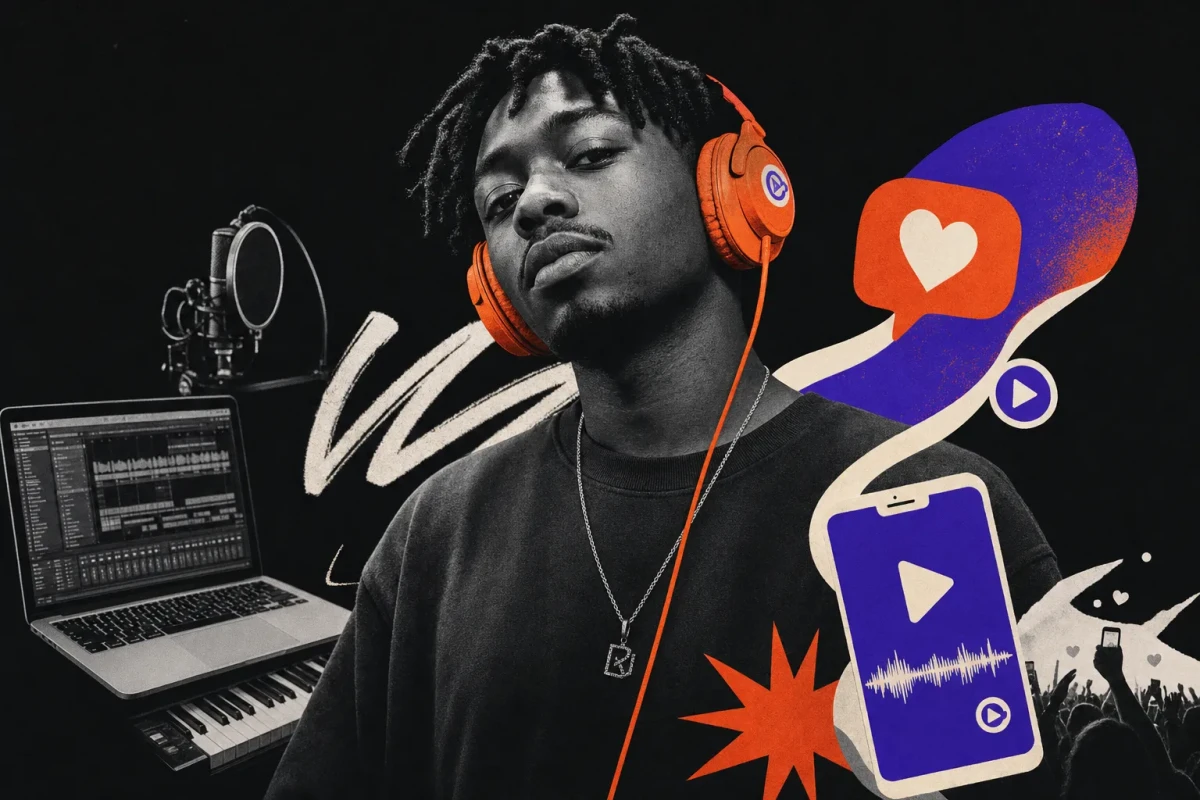
How 2 artists turned bedroom recordings, social feeds, and independent releases into global careers as labels lost control of modern music discovery online.
- June 29, 2026
In today’s music industry, poor timing can be just as damaging as a lack of access.
Twenty years ago, an unknown singer usually needed a studio booking, a label meeting, radio access, and someone in media willing to pay attention. Today, the same first signal can come from a laptop vocal, a phone clip, or a rough upload that strangers replay before anyone in the business has heard the name. As careers scale, some teams mix organic attention with managers, PR, or music promotion service while keeping the earliest proof tied to listener behavior rather than permission.
That shift did not make the industry simpler. It moved the pressure point. Artists can reach people sooner, but they also have to prove demand in public, often before the songs, visuals, live show, and identity feel fully formed.
Gatekeepers lost their monopoly
The old development model was slow because access was rationed. Labels funded recordings, radio programmers controlled repetition, magazines and television shaped taste, and expensive studios created a practical barrier between hobby and profession. A young act could spend years playing small rooms before a wider audience heard a finished single.
Streaming changed the economics around recorded music. It now accounts for most global recorded music revenue, which moved discovery away from a few broadcast channels and toward on-demand listening habits streaming revenue shift . That does not mean labels became irrelevant. It means they often arrive after evidence already exists: saves, shares, comments, completion rates, fan accounts, resale demand, and clips spreading across countries the artist has never visited.
Bedrooms became serious studios
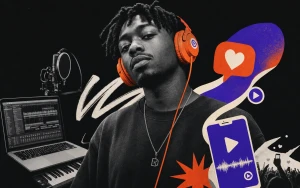
Home recording used to sound like compromise. Affordable interfaces, digital audio workstations, plug-ins, sample libraries, and quiet vocal chains changed that assumption. A bedroom setup still has limits, but it can produce a finished emotional idea fast enough for an artist to test it while the feeling is current.
The cultural part matters as much as the gear. Bedroom pop trained listeners to accept intimacy, texture, and uneven edges as part of the record, not a flaw to erase. Much of this aesthetic emerged alongside affordable production tools and direct online distribution. A slightly dry vocal or close-mic whisper can feel more convincing than a polished studio session if the performance matches the artist's online persona.
Discovery moved into public feeds
The new discovery engine is messy because it sits across TikTok, YouTube, streaming apps, Instagram, Discord, and fan-made edits. A track might break first as a chorus clip, then become a lyric video, then turn into a full-stream spike after listeners search for the original. Each platform captures a different behavior: curiosity, repetition, identity, fandom, or proof that a song works outside the artist's own page.
This is where modern careers become more visible and more exposed. As careers develop, artists often add outside support, whether through managers, publicists, or specialized promotion partners such as Promosoundgroup, to help coordinate attention across multiple platforms. Even so, no service can replace the early moment when listeners decide a song is worth carrying into their own feeds. Over the past decade, streaming, social platforms, and global digital access have dramatically changed how music reaches audiences, creating opportunities that simply did not exist for earlier generations of artists.
Billie and Pink Pantheress changed expectations
Billie Eilish remains the cleanest modern example because the origin story is structurally important, not just biographical trivia. She and Finneas recorded early material at home, and Ocean Eyes reached listeners through SoundCloud before the machinery around her grew. The point is not that every teenager with a sibling producer can become a stadium act. The useful lesson is narrower: a song recorded outside a traditional studio could create enough public reaction for the industry to follow rather than initiate.
Her rise also changed what a debut could sound like. The vocals were close, the production often sparse, and the visual world felt already formed by the time mainstream coverage expanded. That combination gave the project a direct-to-audience logic. Fans did not need a radio campaign to understand the mood, because the music, images, interviews, and online presence pointed in the same direction.
Pink Pantheress shows a different version of the same shift. She uploaded songs while studying, built early attention through TikTok, and let fragments travel before the full industry frame arrived. Her short tracks, garage references, and diaristic writing fit the speed of the feed without sounding engineered only for it. That distinction matters. Viral discovery rewards speed, but audiences stay when the sound has a point of view beyond the clip.
Faster fame, harder careers
The uncomfortable trade-off is that opportunity expanded at the same time competition exploded. A singer can upload from a room at midnight and wake up to comments from another continent. Thousands of others can do the same before breakfast. Speed helps discovery, but it also shortens the window for preparation.
I keep seeing artists confuse attention with infrastructure. A viral sound can create a week of heat, but a career needs repeat listeners, clean rights, reliable collaborators, live plans, audience data, and enough new material to survive the first rush. Content pressure adds another strain. Musicians are expected to write songs, shoot clips, explain themselves, reply to fans, and still keep enough privacy to make work that is not shaped only by feedback.
Success now looks less like one gate opening and more like ownership of a relationship. The strongest modern artists build communities that can move between platforms, buy tickets, defend experiments, and recognize the voice behind each release. Labels, managers, studios, and media still matter, but they increasingly plug into momentum that began somewhere smaller: a room, a file, a post, and a listener who played it twice.