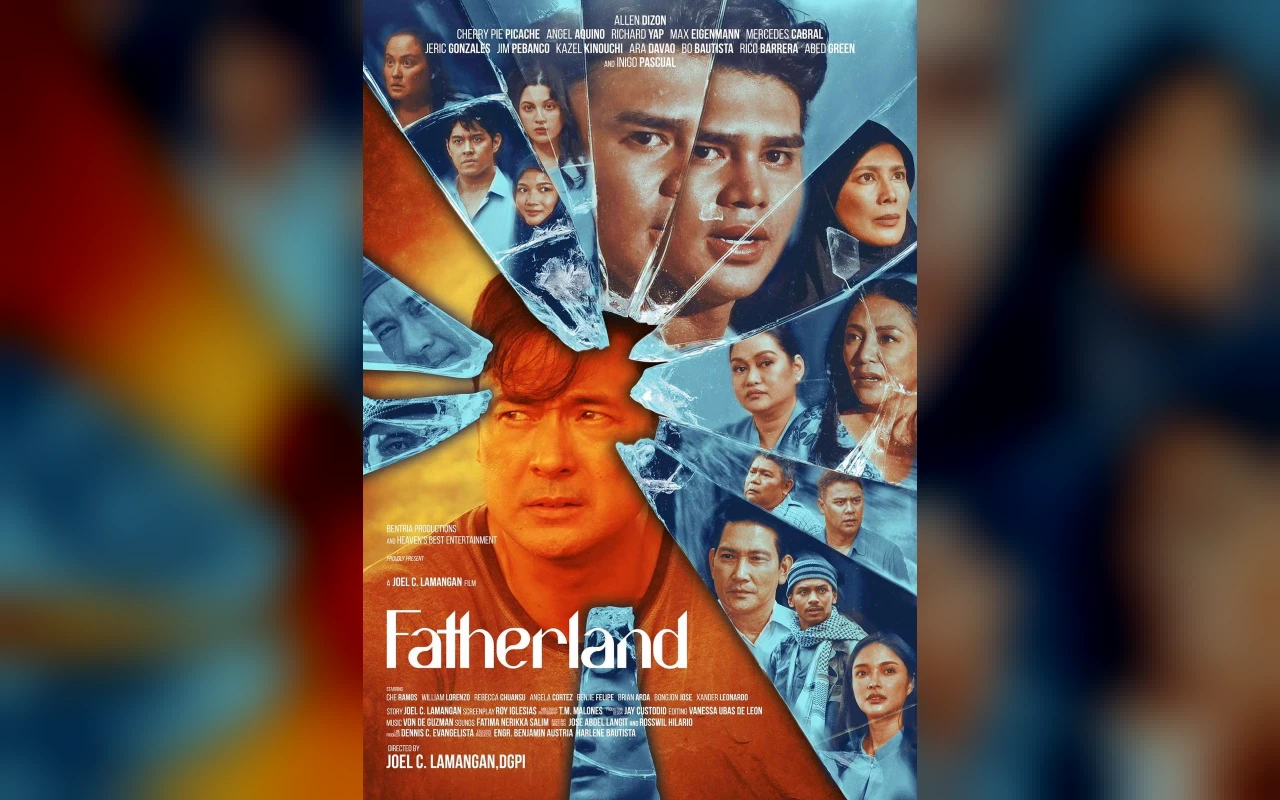
Explore Fatherland, Pawel Pawlikowski’s Cannes drama following Thomas Mann and his daughter Erika through 1949 Germany, starring Sandra Hüller.
- May 16, 2026
AceShowbiz - Fatherland is a meticulously crafted period drama directed by Pawel Pawlikowski, showcased at the Cannes Film Festival. The film traces a 1949 journey through both West and East Germany, featuring the Nobel Prize-winning author Thomas Mann, portrayed by Hanns Zischler, and his daughter Erika, played with remarkable subtlety by Sandra Hüller.
The narrative unfolds as a deeply layered exploration of personal and political tensions, reminiscent of Pawlikowski’s earlier works, Ida and Cold War. Like these previous films, Fatherland navigates the turbulent historical backdrop of postwar Europe, focusing on intimate crises intensified by the oppressive ideologies of the era. Mann must face his shortcomings as a father while contending with the stark choice between the competing political extremes of the time, framed as “Mickey Mouse or Stalin.”
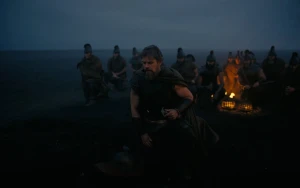
The film’s storytelling is delivered with restrained precision, echoing the aesthetic and emotional tone established in Pawlikowski’s earlier projects. Shot in a boxy aspect ratio and rendered in silvery monochrome by cinematographer Lukasz Zal, who also worked on The Zone of Interest, the visual style recalls the textures and moods of the late 1940s. Every detail—from the ruined urban landscapes and sharply tailored suits to the period-accurate jazz, classical, and folk music selections—contributes to a fully immersive experience.
Fatherland is especially distinguished by its performances. Hanns Zischler and Sandra Hüller anchor the film with an expressive stillness that conveys unspoken emotions and complex family dynamics. The screenplay, co-written by Pawlikowski and Henk Handloegten, opts for subtlety over explicit exposition, leaving much to interpretation. This approach may frustrate viewers who prefer clear moral guidance or overt character motivations, as the film offers no straightforward answers.
Notably, the film contains nuanced depictions of queer sexualities among its main characters, expressed through fleeting glances, small gestures, costume choices, and underlying unsaid tensions rather than direct dialogue. This understated representation contributes to the film’s overall atmosphere of restraint and complexity.
While some historians might debate the film’s factual accuracy, the closing credits explicitly acknowledge that dramatic liberties were taken. Nonetheless, the combination of the accomplished cast and the creative team’s reputations suggests that Fatherland could be a strong contender for awards beyond its Cannes competition premiere.
The story deftly shifts between public and private spaces, juxtaposing crowded auditoriums, official receptions, and political events with intimate scenes of quiet conversations, arguments, or moments of silence. The film also uses empty or abandoned locations—a ruined church, a nearly deserted East German restaurant, and a Buick sedan serving as mobile sanctuary—to underscore the desolation and surveillance pervasive in this postwar world.
The opening scene sets a private tone, beginning inside a hotel room in Cannes where Erika’s brother, Klaus Mann (played by August Diehl), speaks on a 1940s brass and Bakelite telephone with Erika, who urges him to join their father’s celebrations in Germany. Klaus, however, refuses to return, and the phone call reveals much about their fractured family relationships, including Klaus’s difficult rapport with their father and the strong connection between the siblings.
From there, the film immerses viewers in a bleak yet richly detailed portrayal of 1949 Germany. Through a long tracking shot out of the Buick’s window, the camera captures the devastation of urban blocks reduced to crumbling facades, meticulously recreated on sets built in Poland. Erika and Thomas arrive at the Frankfurt Metropol Hotel to begin a series of engagements, including a formal speech in an austere church-like venue.
The film introduces a host of secondary characters who populate this complex world: a menacing CIA agent (David Menkin) assigned to monitor the Manns; AP journalist Betty Knox (Anna Madeley), who shares a mysterious past with Erika, possibly romantic; and Gustaf Gründgens (Joachim Meyerhoff), Erika’s ex-husband and a former Nazi collaborator she struggles to tolerate. Fans of Pawlikowski may also recognize Joanna Kulig, who reprises the role of a captivating jazz singer, evoking her presence in Cold War.
A striking visual motif in the early scenes involves positioning characters in the lower half of the frame, leaving vast empty space above their heads. This artistic choice invites multiple interpretations: it could symbolize the oppressive weight of history, the looming power of state surveillance, or even the presence of unseen forces such as Goethe’s spirit or victims of the war. The effect is to render the characters small and seemingly powerless within the grandeur of their surroundings.
As the film progresses, this framing technique becomes less frequent, particularly as Erika begins to assert her independence, challenging her father’s authority and questioning his neutral stance amid the political forces shaping their journey. Thomas Mann’s speeches often sound lofty but hollow, especially as they venture deeper into East Germany, culminating in Weimar.
The oppressive atmosphere of the German Democratic Republic is subtly yet powerfully conveyed, including a poignant moment when locals urge Erika and Thomas to acknowledge the nearby Buchenwald concentration camp’s transformation into a detention center for political prisoners. Despite the film’s serious themes, a vein of dry, dark humor runs through its later scenes, particularly in the portrayal of Colonel Tulpanov (Daniel Wagner), a Soviet officer who combines menace with absurdity through his pedantic debates on dialectical materialism.
It is worth noting the personal connections of the filmmakers to the story’s setting: Pawel Pawlikowski and Sandra Hüller both grew up behind the Iron Curtain—in Poland and East Germany respectively—which likely informs the film’s nuanced perspective on this complex historical period.
In sum, Fatherland is a masterful and exquisitely nuanced film that blends historical reflection with intimate family drama. It challenges audiences with its subtle storytelling, rich symbolism, and meticulously recreated period details. For viewers attuned to its restrained style and layered meanings, it offers a deeply rewarding cinematic experience that resonates long after the credits roll.