Learn how to cite podcasts, tweets, and Instagram posts in college papers to add credible, current sources and strengthen your academic arguments.
- August 19, 2026
Contemporary Media Sources: Modernize Your College Papers With Podcasts, Twits & Instagram Posts
For decades, the recipe for a strong college paper stayed the same: peer-reviewed journals, hardcover monographs, and the occasional newspaper archive. Those sources still matter, but they no longer tell the whole story of how ideas travel today. A researcher breaks news on a podcast months before a journal catches up. A policy debate unfolds in real time across a thread on X. A visual artist documents a movement through a single Instagram carousel. If your bibliography ignores these channels, it risks feeling dated the moment you submit it. Learning to fold contemporary media into your research is one of the fastest ways to make your work read as timely, observant, and genuinely engaged with the present.
Why Modern Sources Belong in Academic Work
The instinct to stick with traditional references comes from a reasonable place. Older sources feel safe, authoritative, and easy to defend during a citation check. The problem is that relevance and authority are not the same thing. A study from 2011 can be authoritative and still miss the shape of a conversation happening right now.
Blending fresh media into your research paper writing service can let you capture emerging arguments, primary reactions, and voices that formal publishing tends to reach last. This approach signals to your instructor that you understand a topic as a living discussion rather than a closed archive. It also trains a skill that matters far beyond the classroom: the ability to judge credibility quickly across formats that were not designed with footnotes in mind.
There are practical reasons instructors increasingly welcome these sources:
- Podcasts often feature long-form interviews with experts who rarely publish accessible written work, giving you direct access to specialized reasoning.
- Social platforms preserve immediate public reaction to events, which is valuable primary evidence for anything involving culture, politics, or communication.
- Visual posts document trends, protests, and lived experience in ways that text sources frequently flatten or overlook.
Podcasts as Serious Evidence
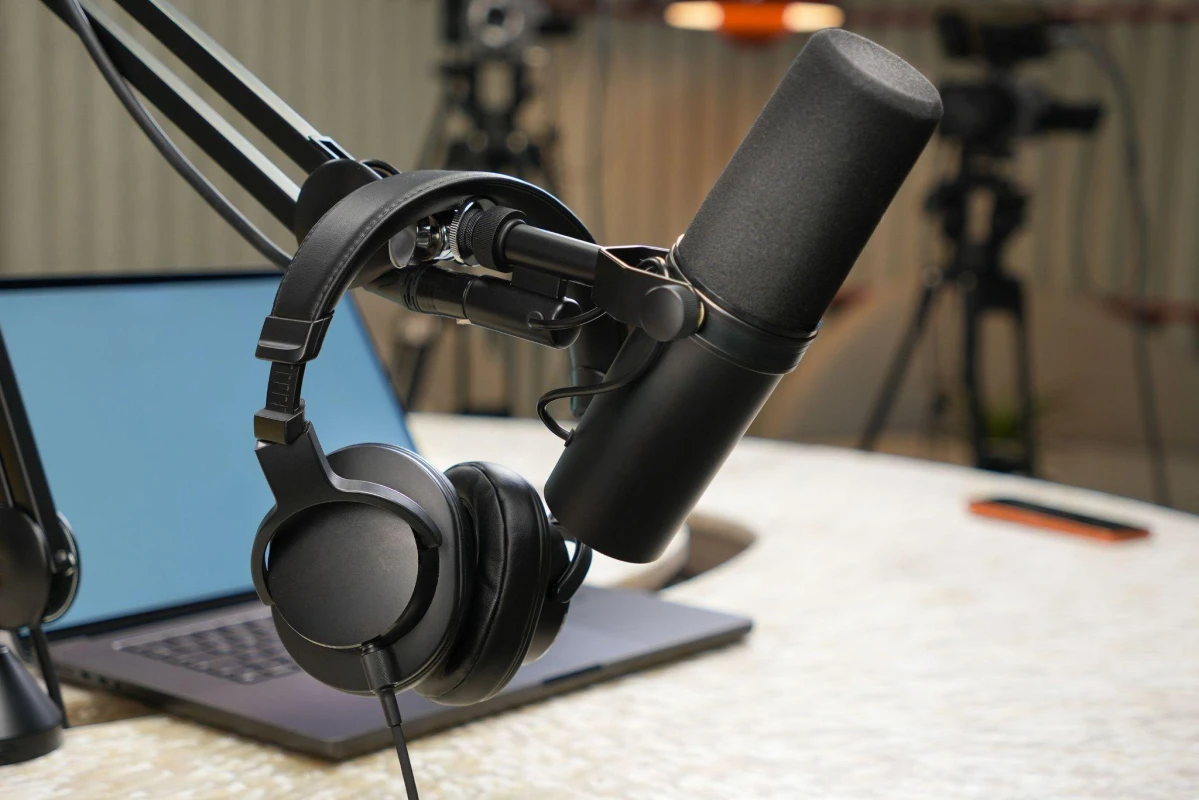
A podcast episode can function like a recorded interview or a public lecture, both of which have long been acceptable in academic writing. The key is treating the audio as a real source rather than background listening you half-remember. Take structured notes, mark timestamps, and capture the speaker's exact phrasing when a quotation strengthens your point.
When you evaluate a show, ask who hosts it and why. A podcast produced by a university, a research institute, or an established journalist carries different weight than one run anonymously for entertainment. Look at the guest list over several episodes to gauge whether the program attracts credible voices. A history podcast that regularly interviews tenured scholars is doing something closer to public scholarship than casual commentary.
To cite responsibly, you will generally need the episode title, the host or producer, the publication date, the platform, and a timestamp for any specific claim. Most citation styles now include a dedicated format for audio, so check whether your assignment uses MLA, APA, or Chicago before you build the entry. Accurate timestamps matter because they let a reader verify your quotation, which is exactly the kind of transparency that earns trust.
Tweets and Threads as Primary Sources
Short posts from X, formerly Twitter, are easy to dismiss because of their length, but brevity is not the same as insignificance. A single post from a public official, a scientist, or an organization can be a primary document that captures a position at a precise moment. Historians already treat telegrams and memos this way, and a timestamped public statement online belongs in the same category.
The trick is context. A screenshot stripped of its thread can mislead, so always trace a post back to its source and read what surrounds it. Verify that the account is authentic rather than a parody or an impersonator, and note whether the person deleted or revised the statement later, since that revision is itself meaningful evidence.
Threads deserve special attention because they let an author develop an argument across several connected posts. When you cite a thread, make clear that you are drawing on the sequence as a whole rather than one fragment, and preserve the link to the opening post. This protects you if the content changes and lets your reader follow the full reasoning you are responding to.
Instagram Posts and Visual Culture
Instagram might seem like the least academic platform on this list, yet it holds real research value for anyone studying visual communication, activism, marketing, or contemporary art. An image, its caption, and its comment section together form a rich primary source about how a message was crafted and received. For fields that care about aesthetics or public sentiment, that combination is hard to replicate with text alone.
Treat a post as you would any visual document. Describe what you see, analyze the choices behind it, and connect that analysis to your larger argument rather than dropping the image in as decoration. Save an archived copy or note the date carefully, because posts disappear and captions get edited. Your credibility depends on being able to show that the source existed as you described it.
Instagram also works well as supporting evidence that grounds an abstract claim in something concrete. If you argue that a campaign reshaped public perception, a well-chosen post from that campaign makes the point vivid in a way statistics cannot.
Keeping Standards High
Modern sources do not lower the bar for rigor. They raise it, because these formats mix credible material with noise more freely than a curated database does. Your job is to apply the same critical questions you would ask of any source and to be honest about limitations.
A few habits will keep your work defensible:
- Confirm the identity and expertise of whoever created the content before you rely on it.
- Cross-check any factual claim against at least one traditional or independently verifiable source.
- Archive or timestamp everything, since digital content is far more fragile than print.
Balance is the final principle worth holding onto. A paper built entirely on tweets and podcasts will feel thin, just as one built only on decades-old texts feels stale. The strongest research braids the two together, using established scholarship to provide depth and contemporary media to provide immediacy. When you manage that blend well, you are not just decorating an old argument with trendy references. You are showing that you can locate a topic within the full landscape of how knowledge actually moves today, which is precisely what modern academic work asks of you.
Start small if the shift feels unfamiliar. Add one podcast interview or one verified public statement to your next assignment, cite it cleanly, and see how it changes the texture of your argument. Once you trust your own judgment across formats, these sources stop feeling like a risk and start feeling like an advantage.