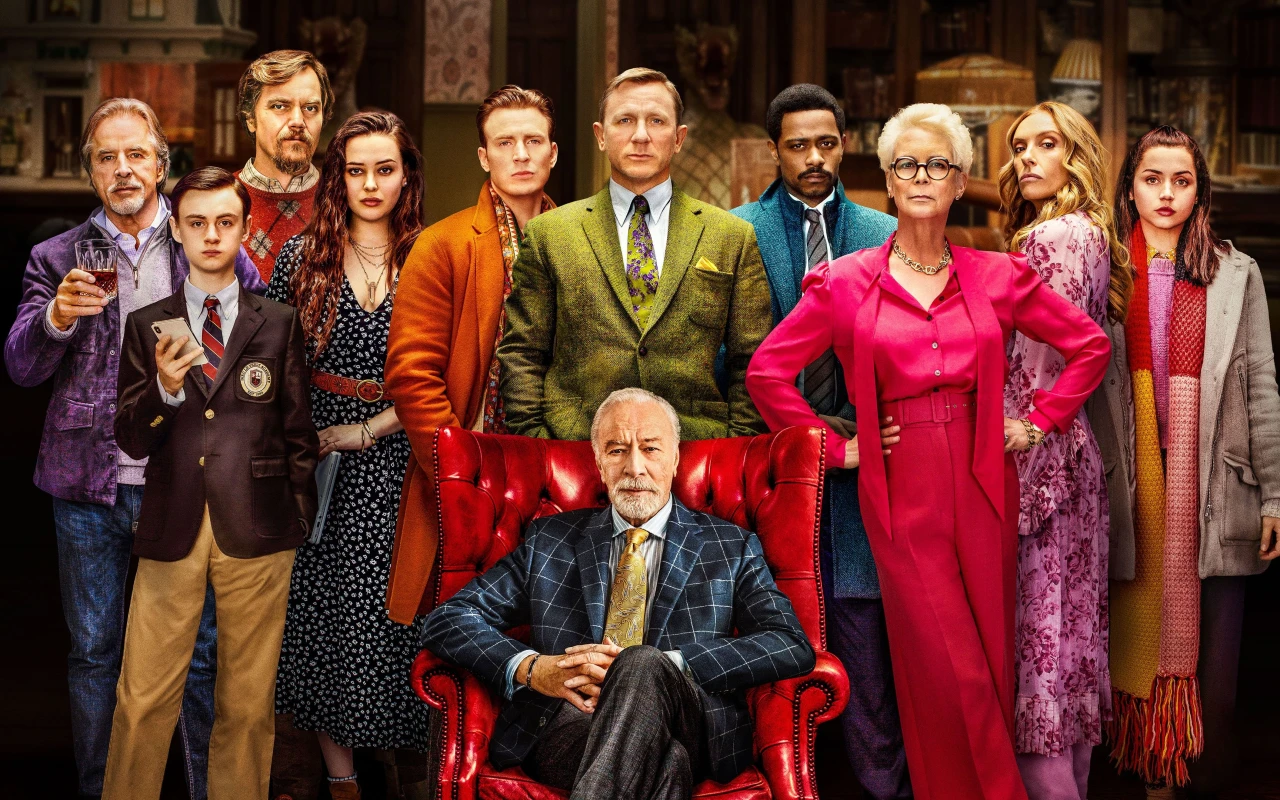
Explore how detective franchises stay fresh beyond the classic whodunit formula, avoiding clichés to keep audiences engaged for seasons.
- April 5, 2026
AceShowbiz - Fictional detectives have long been a crowded field. Whether presented as feature films or TV series, the classic whodunit formula remains a popular and easily replicated structure. Audiences consistently enjoy unraveling mysteries, meaning creating a detective franchise often boils down to selecting an appealing location, casting capable actors, and inviting viewers to play detective.
This formula has led to numerous successful franchises. Examples include multiple adaptations of Agatha Christie’s novels, five distinct Sherlock Holmes series in under two decades, and the longevity of shows like Death in Paradise, which has run for over 15 seasons and generated spin-offs. The constant demand for detective stories is undeniable. However, the true challenge lies in sustaining a franchise within this genre without relying on repetitive plots and clichés. How can a recurring sleuth remain fresh and engaging over multiple entries?
A defining trait of the murder mystery genre is the interchangeability of nearly every element aside from the murder and the mystery itself. The detective’s identity, their affiliation (if any), the suspect profiles, the type of killer, the setting, and the tone can all be swapped without fundamentally altering the story. For many detective franchises, this flexibility becomes a hindrance, quickly leading to predictability and stale storytelling.
This is where Knives Out stands apart. Rian Johnson’s Knives Out franchise uniquely leverages the genre’s interchangeable components to its advantage. The films Knives Out, Glass Onion: A Knives Out Mystery, and the upcoming Wake Up Dead Man: A Knives Out Mystery effectively function as standalone stories.
The three films take place in markedly different environments: a traditional mansion, a sleek private island, and a remote village with a church. Typically, each setting would anchor its own detective franchise. However, the loose narrative connection between these films grants the series a rare flexibility, allowing it to explore diverse settings within a single franchise.
Another significant factor is the franchise’s approach to its cast. Each film assembles an A-list ensemble. Even with Daniel Craig portraying the detective Benoit Blanc, there is no overarching character arc linking the films. This approach enables Craig to reinvent the character in each installment, adding fresh nuances without being constrained by previous portrayals. The only constant across the movies, Benoit Blanc, remains engaging.
Interestingly, the Knives Out series is evolving into something less focused on the mystery itself. Traditionally, murder mysteries revolve tightly around the crime and the identity of the killer. Johnson’s 2019 original respected this formula, but both sequels take a different path. In Glass Onion: A Knives Out Mystery and the upcoming Wake Up Dead Man: A Knives Out Mystery, the emphasis shifts from uncovering the murderer to revealing the complexities of the characters involved.
Glass Onion particularly dissects the personalities of the celebrities invited to the private island of Miles Bron. The film concludes with Benoit Blanc dismissing the mystery’s solution as “just dumb,” signaling Johnson’s deliberate departure from traditional whodunit conventions.
In Wake Up Dead Man, the mystery’s resolution is understated and naturalistic, breaking from typical dramatic reveals. Blanc delivers his concluding speech from a church pulpit, then grounds the scene with a return to everyday reality. Ultimately, the film’s conclusion is less about the murder and more about removing a toxic element from a microcosm of society.
Created by Rian Johnson, the Knives Out franchise began with the 2019 film Knives Out, followed by Glass Onion: A Knives Out Mystery and will soon continue with Wake Up Dead Man: A Knives Out Mystery. The films boast a star-studded cast including Daniel Craig, Chris Evans, Ana de Armas, Jamie Lee Curtis, Michael Shannon, Don Johnson, Toni Collette, LaKeith Stanfield, Edward Norton, and Janelle Monáe.
By embracing the genre’s inherent flexibility and shifting the focus from the mechanics of the crime to the intricacies of the characters and their social environments, the Knives Out franchise redefines what a modern murder mystery can be.