Tired of digging through a cramped pantry? Here's how to organize a small kitchen pantry efficiently, with layouts, containers, and habits that stick.
- October 6, 2026
AceShowbiz - You open the pantry door, and three boxes of pasta slide out onto your foot. Behind them sits a bag of rice you forgot you owned, a jar of something sticky, and a can of beans that expired during a previous administration. Sound familiar? You are not alone, and you are not a messy person. Small kitchens are simply harder to organize, because most storage advice is written for people with walk-in pantries the size of a bathroom.
Here is the good news: a pantry under 20 square feet can hold more than you think, and it can stay functional for years. The trick is not buying more bins. It is working with the space you actually have, in the order you actually cook. This guide walks you through a realistic system, from the first clean-out to the habits that keep it working six months later.
Start by Measuring, Not Shopping
Most people fail at pantry organization because they buy containers before they understand their space. They come home with a matching set of glass jars, discover the jars are two inches too tall for the shelves, and shove them in anyway. Now the shelves are crowded, nothing stacks, and the whole project feels like a waste of $80.
Before you buy anything, grab a tape measure and a notepad. Write down the width, depth, and height of every shelf, including the awkward top shelf and the narrow gap beside the fridge. Note where the door swings, because a door that only opens 70 degrees limits what you can store on that side. Also measure the tallest item you regularly buy, like a cereal box or a bulk bag of flour.
Those numbers change everything. A standard pantry shelf is about 12 inches deep, but most cans are only 3 inches wide, which means a single deep shelf wastes up to 9 inches of usable space. That is where a simple riser or a lazy Susan earns its keep. A 10-inch turntable in a corner shelf can hold 15 to 20 small jars while keeping every one of them visible.
Practical tip: Take a photo of each shelf with your phone before you empty it. When you are standing in the store trying to remember if that bin will fit, the photo answers the question in five seconds.
The Three-Zone Method for Tiny Pantries
Professional kitchens organize by frequency of use, and you should too. Divide your pantry into three zones: daily, weekly, and backup. The daily zone is at eye level and within easy reach. This is where cooking oil, salt, your most-used spices, and the pasta you eat twice a week live. If you have to bend or stretch to grab it, it does not belong here.
The weekly zone sits just below or above the daily zone. This is for items you use a few times a month: baking soda, a second bottle of soy sauce, canned tomatoes, rice. You should be able to reach these with a small stretch, not a step stool. The backup zone is the top shelf and the floor, and it holds bulk purchases, extra paper towels, and anything you buy in multiples.
Why does this matter so much in a small pantry? Because in tight spaces, every reach costs you. A 2019 study on kitchen workflow found that home cooks make an average of 40 to 60 trips to their pantry during a single week of cooking. If each trip takes an extra 10 seconds of searching, that is nearly 10 minutes a week spent hunting for cumin. Multiply that over a year and you have lost almost nine hours to a shelf.
Practical tip: Label the three zones with small removable stickers for the first month. It feels silly, but it retrains your muscle memory fast, and you can peel them off once the habit sticks.
Containers: Buy Fewer, Choose Smarter
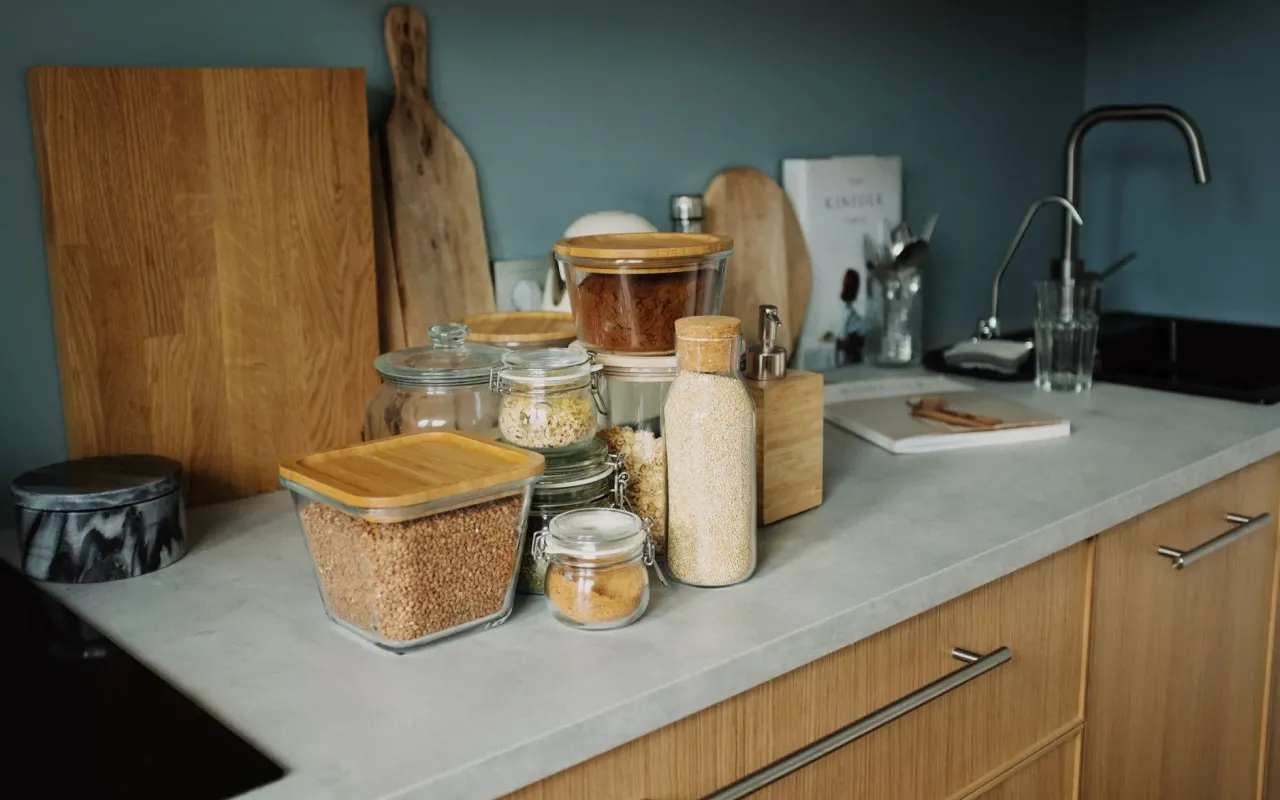
The internet will try to sell you a 40-piece container set. You do not need it. In a small pantry, mismatched containers are not the enemy; containers that do not fit your shelves are. Focus on three shapes: a tall narrow bin for boxes, a shallow rectangular bin for packets, and a set of stackable square jars for dry goods.
Square jars beat round jars every time in a small space, because they use the corners. A 32-ounce square jar holds roughly the same as a round one but takes up about 21 percent less shelf area. If you have four shelves and 20 jars, that savings adds up to nearly a full extra shelf of capacity.
Clear containers are worth the money for one honest reason: you stop buying duplicates. When you can see the level of flour, you know whether you need more before you leave for the store. Opaque bins hide your inventory, and hidden inventory is how people end up with three unopened bags of brown sugar. If you prefer the look of ceramic or metal, keep those for items you use constantly and never overbuy.
One more thing: do not decant everything. Transferring rice, pasta, and cereal into jars is satisfying, but transferring a box of crackers into a bin just creates dishes. Leave items in their original packaging when the packaging is already stackable and sealable, and save your containers for the bulk bags that spill everywhere.
Vertical Space Is Your Cheapest Real Estate
If your pantry has shelves spaced 14 inches apart but your cans are 4 inches tall, you are paying rent on empty air. That gap is the single biggest waste in small pantries. Fix it with stackable risers, wire shelf dividers, or under-shelf baskets that hang from the shelf above.
An under-shelf basket turns one shelf into two without any drilling. A pack of two usually costs under $20 and can add the equivalent of a full shelf to a five-shelf pantry. Use the hanging basket for lightweight items like tea boxes, spice packets, or napkins, and keep heavy cans on the solid shelf below.
The pantry door is another forgotten surface. Over-the-door racks can hold spices, foil, plastic wrap, and even small appliances if the hinges are sturdy. Just check the door clearance first, because a rack that blocks the door from opening fully will drive you crazy within a week. If your door swings into a narrow hallway, a slim rack that adds only 3 inches of depth is the safer pick.
Practical tip: Put the items you touch most in the middle of the door rack, at chest height. Door racks are prime real estate, and most people waste them on things they use twice a year.
Keeping It Organized Without Weekly Overhaul
The best system in the world fails if it takes an hour to maintain. The goal is a pantry that self-corrects. Two habits do most of the work. First, the "front and center" rule: whenever you put a new item away, pull the older one forward. This is how grocery stores rotate stock, and it is why you rarely see expired milk at the front of a dairy case. Do the same with your cans, and you will cut food waste significantly.
Second, do a two-minute reset every time you put groceries away. Not a full reorganization, just a quick scan. Anything that fell over gets stood up. Anything that does not belong in the pantry goes back where it lives. Two minutes a week beats a three-hour deep clean every season, and it keeps the system from quietly collapsing.
Once a month, do a five-minute expiration sweep. Pull anything past its date to the front and plan a meal around it that week. According to the USDA, the average American household throws away roughly 30 percent of the food it buys, and a big chunk of that is pantry items that got buried. A visible, rotated pantry is one of the cheapest ways to cut your grocery bill.
Finally, accept that your pantry will never look like the photos online, and it should not. Those pantries are styled for cameras, not for Tuesday night dinners. A working pantry has a half-used bag of rice, a jar of honey with a sticky lid, and one shelf that is a little chaotic. What matters is that you can find what you need in under 10 seconds and you are not buying duplicates. That is a win, and it is entirely achievable in even the smallest kitchen.