Chuck roast, brisket, short ribs—we compare sous vide vs slow cooker for tough cuts so you know which method actually delivers tender results.
- October 4, 2026
AceShowbiz - You've got a three-pound chuck roast sitting in the fridge, a hungry family, and two appliances staring back at you from the counter. One plugs in and bubbles away all day. The other needs a vacuum sealer and a pot of circulating water. Both promise fall-apart tender meat, but they get there in completely different ways—and the results aren't as interchangeable as you might think.
Here's the surprising part: a slow cooker and a sous vide circulator are both "low and slow" methods, yet they produce measurably different textures, moisture levels, and flavors. Understanding why comes down to one variable that most home cooks never think about: temperature precision. Once you get that, choosing between them becomes a whole lot easier.
How Each Method Actually Cooks Tough Meat
Tough cuts like chuck, brisket, short ribs, and pork shoulder are packed with collagen—a connective tissue that's basically the glue holding muscle fibers together. Collagen doesn't break down from heat alone. It needs time at a specific temperature range, roughly 160°F to 205°F, to dissolve into gelatin. That gelatin is what gives braised meat its silky, lip-sticking richness.
A slow cooker typically runs its "low" setting around 190°F to 200°F and "high" around 300°F. The heating element cycles on and off, so the internal temperature swings up and down throughout the cook. That fluctuation is fine—collagen is forgiving—but it also means the meat's exterior can overcook while the center catches up.
Sous vide flips the script. You set the water bath to an exact temperature—say 155°F for 24 hours—and it holds there within a fraction of a degree. The meat never exceeds that target, so it can't dry out or toughen from overshooting. The tradeoff is time: sous vide collagen conversion is slower at lower temperatures, which is why recipes often call for 18 to 36 hours.
Practical takeaway: If you want dinner on the table after work, a slow cooker wins on convenience. If you want edge-to-edge perfect doneness with zero guesswork, sous vide is the more controlled tool.
The Texture and Moisture Showdown
Texture is where these two methods really diverge, and it's the thing you'll notice with your first bite. Slow-cooked meat tends to be softer and more shredded—the fibers separate easily because the higher, fluctuating heat breaks them down aggressively. That's why pulled pork and shredded beef tacos are slow cooker staples. The meat gives up its structure, and that's the point.
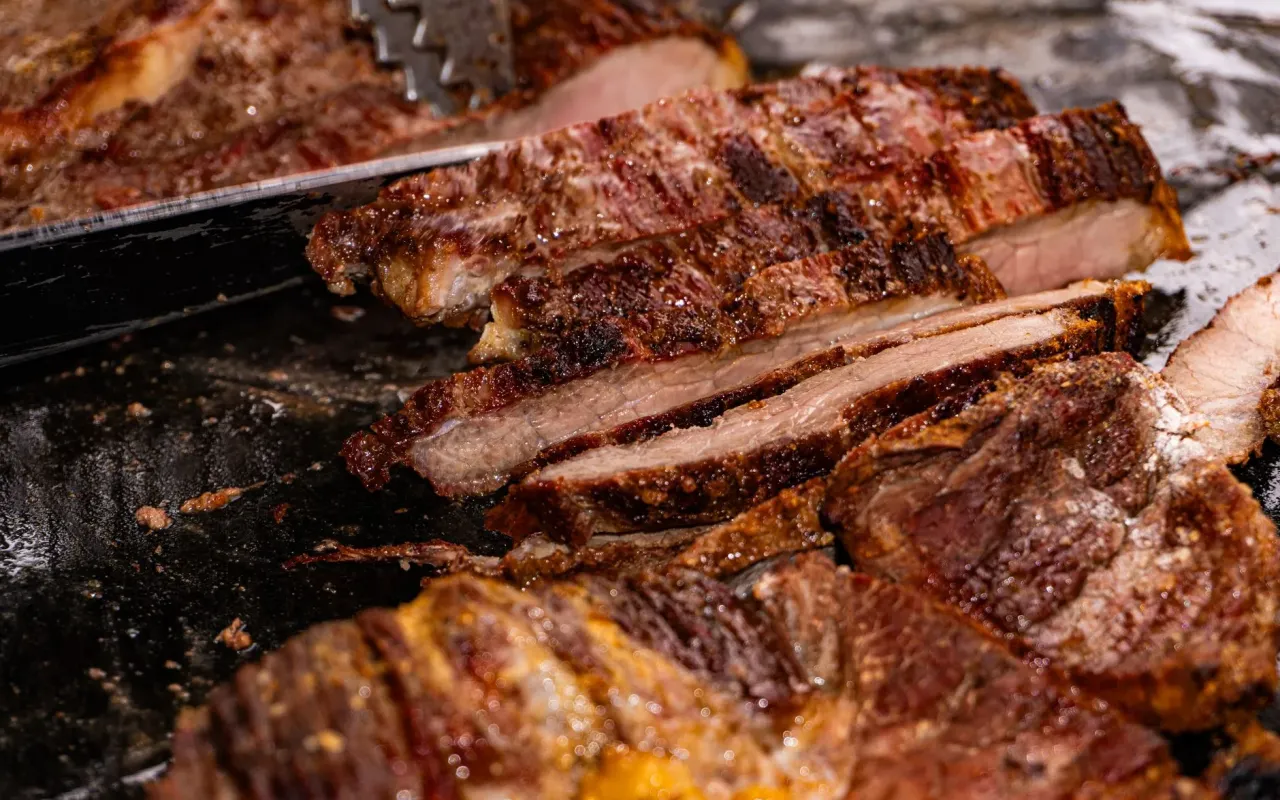
Sous vide meat holds together differently. Because it cooks gently and evenly, the muscle fibers stay more intact while the collagen still converts to gelatin. The result is sliceable, almost steak-like tenderness rather than a pile of shreds. A sous vide chuck roast at 135°F for 24 hours eats more like prime rib than pot roast—pink, juicy, and firm enough to cut with a fork but not falling apart.
Moisture retention also favors sous vide. The vacuum-sealed bag traps every drop of liquid the meat releases, and since the meat never exceeds its target temperature, it loses far less water. Slow cookers, especially on high, drive off more moisture through steam. You often end up with a watery braising liquid that needs reducing on the stovetop to taste like anything.
Practical takeaway: Want shreddable meat for sandwiches and tacos? Slow cooker. Want a sliceable roast that eats like a steak? Sous vide. Match the method to the texture you actually want on the plate.
Flavor Development: Where the Slow Cooker Fights Back
Here's where slow cooker loyalists have a legitimate case. Browning. A slow cooker recipe usually starts with searing the meat in a hot skillet, then deglazing the pan with wine or stock and dumping it all in the crock. That fond—the browned crust on the meat and the caramelized bits in the pan—is pure flavor, and it's built on the stovetop before the slow cooker ever turns on.
Sous vide skips that step unless you add it back. Meat cooked in a sealed bag can't brown, because browning (the Maillard reaction) needs temperatures above 300°F and a dry surface. Many sous vide recipes call for a post-cook sear in a screaming-hot cast iron pan, which works great—but it adds a step and a few minutes of hands-on time.
There's a flip side, though. Sous vide's sealed environment concentrates the meat's natural juices, and you can pack the bag with aromatics like garlic, thyme, and bay leaf that infuse gently over many hours. Slow cookers dilute flavor into a large volume of liquid, so you often need more seasoning to compensate. Some cooks argue sous vide meat tastes "purer" and more intensely beefy, while slow cooker meat tastes more like the braising liquid it sat in.
Practical takeaway: If you love deep, roasted, savory crust, budget time for a post-sous-vide sear. If you want flavor built in automatically through a braise, the slow cooker's one-pot approach is genuinely hard to beat.
Time, Convenience, and Real-Life Logistics
Let's be honest about what each method asks of you on a busy Tuesday. A slow cooker is a dump-and-go appliance. You sear (maybe), chop some vegetables, set it on low, and walk away for eight hours. No bags, no water bath, no planning beyond "start it before work." Cleanup is one ceramic insert that's usually dishwasher-safe.
Sous vide demands more upfront thinking. You need to vacuum-seal or water-displace the meat in a zip bag, preheat the bath, and commit to a cook time that can run overnight or all day. A 24-hour chuck roast means planning a day ahead. You also need to manage food safety: cooks under four hours at low temps require pasteurization times you can look up in tables from the USDA or trusted sous vide guides.
Equipment cost is another factor. A decent slow cooker runs $40 to $80. A reliable sous vide circulator starts around $100 and climbs past $200, plus you may want a vacuum sealer, a container, and a rack. The sous vide setup pays for itself if you cook steak, chicken breast, and fish regularly—but if tough braises are your main goal, the slow cooker is the cheaper entry point.
Practical takeaway: Pick based on your schedule, not just the food. If you can't plan a cook a day ahead, sous vide will frustrate you. If you can, it rewards you with consistency a slow cooker can't match.
Which One Should You Actually Buy for Tough Cuts?
If you cook pot roast, pulled pork, beef stew, and short ribs a few times a month and want minimal fuss, a slow cooker is the practical winner. It's affordable, forgiving, and built for exactly these cuts. The slightly softer texture and diluted flavor are easy trade-offs for the convenience.
If you're chasing restaurant-quality results—a medium-rare chuck roast, a brisket with precise doneness, short ribs that slice cleanly—sous vide is worth the investment and the planning. It gives you control no other home method offers, and for tough cuts specifically, that control translates directly into better texture and moisture.
Plenty of serious home cooks own both, and that's the honest answer. Use the slow cooker for weeknight braises and the sous vide for weekend projects where you want to impress. They're not competitors so much as two tools with different jobs.
Practical takeaway: Start with the slow cooker if you're new to tough cuts. Add sous vide later if you find yourself wanting more precision. You don't have to pick a side—you just have to know what each one does best.