At Cannes, Cate Blanchett’s name opens doors. Now, her Displacement Film Fund empowers displaced filmmakers to tell their own stories.
- May 20, 2026
AceShowbiz - At the Cannes Film Festival, merely uttering the name Cate Blanchett can open doors that seem otherwise firmly closed. When an interviewer attempted to gain access to meet the actress at the Palais, a festival employee initially refused entry. However, upon hearing Blanchett’s name, the barrier vanished. This anecdote underscores the influence and respect Blanchett commands in the film world, influence she is now channeling to support displaced filmmakers through a groundbreaking initiative.
Cate Blanchett is co-founder of the Displacement Film Fund, a collaboration with the International Film Festival Rotterdam designed to provide financial and creative backing to filmmakers who have experienced displacement. The fund’s mission is to amplify authentic stories about the struggles and experiences of displaced people, ensuring these voices are not sidelined but instead integrated into mainstream cinema.
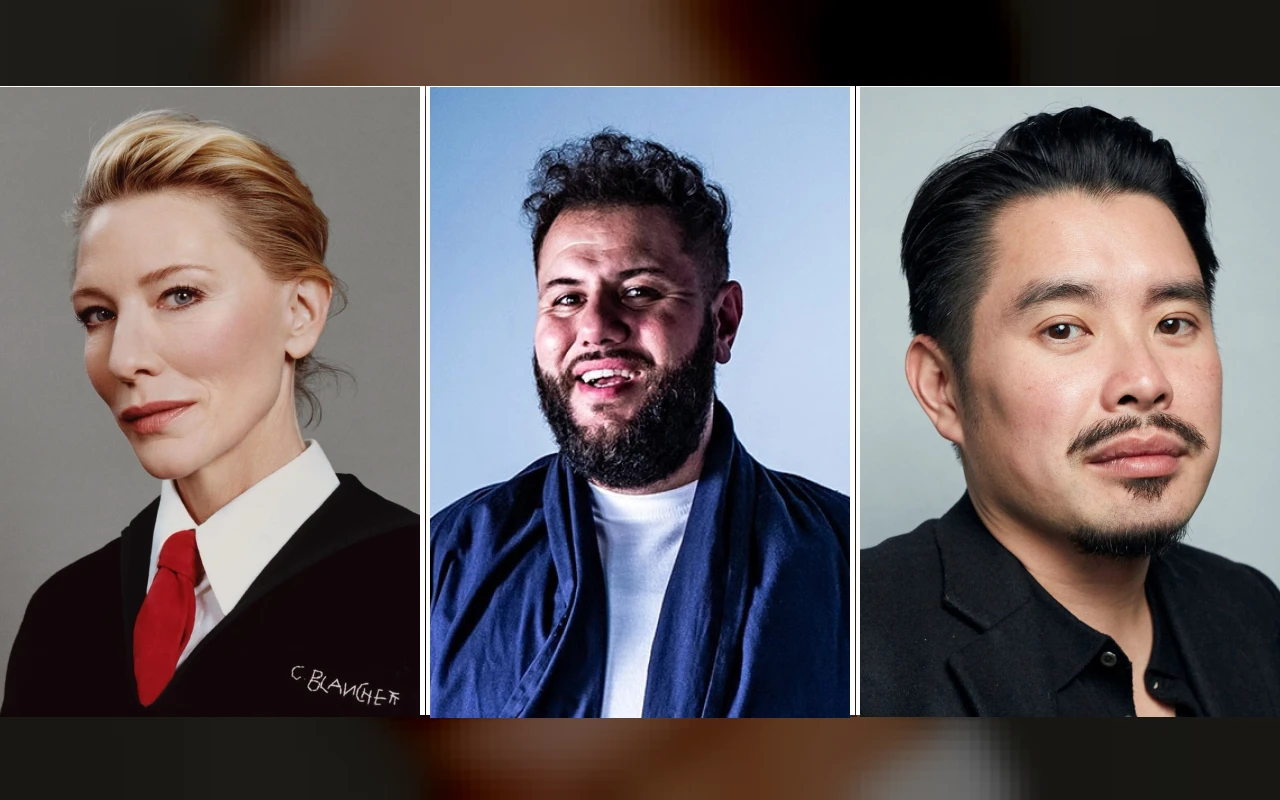
This year, Blanchett announced the recipients of the fund’s grants, including notable talents such as Mohammed "Mo" Amer, Annemarie Jacir, Akuol de Mabior, Bao Nguyen, and Rithy Panh. Each filmmaker brings a unique perspective shaped by their personal or familial experiences of displacement, embodying the fund’s goal of supporting mid-career artists with established track records who are seeking to elevate their storytelling to wider audiences.
Following a lively discussion at Cannes, where Blanchett reflected on her work from Carol to Tár and shared an amusing fable told to her by Guillermo del Toro, the actress sat down for a more in-depth conversation. Accompanying her were Vietnamese American filmmaker Bao Nguyen, whose project How to Ride a Bike explores a Vietnamese father secretly learning to ride a bike after failing to teach his son, and Palestinian American comedian and filmmaker Mohammed Amer, known for the Netflix special Mo, whose new project Return to Sender follows a Palestinian refugee facing escalating immigration restrictions during a global tour.
Blanchett’s approachable style was evident even in her choice of attire—an off-white ensemble paired with platform loafers, which she proudly noted were still remarkably clean. The actress discussed the origins of the Displacement Film Fund, tracing it back to a conversation at the Global Refugee Forum involving herself and colleagues such as Ke Huy Quan, Echo Quan, Ayman Tamer, Koji Yanai, and Isaac Kwaku Fokuo. Inspired by moving stories from displaced individuals, including an Afghan former refugee educator, Blanchett and her peers questioned why these powerful narratives rarely penetrate mainstream film and documentary sectors.
Determined to act, the group committed as a table to create a fund dedicated to championing displaced filmmakers. With longstanding friendships, including one with Clare Stewart of the International Film Festival Rotterdam, Blanchett coordinated support from both public and private sectors, including corporate partners and filmmakers themselves. The fund’s model is deliberately selective, akin to a smaller-scale MacArthur Genius Grant, focusing on mid-career filmmakers rather than open calls, to avoid marginalizing their stories.
The first cohort of filmmakers will have the benefit of a qualifying round and a week of screenings hosted by Film Forum in New York during the fall season. Selection was conducted through a two-tier process involving a nominations committee and a selection committee featuring prominent figures such as Agnieszka Holland, Barbara Broccoli, Ke Huy Quan, and Jonas Rasmussen, the director of Flee. The process was rigorous, narrowing a long list to five outstanding recipients.
Mohammed Amer humorously recounted his initial reluctance to accept the grant, joking to stop the calls from the fund’s team. However, his admiration for Cate Blanchett and recognition of the initiative’s importance swiftly turned his hesitation into enthusiastic acceptance. Amer emphasized the significance of the fund in leaving a legacy that inspires others striving to break through barriers in the industry.
Bao Nguyen shared how his connection to Ke Huy Quan, a mutual friend and fellow Vietnamese refugee who recently won an Oscar for Everything Everywhere All at Once, played a pivotal role in his involvement. Nguyen expressed a deep desire to portray the Vietnamese American experience with nuance and depth, moving beyond the usual war-centric narratives. The grant offers him a rare opportunity to tell personal stories with artistic freedom and strong support from a figure he greatly respects.
Nguyen detailed his ambitious schedule, aiming to complete filming by August, hand footage to his editor, and even plan his wedding, while coordinating post-production during his absence. Amer joked that Nguyen might use the fund money for his honeymoon, to which Nguyen half-jokingly replied that he promised not to work on his wedding day but might have to reconsider if necessary. Blanchett quipped that perhaps he should pitch the wedding as a film project.
Blanchett’s commitment to the Displacement Film Fund and the broader artistic community underscores a vital message: displacement does not halt creativity. Through her advocacy and direct support, she aims to dismantle the risk aversion that currently characterizes Hollywood, encouraging diverse, courageous storytelling that reflects the real experiences of displaced populations worldwide.
As the fund prepares to showcase its first group of filmmakers in New York, the industry will witness fresh narratives that challenge conventional cinema and highlight voices too often overlooked.