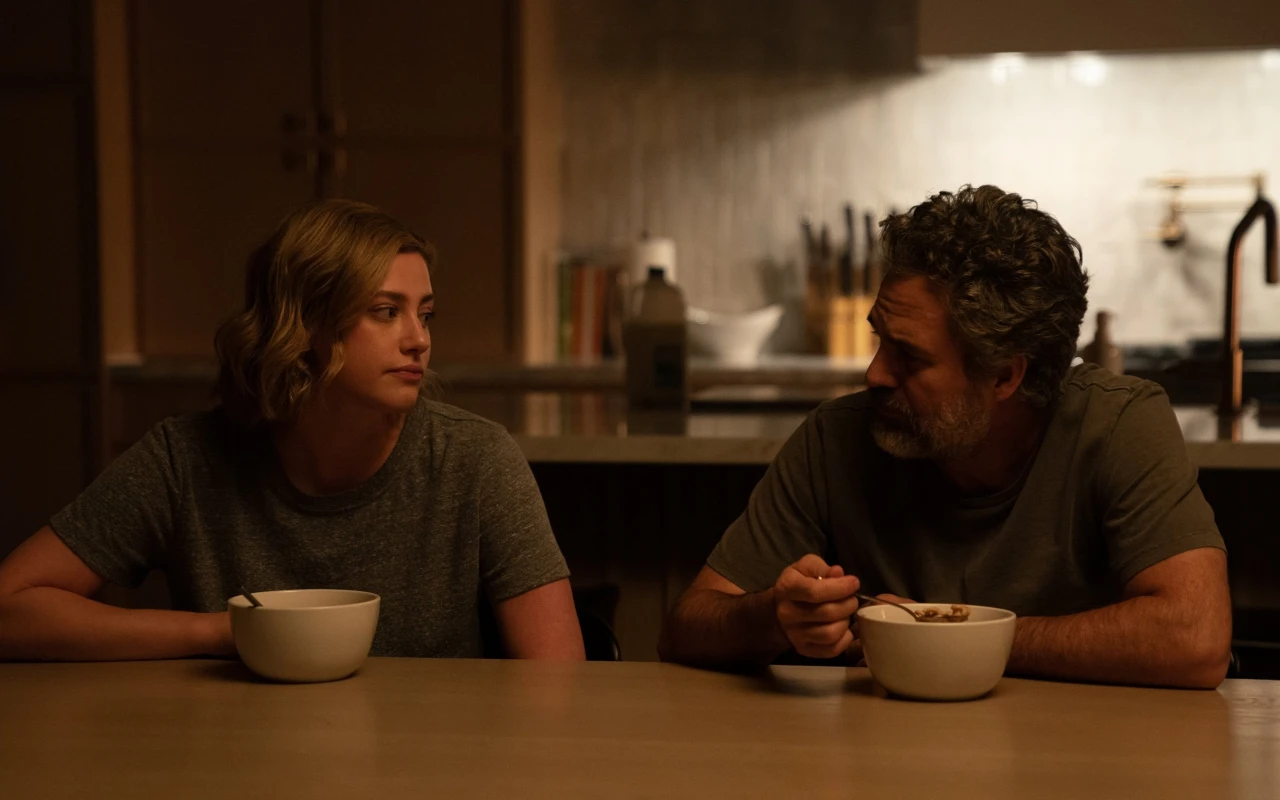
Lili Reinhart reveals the raw emotional core of indie series Hal & Harper, a story of grief, family, and love that defies conventional storytelling.
- April 17, 2026
AceShowbiz - Lili Reinhart recently shared insights about the raw and uncompromising nature of the indie TV series Hal & Harper during her acceptance of the Art of Light Award at the Miami Film Festival. She emphasized how the show defied conventional storytelling by embracing complexity and discomfort to portray themes like grief, codependency, love, and family without diluting their emotional depth.
Hal & Harper, an eight-episode comedy-drama, was created, written, directed, and produced by Cooper Raiff, who also stars in the series as Hal opposite Reinhart’s Harper. The narrative explores the complicated relationship between a brother and sister following the news that their father, played by Mark Ruffalo, is expecting a child with his current partner, Kate (portrayed by Betty Gilpin). Their dysfunction is rooted in childhood trauma, particularly the loss of their mother, shown through both present-day tension and flashbacks featuring younger versions of the characters played by the adult actors themselves.
Following her award acceptance, Lili Reinhart, who also serves as an executive producer on the show, spoke with The Hollywood Reporter about the challenges of producing and marketing an indie series and the complexities of portraying both adult and child versions of her character.
When asked about how Cooper Raiff approached her for the role of Harper, Reinhart recalled receiving a call while on vacation in Hawaii. Despite initial annoyance at being disturbed on holiday, the call turned out to be one of the best she’d received. Her manager informed her about the project and mentioned she might be playing the 9-year-old version of her character, which intrigued her immediately. After a coffee meeting in Los Angeles where Raiff deliberately withheld detailed information, she was sent the pilot script and then the entire 300-page series script. She was impressed by his previous films, such as Shithouse and Cha Cha Real Smooth, and found the tone of the new project deeply human and accessible, a perfect fit after her time on Riverdale.
Reinhart expressed how flattering it was for a director to envision her beyond the typecast role of Betty Cooper from Riverdale, and she quickly accepted the part.
Playing the 9-year-old version of Harper alongside real children was unique for Reinhart, who joked that she would never play a 9-year-old again as she gets older in Hollywood. The younger Harper was portrayed as somewhat jaded, representing not a literal child but rather a 24-year-old’s recollection of her childhood self. This approach was shared by Raiff, who played a more authentic 7-year-old version of his character. The decision to cast adult actors as children was intentional to maintain continuity, allowing audiences to see the character’s inner child and better understand their present emotional struggles.
The actors spent a year together prior to filming, which Reinhart described as a rare and valuable experience. They even took a spiritual retreat to Mount Shasta, California, a place known for its healing energies. This journey helped them connect deeply to the themes of the show and to each other, especially since both were navigating personal breakups at the time. Reinhart appreciated that Raiff was an accessible director, involved closely in the process rather than distant, which is uncommon in the industry.
In preparation for the role, Reinhart read the book Motherless Daughters, which explores the emotional impact on children who lose a parent or become parental figures themselves due to emotional absence or death. This informed her portrayal of Harper’s complicated role within her family dynamic. Although rehearsal time was limited, particularly with Ruffalo and Raiff, Reinhart found the experience challenging but rewarding. She fondly recalled texting Raiff before her first rehearsal with Ruffalo, worried about her performance, but was reassured by Ruffalo’s supportive "dad energy."
The character of Kate, played by Betty Gilpin, was another crucial element of the series. She serves as one of the few people who truly perceives Harper’s emotional burdens. Reinhart noted the dynamic between Kate and Harper as mutual and balanced, providing a healthy space for both characters. Interestingly, during the process of trying to sell the series, some studios suggested removing Kate’s character and even the father’s role, which was a significant obstacle for the creators.
Hal & Harper faced multiple challenges in its journey to find a platform. The original version contained 10 episodes, but was ultimately condensed to eight. The series began with an extended montage showcasing the relationship between Kate and the father, but this sequence was altered because studios found it too slow for the current binge-watching culture. According to Reinhart, the show’s deliberate pacing and emotional honesty made it difficult to fit into the standard television mold, which often prioritizes quick engagement and commercial appeal.
Reinhart expressed that the show’s refusal to simplify complex emotions and relationships was intentional and central to its identity. She believes that allowing characters to be fully human — flawed, messy, and uncomfortable — is what gives the story its power. This approach does not aim to produce likable or easy characters but rather authentic portrayals that resonate with viewers on a deeper level.
The experience of working on Hal & Harper has been personally meaningful for Reinhart, especially given the show’s themes of loss and familial strain. The project reminded her of the importance of visibility in storytelling, where characters are seen in their entirety rather than as sanitized versions designed for mass appeal.
Ultimately, Lili Reinhart sees Hal & Harper as an artistic achievement that challenges the conventional indie TV landscape. It required the cast and creators to "shapeshift" the show during the selling process to align with industry expectations without losing the core emotional truth. This balancing act reflects the broader difficulties faced by indie projects attempting to find a home in a marketplace dominated by formulaic content.
From the initial spark of the script to the spiritual retreat and through the intimate rehearsal process, the journey of creating Hal & Harper has been a testament to dedication to authentic storytelling. Reinhart’s commitment to fully inhabiting both the adult and child versions of Harper illustrates the depth of the project and the unique challenges of such layered performances.
As the series continues to reach audiences, it stands as a reminder of the powerful impact of unvarnished human stories, especially in an industry often focused on polished and marketable narratives. Reinhart’s experience underscores the evolving nature of indie television and the resilience needed to bring nuanced, emotional content to screens today.