A punk-inspired Bride of Frankenstein ignites a gothic crime spree in 1930s America. Maggie Gyllenhaal's bold reimagining carves its own unique path.
- March 18, 2026
AceShowbiz - The Bride! offers a bold and original reinvention of Mary Shelley’s classic Frankenstein tale, focusing on the iconic Bride of Frankenstein with a fresh, punk-inspired twist. Despite the countless adaptations of Shelley’s 1818 novel, this film carves out its own unique space, blending crime spree energy with gothic romance in 1936 Chicago and New York.
Originally slated for a 2025 release, Maggie Gyllenhaal’s film wisely debuted earlier, avoiding competition with Guillermo del Toro’s acclaimed Frankenstein adaptation. While both films share Shelley’s source material, they diverge drastically in tone and setting. The Bride! is set a century after the original Frankenstein movies, ironically just a year after Universal’s 1935 classic Bride of Frankenstein, and it embraces a starkly different style and narrative approach.
The original 1935 Bride of Frankenstein, directed by James Whale and starring Elsa Lanchester, gave the Bride minimal screen time and silence. In contrast, The Bride! centers on the character with a powerful voice and a compelling story, brought vividly to life by the extraordinary Jessie Buckley. Buckley’s performance is not just vocal but deeply purposeful, turning the Bride into a fully realized protagonist rather than a mere plot device.
Universal had long intended to revive the Bride of Frankenstein character within its Monsters series, with Angelina Jolie once attached to the project. However, this version never materialized. Gyllenhaal’s film, by contrast, offers a wholly original narrative that defies simple comparison to its predecessors. The movie evokes the chaotic energy of Bonnie & Clyde if the infamous duo were monsters on the run, infused with punk rebellion and cinematic nods to diverse influences like Sid and Nancy, David Lynch’s Wild at Heart, Terrence Malick’s Badlands, classic Bogart detective films, and even the musicals of Astaire and Rogers. There’s also a subtle echo of the recent Joker: Folie à Deux in its gritty, emotional core.
At its heart, The Bride! is a love story—a tale of loneliness and longing that resonates with the universal question, “Where do all the lonely people come from?” This theme is woven through the narrative with a contemporary sensibility that reflects Gyllenhaal’s own inventive spirit and perspective on identity and monstrosity.
While some may label the film as feminist, the story’s themes transcend gender, addressing the monstrous aspects of living in today’s world and within ourselves. The film opens with a striking black-and-white sequence featuring Buckley as Mary Shelley herself, narrating the story, before shifting into vivid color and the urban chaos of 1936. Here we meet Ida, a young woman trapped in a violent gangland world, silenced and marginalized, whose fate is both tragic and shocking.
Ida’s story ends early in the film—just ten minutes in—but Buckley’s role continues far beyond this, as she transforms into the Bride. After Ida’s death, Christian Bale introduces the creature Frankenstein, known simply as Frank, a patchwork man whose face is masked to hide its scars. Frank seeks companionship to ease his profound loneliness and turns to the controversial Dr. Euphronious, played by Annette Bening, a scientist ostracized for her radical experiments aimed at revitalizing life.
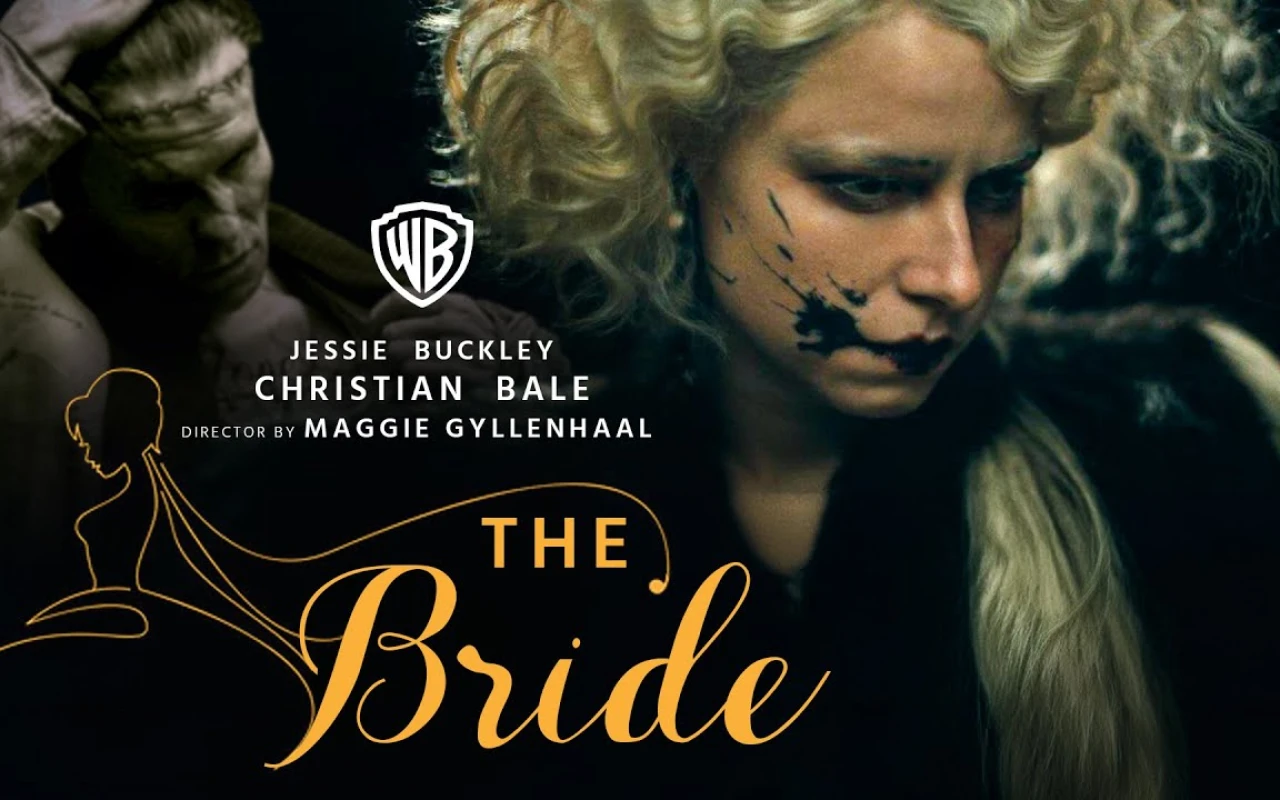
Euphronious, despite doubts, manages to bring the Bride back to life from a dead woman’s body bag. The Bride emerges with striking features—a shock of white hair and a distinctive black birthmark across her face. Frank is overjoyed, but he underestimates the consequences of creating a partner who will soon challenge his control and expectations.
The film employs a fascinating blend of period aesthetics, including black-and-white 1930s movie musicals that Frank adores. Jake Gyllenhaal, playing Ronnie Reed, a matinee idol star from these films, appears in Frank’s imagined world, adding a meta-textual layer to the story. Meanwhile, the Bride struggles to understand her existence, grappling with identity and self-discovery while uncovering that her relationship with Frank is based on deception—she is essentially a living prop meant to stave off his loneliness.
As she gains independence and self-awareness, the Bride becomes a wild, untamable force, leading Frank on a violent, punk-fueled spree that captures headlines and sparks a following of women who see her as a symbol of rebellion and freedom. Their fugitive status brings them to the attention of Detective Jake Wiles, portrayed by Peter Sarsgaard, and his steadfast partner Myrna Malloy, played by Penélope Cruz. Wiles battles self-doubt as an aging detective while Malloy remains his determined anchor.
Among the film’s standout moments is a nightclub scene where Frank and the Bride crash a dance floor, erupting into a choreographed, eerie routine that showcases their otherworldly presence and the film’s inventive visual style. The narrative’s parallels to Bonnie & Clyde are unmistakable, evoking the classic Warner Bros. film’s daring tone and spirit of rebellion.
Jessie Buckley delivers a fearless, captivating performance that anchors the film. Her portrayal is raw and unrestrained, embodying a complex character with no safety nets or reservations. Christian Bale offers one of his most poignant performances in years, humanizing the monster with a mix of vulnerability and desperation. Annette Bening brings depth and nuance to Dr. Euphronious, infusing the role with both intelligence and moral ambiguity. Peter Sarsgaard and Penélope Cruz round out the cast with compelling portrayals of the law enforcers chasing the couple, adding tension and emotional weight.
The film’s production values are exemplary. Cinematographer Lawrence Sher captures both the gritty urban atmosphere and the dreamlike moments with stunning black-and-white and color compositions. Karen Murphy’s period production design and the iconic costume work of Sandy Powell create an immersive 1930s setting that feels authentic yet stylized. The evocative score by Hildur Guðnadóttir complements the film’s tone, blending punk energy with cinematic sophistication, while Dylan Tichenor’s seamless editing maintains a compelling pace throughout.
Seen in glorious IMAX, The Bride! is a cinematic experience that demands a big-screen viewing. It marks a significant leap for Maggie Gyllenhaal as a director, following her smaller-scale debut with 2021’s The Lost Daughter, also starring Buckley. This film confirms her ability to manage large-scale narratives with bold ideas and emotional depth.
The film closes with a dedication from Gyllenhaal “to my daughters,” underscoring the personal and cultural significance of crafting a powerful, female-led story in a genre traditionally dominated by male perspectives. The Bride! is a fiercely original and timely retelling of a timeless story, delivering a fresh perspective on love, identity, and the monsters we all carry within.