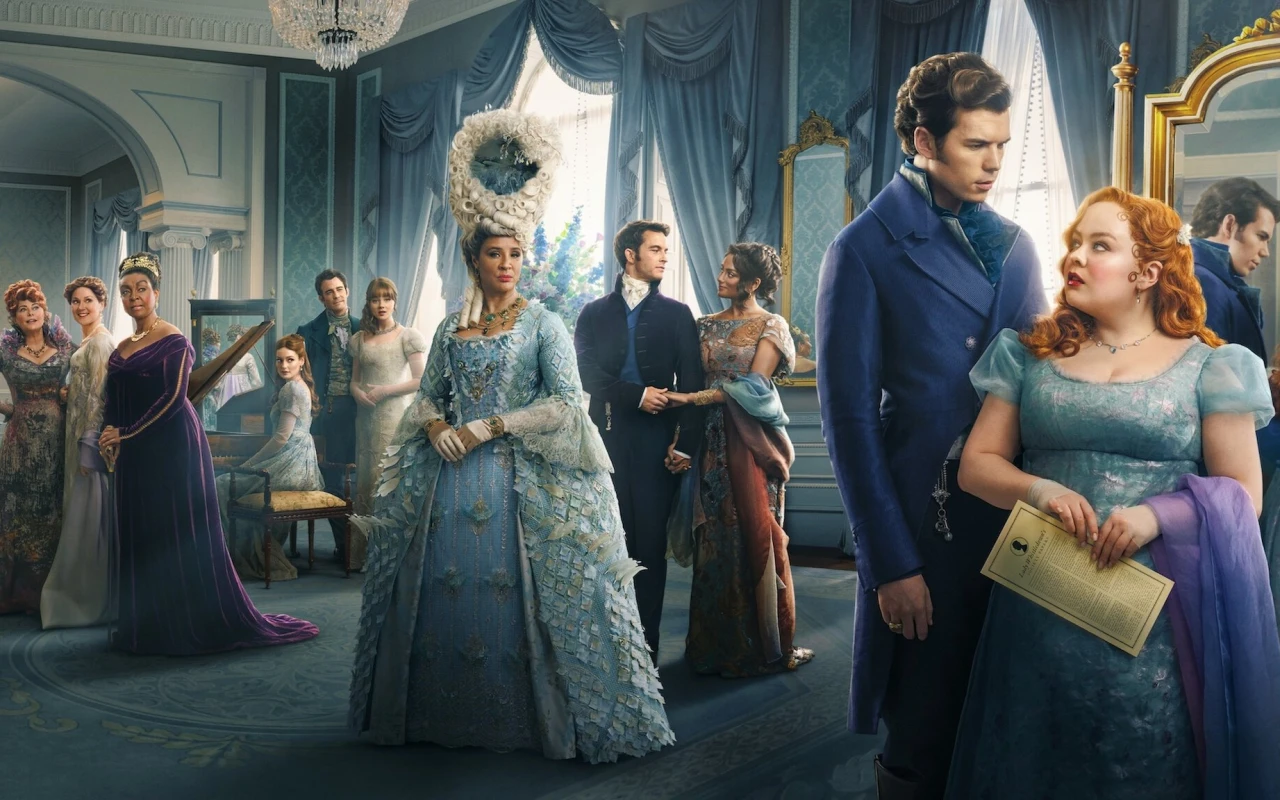
Bridgerton Season 4 dazzles with lavish balls and Benedict's romance, but puzzling storytelling choices leave some character arcs underdeveloped.
- March 4, 2026
AceShowbiz - Bridgerton Season 4 continues to shine a spotlight on another member of the Bridgerton family, bringing all the lavish balls, aristocratic drama, and intricate plotting fans expect. This blend of high society and personal growth is what makes the series so addictive. Scenes that may seem straightforward often contain subtle layers that develop characters and push the narrative forward. Yet, even with all its strengths, the latest season reveals some flaws in storytelling choices that feel puzzling, especially when it comes to character arcs that could have been deeply rewarding but end up underdeveloped or abruptly dropped.
The season’s episodes are divided into two parts. The first half focuses heavily on Benedict Bridgerton (portrayed by Luke Thompson) and Sophie (Yerin Ha), giving their story the attention it deserves. Alongside them, other family members such as Francesca (Hannah Dodd), John (Victor Alli), Michaela (Masali Baduza), the younger siblings Hyacinth (Florence Hunt) and Gregory (Will Tilston), and Eloise (Claudia Jessie) receive screen time to flesh out their individual journeys. However, perhaps the most anticipated storyline was that of the Bridgerton family matriarch, Violet (Ruth Gemmell), who has long been the emotional anchor of the family. Fans expected her to finally step into the spotlight with a significant personal arc. Instead, her plotline falters and is eventually sidelined.
Violet Bridgerton’s Romance Cut Short Without Clear Reason
Volume 1 of Season 4 rekindles the budding romance between Violet Bridgerton and Lord Marcus Anderson (Daniel Francis), a relationship that had been quietly developing since the previous season. This slow-building romance offers a mature and refreshing contrast to the youthful passion dominating the series, providing a calm, hopeful reprieve amid the chaos. It is especially meaningful given Violet’s history, as she navigates life after the death of her husband Edmund. For the first time, she appears to find a partner who truly understands her and accepts her without trying to change her. The story suggests Violet is on a path toward rediscovering herself beyond her role as a widow and mother.
However, this promising romance is abruptly put on hold in Volume 2. Violet’s storyline shifts focus back to her involvement in her children’s lives, and even after she accepts Marcus’ marriage proposal, she hesitates and ultimately decides not to commit. Marcus ends the relationship, leaving viewers with a sense of confusion and disappointment. This sudden halt signals a lack of clear direction for Violet’s arc. It seems the show only values her as a catalyst for her children’s happiness rather than allowing her to pursue her own joy. In effect, the series implies Violet cannot have a fulfilling, personal love story without sacrificing herself to her family’s drama.
While it’s natural for Violet to remain involved in family affairs, making her bear the weight of all the show’s drama while simultaneously denying her the chance at personal happiness feels like a missed opportunity and a lazy narrative choice. Bridgerton had a rare chance to portray a mature woman rediscovering love and happiness after loss, but instead, it retreats into the comfortable trope of the perfect mother figure who is always there for others but never for herself.
This pattern is common in the series: characters outside the young central cast rarely receive fulfilling storylines. Violet’s romance had the potential to be an emotional highlight of the season, demonstrating that love has no age limit and personal reinvention is possible even after tragedy. Instead, her storyline is brushed aside without substantial explanation. The relationship ends quickly and anticlimactically, leaving a sense that the story was started with promise but then buried to manufacture drama without adding meaningful depth. Additionally, Lord Marcus himself remains a largely one-dimensional figure, serving only as a supportive companion rather than a fully fleshed-out character. This raises the question of whether his role will ever evolve.
Was Violet and Marcus’ Romance Destined to End This Way?
Following the release of Season 4, showrunner Jess Brownell addressed Violet and Marcus’ relationship in interviews. She revealed that the outcome was always planned: the couple would not marry. Brownell described Marcus as a catalyst for Violet’s self-discovery rather than a permanent partner. She explained, “I always felt like it was going to not end in a marriage. I felt like Violet – this is the first person she’s dated since her husband died, and I felt like it was – he’s a catalyst, Marcus, for her to realize that she, in fact, has a lot more self-discovery to do.” She also noted that although the chemistry between them was strong, it was too soon for Violet to settle down again.
Back in Season 3, Ruth Gemmell had already suggested Violet’s relationship with Marcus was a journey of self-discovery. Similarly, Daniel Francis explained that the core of the relationship was based on Violet’s emotional honesty and her unique way of expressing love. These insights align with why many viewers rooted for the couple, eager to see a mature love story unfold.
Considering Violet’s character development, the explanation that she requires more time for self-growth is understandable on one level. However, it is also perplexing because Violet is not a young woman uncertain of her feelings; she is a thoughtful mother fully capable of understanding love and making decisions. So why does she suddenly appear indecisive about her own happiness? Fear could be a factor, especially given societal stigma around widows remarrying during that period. Yet this conflicts with her earlier advice to Benedict about pursuing love with Sophie, showing she is not entirely constrained by convention.
Bridgerton has established a pattern where the main romantic couple each season achieves a happy ending. With Violet and Marcus, whose storyline exists only in the show and not in Julia Quinn’s books, the audience was drawn to something fresh and engaging. It’s disappointing that this innovative arc was discarded, justified by the idea that Violet still needs self-discovery before committing, if she ever chooses to.
Ultimately, if Violet never experiences a personal happy ending, her storyline feels futile and unnecessary. This is a squandered opportunity that leaves the audience frustrated rather than fulfilled. The character who could have been a surprising emotional centerpiece is reduced to a plot device, and the potential for a compelling mature romance is lost. Now, fans can only wait to see if Violet’s promised growth will materialize in future seasons and whether she will finally be allowed to pursue her own happiness.
What are your thoughts on Violet and Marcus’ storyline? Join the conversation in the ComicBook Forum and share your perspective on this intriguing but ultimately disappointing arc.