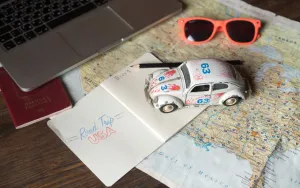
Ditch the stress and build a real cross country road trip itinerary. Practical tips on routing, timing, stops, and budgeting from someone who's done it.
- July 13, 2026
Why Your Road Trip Needs a Skeleton, Not a Script
I once drove from Los Angeles to New York City with nothing but a Spotify playlist and a vague idea that "I'll figure it out." By day three, I was eating gas station jerky in Oklahoma, sleeping in a Walmart parking lot, and desperately wishing I had booked a single hotel room in advance. That trip taught me a hard truth: winging a 3,000-mile drive is romantic in theory but exhausting in practice.
Planning a cross country road trip itinerary isn't about locking yourself into a rigid schedule. It's about building a flexible framework that saves you time, money, and unnecessary stress. The goal is to have enough structure so you never scramble for a place to sleep at 10 PM, but enough freedom to chase a sunset or detour for a quirky roadside attraction.
Most people overplan or underplan. The sweet spot lies in creating a "skeleton itinerary" — a loose daily route with key milestones, pre-booked critical stops (like national park campgrounds), and a few non-negotiable experiences. Everything else is open for improvisation.
Decide Your Route: The Big Three Options
Before you open Google Maps, you need to choose a route philosophy. The United States is vast, and your itinerary will look dramatically different depending on whether you prioritize speed, scenery, or history. There are three main approaches that work for most travelers.
The Northern Route: I-90 and the Great Lakes
If you're starting from the Pacific Northwest or the upper Midwest, Interstate 90 is your backbone. This route takes you through Montana's Glacier National Park, South Dakota's Badlands, and into Chicago before cutting across Ohio and Pennsylvania to New York. The advantage here is cooler temperatures in summer and fewer crowds than the southern options.
Plan for at least 10 to 12 driving days if you want to stop and actually see things. The biggest mistake people make on this route is underestimating the distance between gas stations in Montana and the Dakotas. Always fill up when your tank hits half, especially in remote stretches.
The Southern Route: I-10 and Warm Weather
Starting from Southern California or Arizona? The I-10 corridor runs through Texas, Louisiana, Mississippi, Alabama, and Florida. This route is ideal for winter trips because you'll avoid snow and ice. Highlights include the Alamo in San Antonio, the French Quarter in New Orleans, and the beaches of the Florida Panhandle.
Budget extra time for Texas. It's a full day's drive just to cross the state from El Paso to Houston. Many travelers try to rush this segment and end up exhausted. Instead, plan a stop in Austin or San Antonio to break up the monotony of endless highway.
The Historic Route 66: Nostalgia and Quirks
For the romantic at heart, following remnants of Route 66 from Chicago to Santa Monica is a bucket-list experience. This route takes longer — expect 14 to 18 driving days — but you'll see Americana at its weirdest and most wonderful. Think giant fiberglass dinosaurs, vintage gas stations, and mom-and-pop motels.
Just know that Route 66 isn't a single continuous road anymore. You'll need to hop on and off interstates frequently. Use a dedicated app like the Route 66 Navigation app to avoid getting lost. The payoff is worth the extra planning: you'll drive through small towns that feel frozen in 1950s time capsules.
Set Your Daily Driving Limit Before You Leave
The number one mistake new road trippers make is assuming they can drive 8 or 9 hours every single day. You might be able to do it once, but by day four, your back hurts, your eyes are tired, and you start snapping at your travel partner over snack choices. I learned this the hard way when I tried to push from Denver to Chicago in one 14-hour stretch and ended up pulling over to nap at a rest stop for two hours.
Set a hard cap of 5 to 6 hours of driving per day, or roughly 300 to 350 miles. This gives you time to stop for lunch, take photos, stretch your legs, and actually explore the places you're passing through. If you're traveling with a partner who can share driving duties, you can push to 7 hours, but never exceed that for more than two consecutive days.
Use a tool like Roadtrippers or Furkot to map out your daily mileage and suggest interesting stops along the way. These apps automatically calculate realistic drive times based on road conditions and speed limits, not just straight-line distances. Trust the math — it's better to arrive early with energy to explore than to roll into town at 9 PM too tired to do anything but collapse into bed.
Book Your Sleep Strategically, Not All at Once
Should you book every hotel and campsite months in advance? No. Should you book nothing at all? Also no. The smart approach is to book your first two nights and your last two nights in advance, plus any high-demand locations like national park lodges or popular cities on weekends. Everything in the middle can be booked 24 to 48 hours ahead.
This strategy gives you flexibility while protecting you from disaster. If your car breaks down in Kansas and you lose a day, you won't lose a non-refundable reservation in Missouri. But you also won't end up sleeping in your car because every motel in a 50-mile radius is sold out. I once tried the "no bookings" approach in Wyoming during peak season and ended up paying $300 for a motel room that normally costs $80.
Mix up your accommodations to save money and add variety. Alternate between budget motels (Super 8, Motel 6), campgrounds (KOA, state parks), and the occasional splurge like a boutique hotel or Airbnb. This keeps costs manageable and prevents monotony. For campsites, book through Recreation.gov for federal lands or ReserveAmerica for state parks.
Budget for the Hidden Costs That Sneak Up on You
Everyone remembers to budget for gas and hotels. But the real budget-busters on a cross country road trip are the things you don't think about until you're standing at a register, wallet open. Tolls, for example, can add up fast on the East Coast and around major cities like Chicago and Dallas. Download an app like E-ZPass or Tollsmart to estimate costs and avoid fines for missing payment.
Food is another sneaky expense. Eating three meals a day at restaurants will easily cost $50 to $80 per person daily. Instead, pack a cooler with sandwich supplies, fruit, yogurt, and snacks. Stop at grocery stores for picnic lunches at rest areas or scenic overlooks. Not only will you save money, but you'll also eat healthier than you would at fast food chains every day.
Don't forget about vehicle maintenance. Before you leave, get an oil change, check your tire pressure and tread depth, and inspect your spare tire. Budget $300 to $500 for unexpected repairs on the road, like a blown tire or a dead battery. AAA membership costs about $60 annually and pays for itself the first time you lock your keys in the car or need a tow in the middle of Nevada.
Pack for Comfort, Not Instagram
It's tempting to pack your entire wardrobe "just in case." But you're going to be living out of a car for two to three weeks, and space is precious. The rule is simple: pack for one week of activities, do laundry halfway through, and repeat. Bring layers — a fleece jacket, a rain shell, and a pair of comfortable jeans or hiking pants will cover most weather scenarios.
Your car's back seat is not a storage unit. Keep your passenger seat clear for navigation and snacks, and use a trunk organizer or soft duffel bags that can be squished into tight spaces. Hard-shell suitcases waste space. A mesh laundry bag is worth its weight in gold — toss dirty clothes in it and keep them separate from clean ones.
Tech essentials include a phone mount for your dashboard, a car charger with multiple USB ports, and a physical map as a backup. Cell service drops out in huge stretches of the West and rural Midwest. Download offline Google Maps for each state you'll pass through before you leave home. Also bring a paper atlas — it's not just for nostalgia; it works when your phone dies.
Build in Rest Days or You'll Burn Out
Driving every single day for two weeks is a recipe for resentment and exhaustion. You need rest days — days where you don't drive at all and just explore one place. Plan one rest day for every three to four driving days. This gives your body time to recover, your car a break, and your travel partner a chance to not be trapped in a metal box with you.
Great cities for rest days include Austin, Texas (live music and barbecue), Denver, Colorado (outdoor activities and breweries), Nashville, Tennessee (music and food), and Portland, Oregon (quirky neighborhoods and coffee shops). These cities have walkable downtowns, good public transit, and plenty of free or cheap things to do.
During rest days, do laundry, restock snacks, check your oil and tire pressure, and sleep in. You'll come back to the road refreshed and actually excited to drive again. Skipping rest days might seem efficient, but it almost always leads to mistakes — missed exits, bad driving decisions, and arguments over something stupid like whose turn it is to pick the podcast.
Embrace the Detour: How to Find Hidden Gems Without Wasting Time
The best memories from a cross country road trip rarely come from the planned stops. They come from the random billboard for "World's Largest Ball of Twine" or the handwritten sign pointing to a local pie shop. But you can't chase every shiny object or you'll never reach your destination. The trick is to set a "detour budget" — decide in advance that you'll allow yourself one unplanned stop per day, but only if it adds less than 30 minutes to your total drive time.
Use apps like Atlas Obscura or Roadside America to find quirky attractions along your route before you leave. Add them to your map as "optional" pins. When you're driving and feeling tired or bored, pull up the list and pick one that's close by. This turns a random stop into a mini-adventure rather than a stressful scramble.
Talk to locals. Ask your hotel front desk clerk, the server at your diner, or the person next to you at a gas station what they'd recommend within a 20-minute drive. You'll get tips that no blog or guidebook covers. I once spent an unforgettable evening at a small jazz bar in Memphis because a bartender told me about it. That memory is worth more than any national monument I could have checked off a list.
Remember that the journey itself is the destination. A cross country road trip is not about efficiency — it's about experiencing the vast, weird, beautiful diversity of America. Plan enough to stay safe and sane, but leave room for spontaneity. That's where the magic happens.