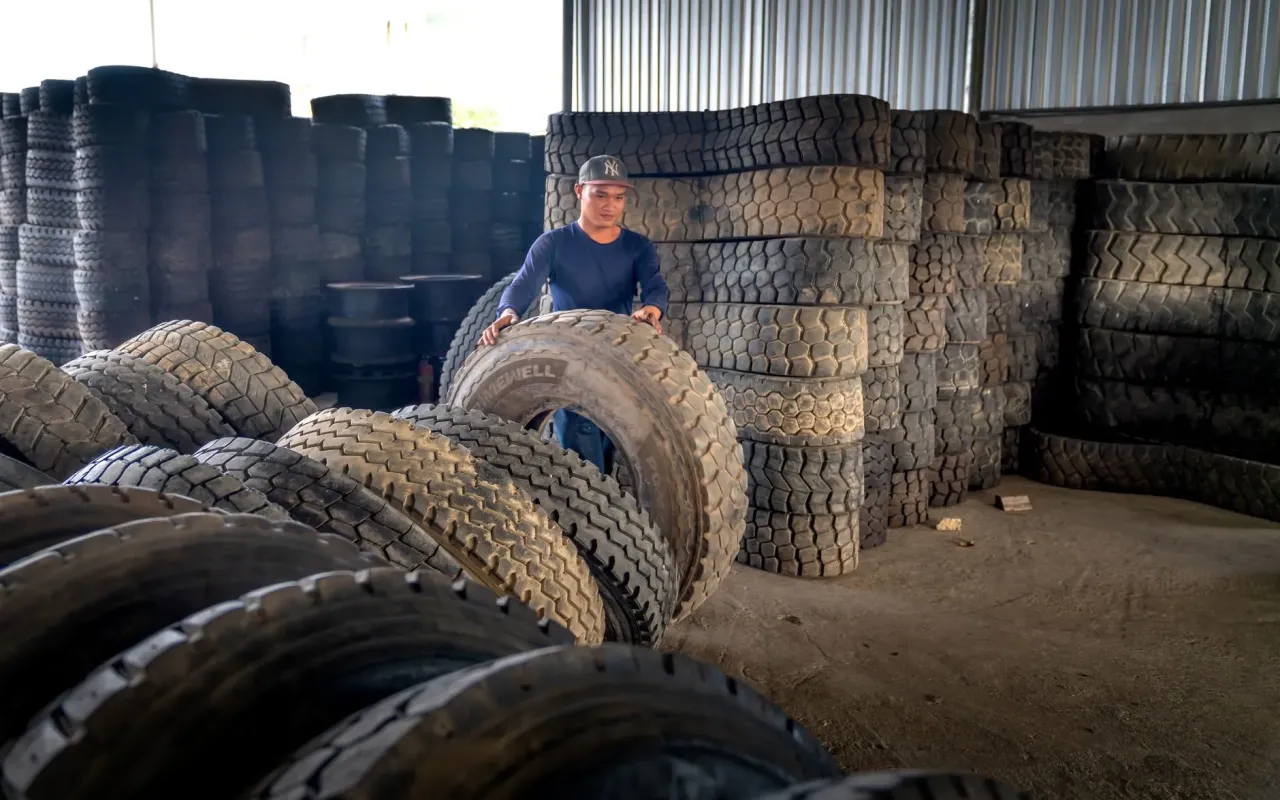
Tire maintenance isn't just about air. Learn why rotation extends tread life, improves safety, and saves you money on replacements.
- July 9, 2026
That Subtle Vibration on the Highway Is a Warning
You're cruising down I-95 at 70 mph, and you feel it—a faint, rhythmic shudder through the steering wheel. Maybe you turn up the radio and ignore it. I did that for three months last year, and it cost me $800 in new tires. That vibration was my front tires screaming for a rotation, and I didn't listen.
Here's the honest truth most car owners don't realize: your tires wear at different rates depending on where they sit on the car. The front tires handle steering, braking, and most of the engine weight (in front-wheel-drive cars). The rears just roll along, living an easier life. After 5,000 miles, that difference in wear is measurable. After 10,000 miles, it's dangerous.
Tire rotation is the simple act of moving each tire to a different position on the car so they wear evenly. It's not glamorous, and it's easy to forget. But ignoring it is like wearing only one shoe for six months and wondering why your gait is off.
Why Uneven Tread Wear Is a Safety Risk, Not Just a Money Issue
Most people think about tire rotation only when they see a bald spot or feel a pull to one side. By then, the damage is done. Uneven tread wear means reduced traction in rain, longer stopping distances, and a higher chance of hydroplaning at highway speeds. The National Highway Traffic Safety Administration (NHTSA) estimates that tire-related crashes cause over 11,000 accidents annually. Many of those could be prevented with basic maintenance.
Let's break it down with a real example. If your front tires have 6/32nds of tread and your rears have 3/32nds, your car handles differently in a panic stop. The rears lose grip first, causing the back end to slide out. That's a spin-out, not a simple stop. Rotating every 5,000 to 7,500 miles keeps all four tires within a safe tread range.
Think of it this way: you wouldn't run a marathon with one shoe sole worn down to the foam. Your car's tires are its only contact with the road. Uneven wear compromises that contact, and your safety depends on it.
Actionable takeaway: Check your tread depth with a penny. Insert it with Lincoln's head down. If you can see the top of his head, your tread is below 2/32nds—time for new tires. But if you see uneven wear between front and rear, you're overdue for a rotation.
How Often Should You Rotate? (And Why Your Owner's Manual Might Be Wrong)
Every car manufacturer prints a recommended rotation interval in the owner's manual. For most vehicles, it's every 5,000 to 7,500 miles. But here's the catch: that interval assumes perfect driving conditions—smooth highways, moderate temperatures, and no potholes. Real life is different.
If you drive in a city with stop-and-go traffic, haul heavy loads, or live where roads are rough (looking at you, Northeast winters), you should rotate every 4,000 to 5,000 miles. I rotate mine every oil change, which is every 5,000 miles. That way, I never forget. It's a simple habit that adds zero extra trips to the shop.
A common mistake is ignoring tire rotation until you buy new tires. That's like waiting until your teeth hurt to see a dentist. By the time you notice uneven wear, you've already lost thousands of miles of usable tread life. A $40 rotation (or free if you bought tires from a shop that includes it) can extend tire life by 20-30%. On a $600 set of tires, that's $120 to $180 saved.
Actionable takeaway: Mark your calendar or set a phone reminder every 5,000 miles. Or, make it a rule: rotate every time you get an oil change. Most shops will do both in under an hour.
The Right Rotation Pattern for Your Car (It's Not One-Size-Fits-All)
Not all cars use the same rotation pattern. Your front-wheel-drive sedan needs a different pattern than your rear-wheel-drive truck or all-wheel-drive SUV. Using the wrong pattern can actually accelerate uneven wear.
Front-Wheel Drive (Most Cars)
Your front tires do the heavy lifting—steering, acceleration, and braking. They wear faster on the edges. The standard pattern is to move the front tires straight back to the rear, and cross the rear tires to the front. So left rear goes to right front, right rear goes to left front. This evens out the wear patterns.
Rear-Wheel Drive (Trucks, Sports Cars)
Here, the rear tires handle power delivery. They wear faster in the center. The pattern reverses: move rear tires straight forward, and cross the front tires to the rear. This balances the load.
All-Wheel Drive (AWD)
AWD systems are sensitive to tire diameter differences. Even a 2/32nds difference between tires can stress the drivetrain and cause costly repairs. Rotate every 5,000 miles without fail. Use a cross pattern: front tires cross to the rear, rear tires cross to the front. Never mix tire sizes or tread depths on AWD vehicles.
Actionable takeaway: Check your owner's manual for the exact pattern, or ask your mechanic to show you. Most tire shops have a diagram. Take a photo of it for your records.
What Happens If You Don't Rotate? (The $800 Lesson)
I learned this the hard way. I drove a 2015 Honda Civic for two years without a single rotation. The front tires wore down to 2/32nds while the rears still had 6/32nds. I thought I could just buy two new front tires and save money. Wrong.
Here's the problem: new tires have deeper tread than old ones. On a front-wheel-drive car, putting two new tires on the front creates a handling imbalance. The rear tires have less grip, so the car oversteers in corners. Plus, the new tires wear faster because they're on the drive wheels. I ended up buying four new tires anyway, plus paying for alignment and mounting. Total: $800.
If I had rotated every 5,000 miles, all four tires would have worn evenly and lasted 50,000 miles instead of 30,000. That's 20,000 extra miles of life—roughly two extra years of driving. The math is simple: a $40 rotation every 5,000 miles costs about $320 over 40,000 miles. Replacing a set of tires early costs $600 to $1,000. You do the math.
Actionable takeaway: If you're buying a used car, ask the seller for the rotation history. If they can't provide it, budget for a rotation and alignment immediately. You'll save money down the road.
Beyond Rotation: Two Checks That Double Your Tire's Lifespan
Rotation alone isn't enough. Two other maintenance tasks work hand-in-hand with rotation to maximize tire life: proper inflation and alignment.
Check Tire Pressure Monthly
Tires lose about 1 PSI per month naturally. Under-inflated tires wear faster on the edges and reduce fuel economy by up to 3%. Over-inflated tires wear faster in the center and reduce traction. Use a digital gauge (not the gas station's iffy one) and check when tires are cold. The correct pressure is on the sticker inside your driver's door jamb, not the sidewall of the tire.
Get an Alignment Every 12 Months
Alignment issues cause uneven wear that rotation can't fix. If your car pulls to one side or the steering wheel is off-center when driving straight, get an alignment. A $100 alignment can prevent a $600 premature tire replacement. I do mine annually, usually in spring after pothole season.
Actionable takeaway: Combine these checks with your rotation schedule. Every 5,000 miles: rotate, check pressure, and inspect for alignment issues. It takes 30 minutes and saves you hundreds.
When to Skip Rotation and Just Buy New Tires
There are times when rotation doesn't make sense. If your tires are already near the end of their life (tread below 3/32nds), rotating won't save them. You're better off replacing all four. Also, if you have a puncture that's been repaired, rotating that tire to a different position can stress the repair. Check with your tire shop.
Another scenario: if you have a staggered fitment (different sizes front and rear, common on sports cars like a BMW M3 or Mustang GT), you can't rotate side to side. You can only move front to back on the same side. In that case, just monitor wear and replace as needed. But for 90% of drivers, rotation is a no-brainer.
Actionable takeaway: If your tires are older than six years (check the DOT code on the sidewall), replace them regardless of tread depth. Rubber degrades over time, and old tires are a safety risk even with good tread.
Making Tire Rotation a Habit, Not a Chore
The biggest barrier to tire maintenance isn't cost or knowledge—it's forgetfulness. We're busy. We have jobs, kids, and Netflix. But a simple system works: tie rotation to another regular event. Oil change. Season change. Your birthday. Whatever sticks.
I use a note on my phone's calendar that repeats every 5,000 miles. It takes 10 seconds to set up. When the reminder pops, I call my local tire shop and schedule it. They do it while I wait. No hassle, no excuses.
And if you buy tires from a shop that offers free rotations for life (like Discount Tire or Costco), you have zero reason to skip it. You're literally leaving money on the table. Use that service. Your tires—and your wallet—will thank you.