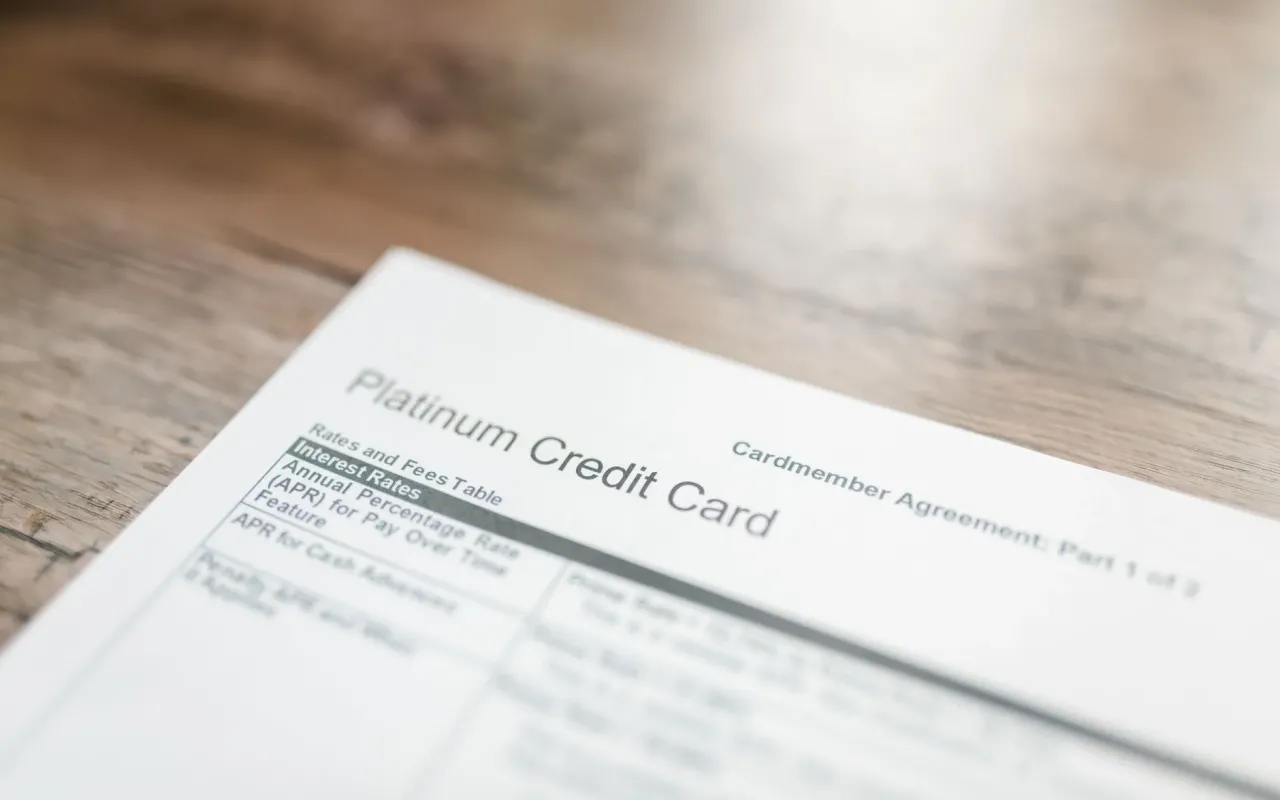
Stop paying sky-high interest. Learn the exact script and strategy to call your credit card company and negotiate a lower APR. Real results, not fluff.
- July 9, 2026
AceShowbiz - You know that sinking feeling when you open your credit card statement and see a balance that just won't budge, despite making payments? That's the interest—compounding daily, eating your money like termites in a wooden house. The average credit card APR in the U.S. recently hit over 22%, according to Federal Reserve data. But here's the kicker: most people never even ask for a lower rate, and banks are actually willing to negotiate. They're counting on you to stay quiet and pay.
I've been there. I once carried $4,500 on a card with a 24.99% APR. Minimum payments felt like throwing water into a leaky bucket. Then I called, spent 12 minutes on the phone, and got it dropped to 14.99%. That single call saved me roughly $450 in interest over the next year. You can do this too—if you know what to say and how to say it. Let's walk through the exact process.
Why Credit Card Companies Will Lower Your Rate
Banks are not in the business of being nice. They're in the business of making money. So why would they ever agree to lower your interest rate? Simple: because keeping you as a paying customer is more profitable than losing you to a balance transfer or, worse, having you default. When you threaten to leave, you hold real leverage.
Think about it from their perspective. If you transfer your $5,000 balance to another card offering 0% for 18 months, your current bank loses all that interest revenue. They also lose the chance to sell you other products like loans or insurance. A small rate reduction—say, 5%—is a cheap price for them to keep you loyal. Data from CreditCards.com shows that nearly 75% of people who asked for a lower rate got one, even if it wasn't the full amount they wanted.
The key is timing. Your best shot is when you have a good payment history (at least six months of on-time payments) and a credit score above 680. But even if your score is lower, you can still try—especially if you've been a long-term customer. Banks value tenure because it signals stability. I once helped a friend with a 640 score get a 3% reduction just by mentioning she'd been a customer for eight years.
Actionable tip: Check your credit score for free on sites like Credit Karma or through your bank's app before you call. If it's above 700, you have strong leverage. If it's lower, focus on your payment history and loyalty as your main arguments.
How to Prepare Before You Pick Up the Phone
You wouldn't walk into a job interview without researching the company, so don't call your credit card issuer without a game plan. Preparation is the difference between getting a "no" and a "let me see what I can do." Start by gathering three things: your current APR, your account standing, and a specific number you want to ask for.
Log into your online account and find the section that shows your interest rate. It's usually buried in the terms or under "Account Details." Write it down. Then, look at your recent statements. Have you paid on time for the last six months? Have you ever missed a payment? If you're clean, you're in a strong position. If you have one late payment, wait two more months of perfect payments before calling.
Next, research competitor offers. Go to sites like Bankrate or NerdWallet and find a balance transfer card with a lower APR—ideally 0% for 12-18 months. Print or save the offer details. This is your ammunition. When you call, you'll say, "I have an offer for 0% APR for 15 months from a competitor. Can you match or beat that?" Without this, you're just asking nicely. With it, you're negotiating from power.
Finally, decide your target rate. Don't just ask for "lower." Be specific. If your current rate is 22%, ask for 14% or 15%. That's a realistic drop for someone with decent credit. If they say no, have a backup ask: "Can you at least reduce it to 18%?" This gives them a face-saving middle ground.
Actionable tip: Write down your script on a notecard. Include your account number, current APR, competitor offer details, and your target rate. Keep it next to the phone. You'll sound confident and prepared, which reps respect.
The Call: What to Say and When to Push Back
Now comes the moment of truth. Call the number on the back of your card and ask for the "Retention Department" or "Customer Retention." Don't just talk to the first person who answers—they're often a general customer service rep with limited power. Retention specialists have authority to lower rates, waive fees, and offer perks. If the first rep says no, politely ask, "Can you transfer me to someone who can review my account for a rate adjustment?"
When you get the right person, use this exact opening: "Hi, I've been a customer for [X years] and I've always paid on time. I'm looking at my interest rate, and it's [current APR]%. I've received an offer from [competitor] for [lower rate]. I'd prefer to stay with you, but I need a rate that's competitive. Can you lower my APR to [target]%?"
Notice what you're doing here: you're leading with loyalty, stating facts, and presenting a clear ask. You're not complaining or begging. You're a valued customer making a business case. The rep will likely put you on hold to check your account. When they come back, they might offer a smaller reduction than you asked for. That's okay—take it. But if they say no, don't hang up. Try this: "I understand. Is there any way you can review a partial reduction? Even 3% would make a difference for me. If not, could you waive my annual fee or offer a lower rate on a different card?"
One woman I coached called Chase with a 25.99% rate and a $6,000 balance. She used this script, and the rep initially said no. She calmly asked to speak to a supervisor, mentioned she was considering a balance transfer, and within 10 minutes, got a drop to 17.99%. The key was she didn't argue—she just presented a choice: "Help me stay, or I'll leave."
Actionable tip: If you get a "no" from the first rep, ask for a supervisor. Supervisors have even more flexibility. Be polite but firm. Say, "I appreciate your help, but I'd like to escalate this to someone who can make a final decision on rate adjustments." Most will transfer you without pushback.
What to Do If They Refuse to Lower Your Rate
Sometimes, despite your best efforts, the bank says no. Maybe your credit score is too low, or you haven't been a customer long enough. Don't panic—this isn't the end of the road. You have two powerful alternatives: a balance transfer or a debt management plan. Both can effectively lower your interest without the bank's permission.
Balance transfers are straightforward. Find a card with a 0% introductory APR for 12-18 months. Transfer your balance, pay a 3-5% fee (usually worth it if you pay off the balance during the promo period), and then attack the debt aggressively. For example, if you transfer $5,000 at a 3% fee ($150), you save hundreds compared to paying 22% interest for a year. Just be careful: after the promo period, the rate jumps to the regular APR, so set a payoff plan.
If your credit isn't good enough for a balance transfer card, consider a debt management plan through a nonprofit credit counseling agency. These agencies (like the National Foundation for Credit Counseling) negotiate with your creditors to lower interest rates to 8-10% on your behalf. You make one monthly payment to them, and they distribute it. The catch? You close the credit cards, which can temporarily hurt your score, but the savings are massive. I've seen people drop from 25% to 9% this way.
Another option is to simply pay more than the minimum. This sounds obvious, but it's often overlooked. If you can double your minimum payment, you slash the time it takes to pay off the balance and reduce total interest. Use a calculator to see the difference: paying $200 instead of $50 on a $3,000 balance at 22% saves you over $1,200 in interest over two years.
Actionable tip: If a balance transfer isn't an option, call a nonprofit credit counselor. The call is free, and they can often negotiate rates you couldn't get alone. Just avoid for-profit "debt settlement" companies—they charge high fees and can damage your credit.
How to Keep Your Lower Rate and Avoid Future Hikes
Congratulations—you got a lower rate. But don't celebrate and forget. Credit card companies can raise your rate again if you miss a payment, your credit score drops, or they change their terms. You need to protect your new rate like a fragile egg. That means paying on time, every time, even if it's just the minimum.
Set up automatic payments for at least the minimum due. This is the single most effective way to avoid late fees and rate hikes. Most banks let you schedule this online in two minutes. Also, keep your credit utilization low—ideally under 30% of your limit. If you have a $10,000 limit, keep your balance below $3,000. High utilization signals risk to lenders, and they may trigger a rate review.
Monitor your statements for any notice of rate changes. Banks are required to give you 45 days' notice before raising your rate for certain reasons. If you see one, you have the right to opt out and close the account at the current rate (though you'll need to pay off the balance at that rate). Don't ignore these letters—they're your early warning system.
Finally, consider using a different card for everyday spending. Keep the card with the lower rate for emergencies or balance transfers only. Use a rewards card (paid off monthly) for regular purchases. This prevents you from racking up new debt on the low-rate card, which keeps your balance manageable and your rate safe.
Actionable tip: Check your credit report for free at AnnualCreditReport.com once a year. Errors on your report can lower your score and trigger rate hikes. Dispute any mistakes immediately—it's your right under the Fair Credit Reporting Act.
Timing Your Call for Maximum Success
Not all days are created equal for negotiating. The best time to call is Tuesday through Thursday, between 10 AM and 2 PM in the bank's time zone. Why? Mondays are chaotic with weekend backlog, Fridays everyone's checked out, and early mornings or late evenings often have less experienced staff. Midweek mid-morning hits the sweet spot when retention specialists are fresh and less rushed.
Seasonal timing matters too. Call after you've had the card for at least six months, but also consider calling right after you've made a large payment or paid off a previous balance. This shows you're responsible and have capacity to leave. I called Capital One the day after I paid off a $2,000 balance, and the rep immediately offered a 5% reduction without me even asking for a specific number.
Avoid calling during peak holiday seasons (November-December) or right after a rate hike announcement. Banks are flooded with calls then, and reps are more likely to stick to scripts. Instead, aim for late January or early February, when many people are recovering from holiday spending and banks are more willing to retain customers who might transfer balances.
One more insider trick: if you've been denied a rate reduction before, wait at least three months before trying again. Your credit score or payment history may have improved, or the bank may have new promotions. Persistence pays off—literally.
Actionable tip: Set a calendar reminder for exactly six months from now to call again. Even if you got a reduction, you might get another. I've seen people stack reductions over time, dropping from 24% to 12% over two years by asking once per year.