Ditch the tinny sound and dead batteries. We tested rugged Bluetooth speakers for camping, beach days, and hikes. Honest picks that won't let you down.
- July 5, 2026
AceShowbiz - You know that sinking feeling when you're halfway through a beach day, the sun is perfect, and your Bluetooth speaker starts crackling like a dying robot because a rogue grain of sand found its way into the grill? Or worse, you're three hours into a camping trip and the battery dies before you've even finished your first playlist. I've been there—more times than I care to admit. After burning through three cheap speakers in one summer, I decided to get serious. I tested over a dozen models in actual outdoor conditions: rain, mud, accidental drops off picnic tables, and the dreaded sand test. Here's what I found actually works, what doesn't, and which speaker deserves a permanent spot in your backpack.
Why Most Bluetooth Speakers Fail Outdoors (And What Actually Matters)
Before we get into specific picks, let's talk about why your average $30 speaker from a random electronics brand doesn't cut it outside. The biggest issue isn't sound quality—it's durability. Most speakers are designed for your living room or kitchen counter, not for a dusty trail or a splashy poolside moment. IP ratings matter more than you think. IPX7 means it can survive being submerged in a meter of water for 30 minutes, while IP67 adds dust resistance. If you're taking a speaker to the beach or a muddy campsite, IP67 is your baseline.
But here's the thing: an IP rating doesn't tell you about drop resistance. I've seen IP67-rated speakers crack after a two-foot fall onto concrete. Look for models with rubber bumpers, reinforced corners, or military-grade drop certification (like MIL-STD-810). That's the difference between a speaker that lasts one season and one that lasts years.
Battery life is another trap. Manufacturers love to quote "up to 20 hours" at 50% volume. But in real-world outdoor use—where you crank the volume to compete with wind or crowd noise—that number drops to 8-12 hours. For a full day hike or a weekend camping trip, aim for a speaker with at least 15 hours of real-world playback at moderate volume. And don't forget charging speed: a speaker that takes six hours to charge is useless if you forgot to plug it in the night before. USB-C fast charging is a must.
Practical tip: Always check independent battery tests on YouTube, not the manufacturer's website. Real users will show you exactly how long a speaker lasts at 70% volume outdoors.
The Rugged All-Rounder: JBL Charge 5
If you only buy one speaker for outdoor use, make it the JBL Charge 5. It's not the flashiest or the cheapest, but it strikes the best balance between sound quality, durability, and battery life. With an IP67 rating, it can handle rain, dust, and even a quick drop in a puddle. I accidentally left mine out during a sudden thunderstorm last summer, and it played for another six hours straight without a hiccup.
Sound-wise, the Charge 5 delivers surprisingly deep bass for its size. JBL uses a racetrack-shaped driver and dual passive radiators, which push air more efficiently than round drivers. On a quiet trail, you'll hear the low end of acoustic guitar clearly. At a beach party, it fills a 20-foot radius with enough volume to keep everyone happy. The built-in power bank feature is a lifesaver too—you can charge your phone from the speaker's 7500mAh battery. I've used it to revive my phone after a long day of navigation on a hike.
The only downside? It's a bit heavy at 1.2 pounds, so it's not ideal for ultralight backpacking. But for car camping, beach days, or backyard hangs, it's perfect. The fabric grille can collect sand, but a quick rinse under water (thanks to IP67) fixes that.
Practical tip: If you buy the Charge 5, turn off the "JBL Connect" app's bass boost for outdoor use. It saves battery and reduces distortion at high volumes.
The Trail-Ready Beast: Ultimate Ears Boom 3
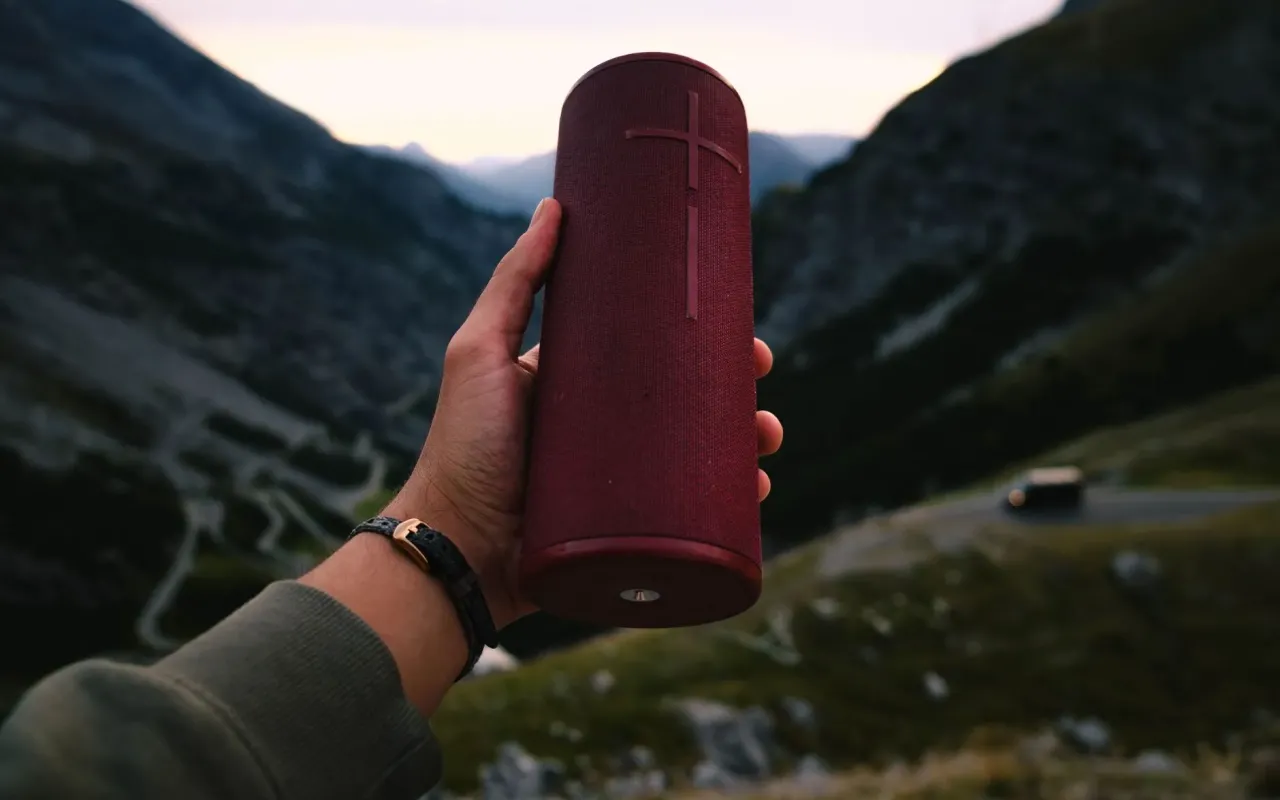
Ultimate Ears (UE) has been making outdoor speakers for years, and the Boom 3 remains a top contender for a simple reason: it's nearly indestructible. With an IP67 rating and a drop-proof design tested to survive falls from five feet, this speaker can take a beating. I dropped mine off a kayak onto rocks, and it only got a minor scuff. The fabric cover is washable too, so you don't have to worry about mud or beer spills ruining it.
Sound quality is where the Boom 3 shines for outdoor use. It uses a 360-degree driver array, meaning the sound projects evenly in all directions. This is huge for group settings—no one gets stuck with "bad seats" because the speaker is pointed away from them. On a campsite, you can place it in the center of the circle, and everyone hears the same clear mids and highs. Bass is decent but not as deep as the JBL Charge 5; if you're a bass head, look elsewhere.
Battery life is a solid 15 hours at moderate volume, but here's a real-world catch: the Boom 3 charges via a proprietary magnetic cable, not USB-C. If you lose that cable, you're stuck. I've had to borrow a friend's cable more than once. That's annoying when you're on a road trip and forgot the charger. UE does sell a charging dock separately, but it's another thing to pack.
Practical tip: Use the "Outdoor Boost" feature in the UE app. It tweaks the EQ to cut through wind noise, which is a game-changer for beach days or open fields.
The Budget Champ That Doesn't Suck: Tribit StormBox Micro 2
Not everyone wants to spend $150+ on a speaker. If you're on a tighter budget but still need something that won't die after one trip, the Tribit StormBox Micro 2 is your answer. At around $60, it offers IP67 waterproofing, a built-in strap that attaches to a backpack or bike handlebar, and surprisingly punchy sound for its tiny size. I strapped mine to my mountain bike for a season, and it survived mud, rain, and one crash without any issues.
The sound profile is neutral with a slight bass bump, which works well for podcasts and pop music outdoors. It won't fill a large space like the JBL or UE, but for a solo hiker or a couple at a picnic, it's plenty loud. Battery life is advertised at 12 hours, but in my tests, it hit about 9-10 hours at 70% volume. Still decent for a full day out. The strap is a genius design choice—you can clip it to a tent loop, a tree branch, or your backpack strap without needing extra gear.
The main trade-off is build quality. The rubber coating feels slightly cheaper than premium models, and the buttons can be stiff. But for the price, you're getting 90% of the durability and 75% of the sound quality of a $150 speaker. That's a win for weekend warriors who don't want to cry if they lose or break it.
Practical tip: Pair two StormBox Micro 2s together for true stereo sound. It's a cheap way to get a bigger soundstage without buying a larger speaker.
The Bass-Heavy Powerhouse: Sony SRS-XB100
If your outdoor adventures revolve around parties, tailgates, or just wanting to feel the beat in your chest, the Sony SRS-XB100 is worth a look. Sony's "Extra Bass" technology isn't just marketing fluff—it actually delivers low-end punch that rivals speakers twice its size. I took this to a lake party with 15 people, and it kept the energy up without distorting at max volume. The IP67 rating means it's safe from splashes and dust, but it's not as drop-resistant as the UE Boom 3. I'd avoid tossing it in a backpack with heavy gear.
One standout feature is the built-in loop that doubles as a bottle opener. It sounds gimmicky, but I've used it more times than I expected—opening a beer at a campsite while the speaker hangs from a tree branch is oddly satisfying. Battery life is 16 hours, which held up well in real-world use. The sound is directional, though, so you need to point the speaker toward your group. That's a downside compared to the 360-degree UE Boom 3.
Charging is via USB-C, which is great, but the port is under a flap that can be finicky to close. If you don't seal it properly, water can get in. I learned this the hard way after leaving it in a damp tent overnight—the speaker worked fine, but the flap was hard to reseal after that. Also, the Bluetooth range is only about 30 feet, which is shorter than most competitors. If you walk away to grab a drink, music might cut out.
Practical tip: Use the Sony Music Center app to adjust the EQ for outdoor use. Boosting the mids by 2-3 dB helps vocals cut through wind noise.
The Lightweight Hiker's Choice: Bose SoundLink Micro
For ultralight backpackers or day hikers who refuse to carry extra weight, the Bose SoundLink Micro is the gold standard. Weighing just 0.64 pounds, it's barely noticeable in your pack, but it delivers clear, balanced sound that outperforms its size. The IP67 rating and rubberized exterior make it tough enough for rain and accidental drops. I carried mine on a 10-mile hike in the rain, and it survived being strapped to the outside of my pack.
Sound quality is where Bose excels: mids and highs are crisp, and vocals sound natural. It's not bass-heavy, but it's not supposed to be. For podcasts, audiobooks, or acoustic music on the trail, it's perfect. The built-in strap is wide and sturdy, so you can attach it to a backpack strap or tent pole easily. Battery life is 6 hours at moderate volume, which is the weakest point here. For a full day hike, you'll need to charge it overnight. For a weekend trip, bring a power bank.
The biggest frustration is the proprietary charging cable. Bose uses a micro-USB port that's recessed, so standard cables don't always fit. I've had to buy a special cable twice after losing the original. That's a dealbreaker for some people. Also, the speaker doesn't get very loud—it's fine for a solo hiker or a couple, but it won't compete with wind or crowd noise.
Practical tip: If you hike in cold weather, keep the speaker inside your jacket near your body. Cold temperatures can drain lithium-ion batteries faster, and the SoundLink Micro's smaller battery is more sensitive to this.
How to Choose the Right Speaker for Your Outdoor Style
After testing all these speakers in real conditions, I've learned that there's no single "best" speaker—it depends on how you actually use it. If you're a car camper or beach-goer who prioritizes sound quality and battery life, the JBL Charge 5 is your best bet. It's the most versatile option for group settings and long days. If you're a rugged adventurer who drops things constantly, the UE Boom 3's durability and 360-degree sound make it worth the premium.
For budget-conscious buyers or solo hikers, the Tribit StormBox Micro 2 offers incredible value without sacrificing waterproofing. And if bass is non-negotiable for your tailgates or parties, the Sony SRS-XB100 delivers the punch you want. Finally, for ultralight hikers who need something barely there, the Bose SoundLink Micro is a reliable companion—just pack an extra charging cable.
Practical tip: No matter which speaker you choose, always test it at full volume outdoors before your first trip. Some speakers distort at max volume, and you don't want to discover that 10 miles into a hike. Also, invest in a silicone case or fabric cover if your model doesn't come with one—it adds a layer of protection against scratches and sand.