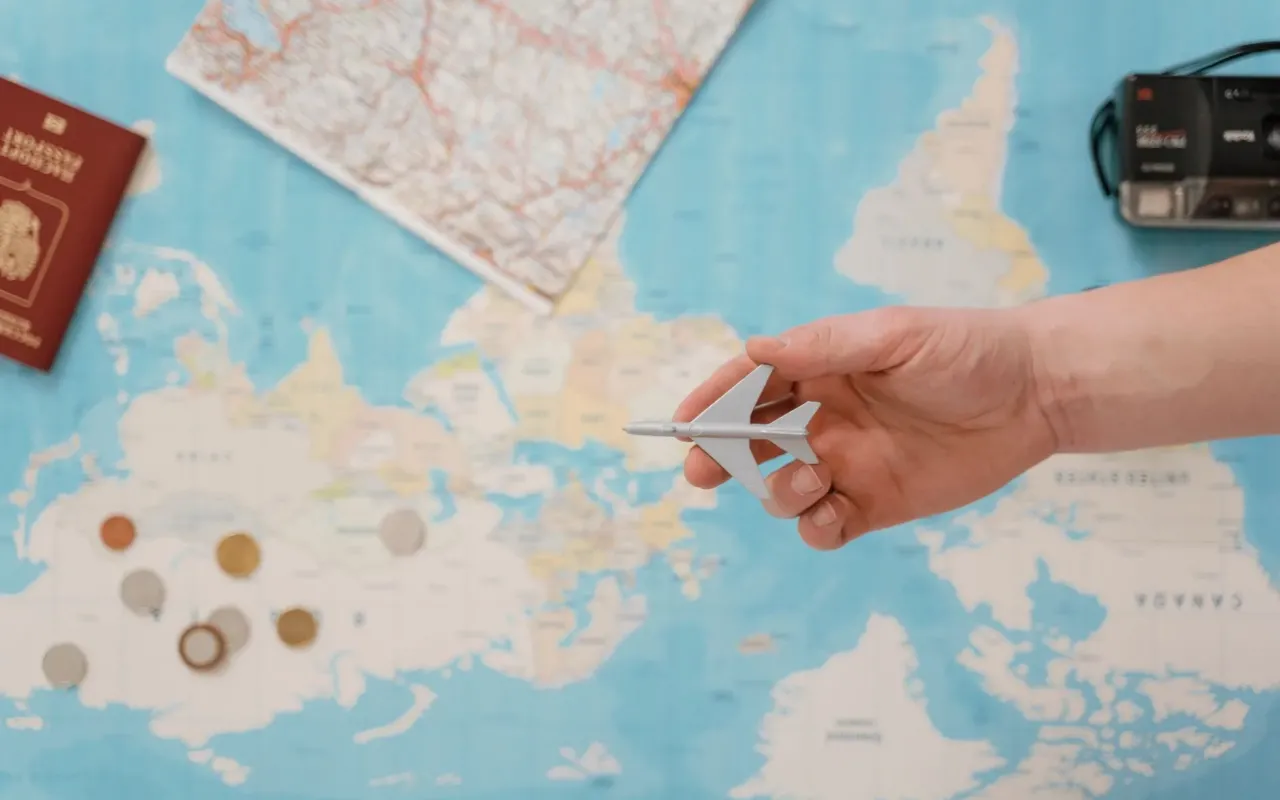
Stop dreaming of multi-city trips. Here's a practical, no-nonsense guide to planning a multi destination trip on a budget without sacrificing adventure.
- June 23, 2026
The Airport Sucks. Your Wallet Doesn't Have To.
You know that feeling when you see a flight deal to a city you love, but then you realize you'd have to fly home the same day? Or when you're scrolling Instagram and see someone's "three countries in two weeks" post, and you think, "That's either a lie or a $5,000 credit card bill"? I've been there. The reality is that multi-destination travel often gets a reputation for being either impossibly expensive or a logistical nightmare. But here's the truth: you can absolutely plan a multi destination trip on a budget without sleeping in hostels or eating instant noodles for a week. It just requires a different kind of thinking—one that prioritizes strategy over spontaneity.
Let's be honest: the biggest barrier isn't the cost of the flights themselves. It's the hidden costs—the overpriced airport food, the last-minute hotel booking, the train ticket you forgot to buy in advance. The good news? You can cut those costs by 30-50% with a little planning. According to a 2026 study by the travel analytics company Skyscanner, travelers who book multi-city itineraries (instead of separate one-way tickets) save an average of 23% on airfare alone. That's real money you can spend on experiences, not on logistics. So, let's break down exactly how to do this without losing your mind—or your savings.
Why Most People Fail at Budget Multi-Destination Travel
The biggest mistake I see people make is trying to "wing it." They book a flight to Paris, then decide they want to go to Rome, and suddenly they're paying $400 for a last-minute Ryanair ticket because they didn't check the dates. Or they think "budget travel" means staying in a $20 hostel in Barcelona, but then they spend $60 on taxis because the hostel is far from everything. The math doesn't add up. The key to planning a multi destination trip on a budget is to treat your itinerary like a puzzle—every piece needs to fit together without leaving a gap that costs you money.
Another common failure: overpacking the schedule. I once met a couple who tried to visit seven cities in ten days. By day four, they were exhausted, eating overpriced airport sandwiches, and fighting about directions. They spent more on transit than they did on actual experiences. The truth is that budget travel isn't about seeing everything—it's about seeing the right things efficiently. Research from the travel blog Nomadic Matt suggests that for every additional city you add to a trip, your per-day cost increases by roughly 15% due to transit, accommodation turnover, and food waste. So, the first rule of budget multi-destination travel is simple: fewer cities, deeper experiences.
Here's a practical tip to start: limit yourself to three destinations per trip, max. If you have two weeks, that's roughly 4-5 days per city. This gives you enough time to actually explore without feeling rushed, and it reduces the number of flights or trains you need to book. Your wallet will thank you.
The "Hub and Spoke" Strategy
Instead of hopping from city to city like a pinball, consider the "hub and spoke" approach. Pick one central city (like Barcelona, Madrid, or Amsterdam) and use it as your base. Then, take day trips to nearby destinations. For example, if you base yourself in Barcelona, you can take a 2-hour train to Montserrat, a 1-hour bus to Sitges, or even a low-cost flight to Mallorca for a day. This saves you the cost of checking in and out of hotels multiple times, plus you only pay for one long-haul flight. The savings on accommodation alone can be 20-30% because you're not paying for multiple check-in fees or late-night taxi rides.
I did this myself when I visited Portugal. I stayed in Lisbon for a full week and took day trips to Sintra, Cascais, and even a quick flight to Porto. My total accommodation cost was $350 for the week, compared to $600 if I had booked separate hotels in each city. The trick is to choose a hub that has good public transport connections to other places you want to see. Check Rome2Rio or Omio before you book your base city to see what's within a 2-3 hour radius.
Booking Flights Without Breaking the Bank
Here's where most people lose money: they book flights as separate one-way tickets. For example, they book New York to Paris, then Paris to Rome, then Rome back to New York. The total? Often $800-$1,200. But if you use a multi-city booking tool (like Google Flights, Skyscanner, or Kayak), you can search for "New York to Paris, then Paris to Rome, then Rome to New York" as a single itinerary. I've seen these itineraries cost as little as $500-$700 for the same route. The reason is that airlines price multi-city bookings as a single ticket, so you avoid the "one-way penalty" that often doubles the price of individual flights.
Another hack: be flexible with your airports. If you're flying into Europe, consider landing in a cheaper hub like Dublin, Madrid, or Milan instead of London or Paris. Then, take a budget airline (like Ryanair, EasyJet, or Vueling) to your first destination. For example, a flight from New York to Milan might cost $400, while a flight to Paris costs $600. From Milan, you can take a $30 train to Paris or a $50 flight to Barcelona. The savings add up quickly. Just remember to factor in the cost of getting from the airport to the city center—budget airlines often fly into smaller, more distant airports.
One more tip: book your flights at least 6-8 weeks in advance for the best prices. According to a 2026 report from the travel app Hopper, prices for international multi-city itineraries increase by an average of 10% per week after the 8-week mark. Set up price alerts on Google Flights for your specific multi-city route, and wait for a drop. I've personally saved $200 on a trip to Japan by waiting just two weeks for a price alert to trigger. Patience pays off.
Accommodation: Where to Sleep Without Sleeping on the Floor
Accommodation is often the second biggest expense after flights, but you can cut it by 40% or more with the right strategy. The key is to avoid booking everything in tourist-heavy areas. Instead, look for neighborhoods that are a 15-20 minute walk or bus ride from the main attractions. For example, in Paris, staying in the 11th arrondissement (near Bastille) can save you 30% compared to the 1st or 4th arrondissement, and you're still a short metro ride from the Eiffel Tower. In Bangkok, staying in the Sukhumvit area (instead of Khao San Road) gives you better value and cleaner accommodations.
Another smart move: mix accommodation types. Use hostels or guesthouses for the first and last nights (when you're just sleeping and showering) and splurge on a nice hotel or Airbnb for the middle nights when you want to relax. For example, on a recent trip to Vietnam, I stayed in a hostel in Hanoi for the first two nights ($12/night), then moved to a mid-range hotel in Hoi An ($45/night) for three nights. The hostel saved me $66, which I used for a cooking class. The balance worked perfectly.
Don't forget about loyalty programs or credit card points. If you have a travel rewards card, you can often book hotels for free or at a steep discount. I once used 50,000 Chase points to cover five nights at a Marriott in Madrid—that's a $700 value for free. Even without points, look for hotels that offer free breakfast, which can save you $10-$15 per day. On a two-week trip, that's $140-$210 saved just on breakfast. Check Booking.com or Hotels.com for "free breakfast" filters.
Getting Around: Trains, Buses, and Budget Airlines
Once you're in your destination, the way you move between cities can make or break your budget. Trains are often the best option in Europe and parts of Asia because they're fast, comfortable, and you can see the countryside. But they can be expensive if booked last minute. For example, a high-speed train from Paris to Lyon can cost $80 if booked a day before, but as low as $30 if booked two weeks in advance. Use apps like Trainline or Omio to compare prices and book early. In Japan, the Japan Rail Pass can save you a fortune if you're traveling between cities—a 7-day pass costs around $330, but a single round-trip Tokyo to Kyoto is already $250.
Buses are the unsung heroes of budget travel. Companies like FlixBus (Europe), Greyhound (US), and BlaBlaCar (shared rides) offer fares as low as $5-$15 for trips that would cost $50-$100 by train. The catch? They take longer—sometimes 2-3 hours more. But if you're not in a rush, buses are a fantastic way to save money. I once took a FlixBus from Berlin to Prague for $9. The ride was 4.5 hours, but I saved $60 compared to the train. I just brought a book and a snack, and it was totally fine.
Budget airlines are another option, but be careful. They often charge extra for baggage (sometimes $30-$50 for a carry-on), seat selection, and printing your boarding pass. Always read the fine print. I recommend using a site like Kayak or Skyscanner to compare the total cost (including baggage) before booking. For example, a $20 Ryanair flight might cost $70 after baggage and fees, making it more expensive than a $60 train. Do the math every time.
Eating on a Budget Without Eating Trash
Food is where many travelers overspend without realizing it. You're in a new city, you're hungry, and suddenly you're paying $25 for a mediocre pasta dish near a tourist attraction. The fix? Eat like a local. In Rome, skip the restaurants near the Colosseum and walk 10 minutes to a neighborhood like Trastevere, where you can get a plate of cacio e pepe for $12. In Bangkok, eat at a street stall where pad thai costs $2 instead of a sit-down restaurant where it's $8. Not only is it cheaper, but the food is often better.
Another strategy: grocery stores. I always hit a local supermarket on day one to buy snacks, water, and breakfast items. A baguette, cheese, and fruit from a Parisian market costs about $5 and can feed you for two meals. In Japan, convenience stores like 7-Eleven offer onigiri (rice balls) and sandwiches for $2-$3 each—perfect for a quick lunch. This saves you from paying $15 for a tourist-trap meal. I saved $100 on a two-week trip to Spain just by eating one meal per day from a grocery store.
Finally, take advantage of happy hours and lunch specials. Many restaurants offer discounted meals between 12-2 PM (lunch menus) or 5-7 PM (happy hour). In Barcelona, you can get a "menu del dia" for $12-$15 that includes a starter, main, dessert, and drink. Dinner at the same restaurant might cost $30. Plan your main meal around lunchtime to save 40-50%. It's a simple shift that adds up fast.
Packing Smart to Avoid Fees and Hassles
One of the sneakiest budget killers is baggage fees. Budget airlines often charge $30-$50 for a carry-on bag that fits in the overhead bin. But if you pack light and use a backpack that fits under the seat (like a 40L bag), you can fly for free. I've flown Ryanair, EasyJet, and Spirit Airlines dozens of times without paying a dime for baggage. The trick is to use packing cubes, wear your heaviest items (like jeans and a jacket), and limit yourself to 7-10 days' worth of clothes. Do laundry at your destination—hostels often have machines for $3-$5, or you can hand-wash in a sink.
Another tip: bring a reusable water bottle with a filter. In many countries, tap water is safe to drink, but in places like Mexico or Thailand, you might need filtered water. A bottle like the LifeStraw or Brita filter bottle costs $20 and saves you from buying plastic bottles every day. On a two-week trip, that's $30-$50 saved and less plastic waste. Also, pack a small first-aid kit with pain relievers, bandages, and anti-diarrhea meds. Buying these at a tourist pharmacy can cost 3x the normal price.
Finally, don't forget to download offline maps (Google Maps allows this) and translation apps (like Google Translate). This saves you from paying for international data plans or roaming fees. I use a local SIM card (usually $10-$20 for a week) or an eSIM app like Airalo for $5-$15. Without this, you might end up paying $10 per day for data from your home carrier. A little prep saves a lot of money.
Real-World Example: A 10-Day Budget Multi-Destination Trip
Let's make this concrete. Imagine you're flying from New York to Europe for 10 days. Your destinations: Lisbon, Porto, and Madrid. Here's a realistic budget breakdown using the strategies above. Flight: New York to Lisbon (round-trip via multi-city, with a return from Madrid) = $550 (booked 8 weeks in advance, using Google Flights). Accommodation: Hostel in Lisbon ($20/night x 3 nights = $60), budget hotel in Porto ($35/night x 3 nights = $105), and Airbnb in Madrid ($40/night x 4 nights = $160). Total accommodation: $325. Transit: Train from Lisbon to Porto ($25), train from Porto to Madrid ($40), local metro/bus passes ($30). Total transit: $95. Food: $25/day x 10 days = $250 (using grocery stores and lunch specials). Activities: $100 (free walking tours, museum discounts, and a day trip). Total trip cost: $1,320. That's $132 per day for everything—flights, hotels, food, and transit. Compare that to a typical all-inclusive tour that costs $300-$400 per day, and you're saving 60%.
The key here is that I didn't sacrifice comfort. I stayed in clean, central places, ate well, and saw everything I wanted. The savings came from planning—booking trains early, choosing a hub strategy (Lisbon for day trips), and eating smart. You can replicate this for any region: Southeast Asia, South America, or even the US. The same principles apply—just adjust the numbers for local costs.
Final Thoughts: Your Trip, Your Rules
Planning a multi destination trip on a budget isn't about deprivation. It's about making intentional choices that free up money for what matters—experiences, not logistics. When you cut costs on flights and accommodation, you can afford that cooking class in Rome or that boat tour in Thailand. You can travel longer, go deeper, and come home with stories, not debt. The next time you see a flight deal, don't just book it. Map out your route, check your options, and remember: every dollar saved is a dollar you can spend on a memory.
So, start today. Open Google Flights, pick a hub city, and build your itinerary around the cheapest dates. Set a budget limit (say, $150 per day) and stick to it. And when you're on the road, remember to slow down. The best budget travel secret isn't a hack or a discount code—it's the simple realization that you don't need to see everything to see something amazing.