Stop guessing what chores kids can handle. A no-nonsense age-by-age list for building responsibility without the fight.
- June 9, 2026
Why Your Kid Needs to Load the Dishwasher (Even If It's Painful to Watch)
My neighbor texted me last week, panicked: "My 8-year-old just asked if she could vacuum the living room. Is this a trap?" It's not a trap—it's a kid who's ready to contribute. But most parents don't know what's actually age-appropriate. We either hand them a dust cloth at 3 and expect perfection, or we wait until they're 12 and wonder why they have zero motivation to help.
Here's what the research says: children who do regular chores starting as young as 3 develop stronger executive function skills, better self-esteem, and even higher academic performance later in life. A 2018 study from the University of Minnesota found that the best predictor of success in young adulthood was whether they started chores at age 3 or 4—not IQ or test scores. But the key is matching the chore to their developmental stage. Give a 5-year-old a task they can't physically do, and you'll both end up frustrated. Give them something they can master, and you're building a foundation.
This list isn't about making your life easier right now—it's about raising a capable human. And yes, you'll have to re-fold towels for the first six months. That's part of the deal.
Ages 2–3: The "Helper" Phase (Expect Zero Efficiency)
At this age, your toddler desperately wants to be part of the action. They'll follow you around with a toy broom, "help" you unload the dishwasher by handing you spoons one at a time, and feel a deep sense of pride when you let them carry a napkin to the table. Lean into this window—it closes fast.
Chores that actually work:
- Put toys in a bin. Make it a game: "Can you find all the red blocks before I count to ten?" Sing a cleanup song. The goal isn't a tidy room; it's building the habit of contributing.
- Wipe down low surfaces. Hand them a slightly damp sponge (no cleaner) and let them "wipe" the coffee table or their plastic table. They'll miss spots. That's fine.
- Sort laundry by color. Give them two piles—whites and darks—and let them toss socks into the right basket. It's a matching game that also teaches categorization.
- Put away their own shoes. Have a low basket near the door. They can drop their shoes in after you help them take them off.
Real talk: You'll spend more time explaining and supervising than if you did it yourself. That's the point. The payoff comes years later when they're 8 and automatically pick up their shoes without being asked. The trick is to praise the effort, not the result. "You worked so hard putting those blocks away!" beats "Good job" every time.
Ages 4–5: The "I Can Do It Myself" Stage
By age 4, your child has better fine motor control and a fierce desire for independence. They want to prove they're a "big kid." This is the golden window for teaching simple, meaningful tasks that feel like real work, not just play.
Chores that build real skills:
- Make their bed. Not perfectly—just pull the blanket up and put the pillow on top. Show them once, then let them try. Expect lumpy results for a year.
- Set the table. Give them a visual: a placemat with outlines for plate, fork, spoon, and cup. They can match the real items to the picture. This builds sequencing and memory.
- Feed a pet. Measure the food into a cup, let them pour it into the bowl. They feel like a hero to the dog. Just supervise to avoid an extra scoop.
- Water plants. Use a small watering can with a narrow spout. Show them how much water each plant needs (e.g., "three scoops from the can"). They'll learn cause and effect when the plant stays alive.
- Put dirty clothes in the hamper. Make it a game: "Race you to the laundry basket!" They'll start doing it automatically by age 6.
Pro tip: Use a visual chore chart with pictures, not words. At this age, they can't read "feed the cat," but they can recognize a picture of a cat bowl. Stick the chart at their eye level on the fridge. Let them move a magnet or sticker when they finish a task. The dopamine hit from that sticker is real—and it builds the habit loop.
Ages 6–8: The "Real Help" Years
This is the sweet spot. Your child can follow multi-step instructions, handle some responsibility, and actually produce work that's useful to you. They're also more capable of understanding cause and effect: "If I don't put my lunchbox away, it won't be clean for tomorrow."
Chores that genuinely lighten your load:
- Load the dishwasher. Teach them the pattern: plates on the bottom, cups on the top, silverware in the basket. They'll get it wrong at first, but by age 7, many kids can load a full dishwasher with minimal redo.
- Fold and put away their own laundry. Start with simple items: socks (match them), underwear (ball them up), pajamas (fold in half). Leave your own clothes for you, but let them manage their drawer.
- Sweep the kitchen floor. A child-sized broom and dustpan make a huge difference. Show them how to sweep debris into a pile, then into the dustpan. Expect them to miss corners—that's fine.
- Take out the trash. If the bag is light enough, they can tie it, carry it to the outside bin, and put a new bag in (with help). This builds a sense of community contribution.
- Help with meal prep. They can wash vegetables, tear lettuce, stir batter, or spread peanut butter on bread. These fine-motor tasks also make them more likely to eat the food they helped prepare.
What to watch for: At this age, they may resist because chores feel like "work" and they'd rather play. Don't frame chores as punishment or as something you "make" them do. Frame it as contribution: "In our family, everyone helps keep our home nice. You're a big part of that." Also, some kids this age respond well to a small allowance tied to chores—but research is mixed on whether that builds intrinsic motivation. I lean toward no allowance for basic chores, but a bonus for extra tasks (like washing the car or organizing the pantry).
Ages 9–11: The "Let's Level Up" Phase
By now, your child has the cognitive ability to handle complex, multi-step tasks. They can plan, sequence, and execute with minimal supervision. This is the age where they can genuinely take over some household responsibilities, freeing you up for other things. But they'll also test boundaries—expect pushback on "boring" chores.
Chores that teach real-world skills:
- Clean their own bathroom. Show them how to spray cleaner, scrub the sink, wipe the mirror, and clean the toilet (with a dedicated brush). Make a checklist they can follow. This teaches pride in personal space.
- Vacuum the whole house. Teach them to move furniture, go under tables, and empty the canister when full. They can handle a corded vacuum safely at this age.
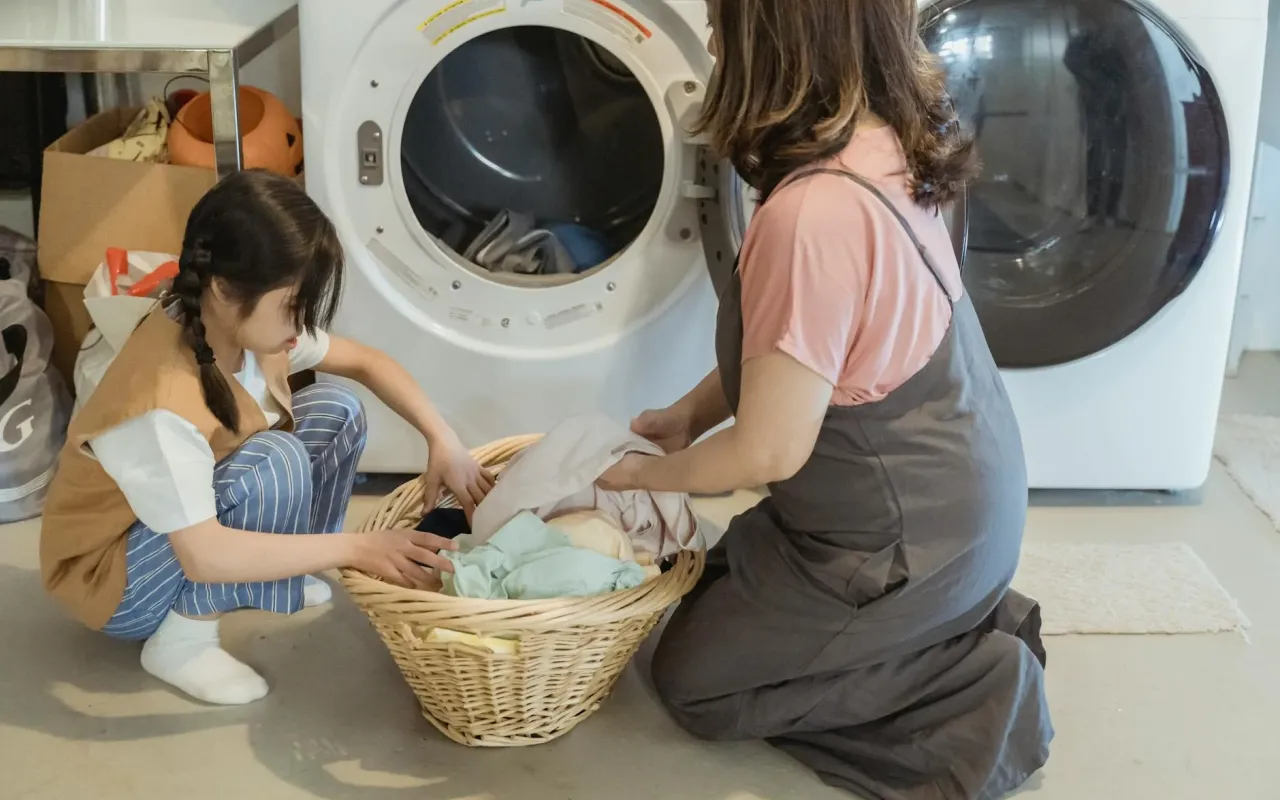
- Do a load of laundry from start to finish. Sorting, loading, adding soap, choosing the cycle, transferring to the dryer, folding, and putting away. By age 10, many kids can manage this independently. It's a life skill they'll need in college.
- Prepare a simple meal. Think: scrambled eggs, pasta with jarred sauce, grilled cheese, or a salad. Teach knife safety (use a kid-safe knife for soft veggies). They can also pack their own lunch.
- Mow the lawn or rake leaves. With supervision and safety gear, this is a great outdoor chore. It builds physical stamina and a sense of ownership over the yard.
How to handle resistance: At this age, chores often feel like a battle. The fix? Give them choice. "Do you want to clean the bathroom or vacuum the living room?" Let them pick their top two chores for the week. Also, tie chores to privileges: "Once your room is clean and the laundry is folded, you can have screen time." This is how the real world works—you do the work, then you get the reward. Just don't make it a constant negotiation. Set clear expectations and stick to them.
Ages 12+: The "Almost Adult" Training Ground
By middle school, your child is capable of managing most household tasks independently. The goal here shifts from "teach them to help" to "teach them to manage their own life." They need to learn planning, budgeting, and time management—skills that will serve them in high school and beyond.
Chores that build adult competence:
- Plan and cook a full meal. Give them a budget, let them choose a recipe, shop for ingredients (with you or solo if they're mature), and cook the meal for the family. Do this once a week. They'll learn budgeting, timing, and nutrition.
- Manage their own schedule. They should set their own alarm, pack their school bag, and keep track of homework deadlines. Your role is to check in, not to remind them every step. Let them face natural consequences (like a forgotten permission slip) so they learn.
- Handle basic home maintenance. Teach them to change a light bulb, unclog a toilet, reset a tripped breaker, or change a furnace filter. These are skills most adults didn't learn until they had to call a repairman.
- Do their own laundry entirely. No reminders. They manage their own clothes, including stain treatment and ironing if needed. This is non-negotiable before they leave for college.
- Help with deep cleaning. Windows, baseboards, inside the fridge, organizing the pantry. These are tasks that require attention to detail and patience—great for building character.
The big picture: At this age, chores are less about "helping mom" and more about "learning to be a functional adult." Frame it that way: "I'm teaching you this so you'll know how to take care of yourself when you're on your own." Teens who understand the purpose behind chores are far more likely to do them without resentment. Also, consider giving them a larger allowance that covers both chores and their own spending money (like for outings or video games). This teaches budgeting: if they skip chores, they lose the allowance, and they have to decide what's worth their time.
The One Rule That Makes Chores Actually Work
After years of trial and error with my own kids and coaching dozens of families, I've landed on one non-negotiable rule: Do not redo their work in front of them. If your 6-year-old makes their bed and it looks like a hurricane hit it, resist the urge to smooth the blanket. If your 10-year-old loads the dishwasher and the cups are upside down, let it run that way. They learn from imperfection. If you fix it, you're telling them their effort isn't good enough—and they'll stop trying.
Instead, set clear standards upfront. Show them what "done" looks like. Take a photo of a properly made bed or a clean sink and post it near the chore chart. Then, when they're done, check together against the photo. If it's not up to standard, ask: "What do you think needs to change?" Let them fix it. This teaches self-evaluation, not dependence on your approval.
The real secret is that chores aren't about the chores. They're about teaching your child that they are a capable, contributing member of a community—starting with your family. They'll carry that identity into every relationship and responsibility they ever have. And that's worth a few lumpy beds and upside-down cups.