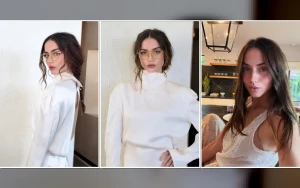
Harry Styles and Zoë Kravitz plan a private winter wedding; Niall Horan declines, sparking speculation. A nuanced look at their intimate choice.
- May 27, 2026
AceShowbiz - Harry Styles and Zoë Kravitz are reportedly planning a small, intimate winter wedding in the UK, opting to avoid the grand public spectacle often associated with celebrity nuptials. The event is expected to be low-key, with a very limited guest list, so much so that Niall Horan, a former bandmate of Harry Styles, has said he is "too busy" to attend.
This absence has sparked speculation online, with some interpreting it as a sign of tension or distance between the former One Direction members. However, a closer look suggests the reality is far more nuanced, focusing on personal choice and emotional dynamics rather than drama.
The decision by Harry Styles and Zoë Kravitz to host a small wedding says a great deal about their priorities and relationship. After years spent under intense public scrutiny—the so-called "goldfish bowl" that follows every move, every gesture, every glance—both understand the costs of a life lived in the spotlight. The constant observation can lead to protective personas, such as the "Seducer," a charming and polished version of oneself designed to win affection but incapable of sustaining genuine intimacy.
A small winter wedding is a deliberate rejection of that performative role. It symbolizes a choice to prioritize authentic connection over public validation. In the view of couples therapists who work with high-profile clients, this move reflects a desire to create a secure, private space where love can flourish away from cameras and social media. Love, fundamentally, is about two nervous systems seeking stable ground together. This stability rarely makes for viral content, but it feels deeply real and sustaining.
By choosing a quiet ceremony with just a few trusted faces, Harry Styles and Zoë Kravitz are protecting their relationship from the pressures of public spectacle. They are opting to live their truth in private rather than perform it for an audience. This decision offers a headline that focuses on connection and preservation rather than controversy.
Meanwhile, the subplot involving Niall Horan—who is reportedly too busy to attend—deserves a more empathetic understanding. The common gossip narrative suggests distance, sulking, or unresolved conflict, but from a psychological perspective, "too busy" often functions as an emotional shield rather than a literal scheduling issue. For individuals whose self-worth is tied to productivity and output, busyness can serve as a refuge from emotional intensity.
Workaholism and over-scheduling frequently operate as attachment protests in modern life. Instead of relying on emotional presence, which can feel vulnerable or overwhelming, some people seek security through control and productivity. Weddings, by contrast, are deeply emotional and unstructured occasions—what therapists sometimes call the "living room" moments, where raw feelings come to the surface without polish or preparation.
For someone like Niall Horan, who is accustomed to managing his life in a strategic, articulate way, the emotional immersion of a wedding can feel threatening or difficult to navigate. Choosing busyness might be a way to cope with the overwhelming feelings that come from close relationships, especially those forged in intense group dynamics like bands.
It is important to recognize that when loved ones withdraw or appear unavailable, it does not necessarily indicate a lack of care or affection. Often, it reflects an internal struggle with managing strong emotions. Love can be so intense that it momentarily overwhelms, leading to withdrawal as a form of self-preservation. This may be what Niall Horan is experiencing, whether consciously or not.
Another layer to this situation is the nature of friendship bonds formed in high-pressure environments like boy bands. These relationships often resemble family systems, marked by deep enmeshment and shared identity. When one member begins to individuate—such as by entering a serious partnership and choosing privacy—the group dynamics must shift. This recalibration can manifest as distance or increased busyness from other members, not out of rejection, but as a natural response to change.
In this context, the emotional complexity of Harry Styles feeling sadness or perceiving a lack of reciprocity from Niall Horan is understandable. The healthiest approach is for each person to acknowledge their feelings openly and honestly. Harry Styles might express his sadness without blaming, while Niall Horan could reflect on whether his busyness is a genuine necessity or a protective pattern rooted in past experiences.
This kind of self-awareness and emotional honesty is the unseen work that sustains long-term relationships, whether romantic or platonic. It is not about public confession but about internal clarity and mutual respect. Such efforts determine whether bonds endure across time and transformation.
Ultimately, none of the parties involved are villains. Harry Styles and Zoë Kravitz are making a conscious choice to safeguard their love in a way that feels authentic to them. Niall Horan is responding in a way that has kept him safe and functional, even if it looks puzzling from the outside. Observers would do well to resist simplistic narratives of rejection or drama and instead honor the complexity of human connection.
The most generous stance for those watching from the sidelines is to stop scoring this story and recognize that love, friendship, and personal boundaries play out quietly beneath the surface of public events like weddings.
The insights in this reflection come from Empathi founders and couples therapists Figs O'Sullivan and Teale, who serve clients in San Francisco and Silicon Valley, working with celebrities and non-celebrities alike. They emphasize the importance of emotional presence and authenticity over performative displays, especially in high-profile relationships.
This article is based on reporting originally published by HollywoodLife.