Chicago honors Steve Albini by naming a street after him, celebrating his legendary recording career and complex legacy.
- May 8, 2026
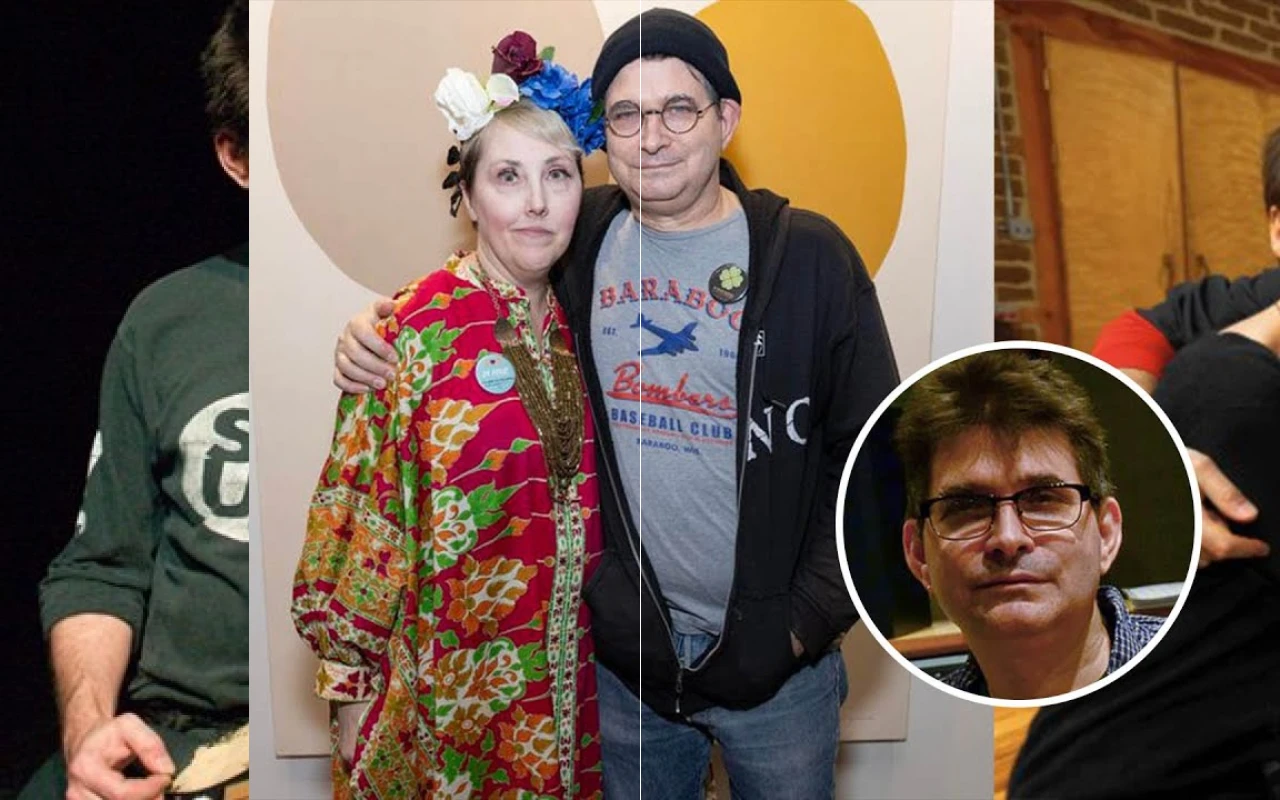
AceShowbiz - On a chilly November day in 2024, a gathering of family, friends, and admirers convened on Belmont Avenue in Chicago outside a modest two-story brick building marked only by a red door and a lowercase “e” sign. This site, known for housing the influential Electrical Audio studio, was the setting for a heartfelt tribute to Steve Albini, the renowned recording engineer who had passed away six months earlier at 61 from a heart attack. In recognition of his profound impact on music and the Chicago community, the city officially named the street bordering his studio “Steve Albini Way.”
The honor reflects the singular path Albini carved throughout his life, marked by his distinctive philosophy toward recording and producing music. He championed an unfiltered, live sound that shaped rock music for decades. Yet, his legacy was complex: early in his career, his outspoken remarks often sparked accusations of misogyny and racism. Despite these controversies, Albini was known for his unwavering sense of fairness and a caustic wit that guided his personal and professional interactions. Many who knew him witnessed a significant personal transformation in his later years, a change attributed largely to his wife, Heather Whinna, whom he married in 2009.
At the dedication ceremony, Whinna appeared soft-spoken and subdued, attributing her quiet voice partly to grief. By April 2025, though her voice remained faint, she was prepared to share a detailed account of her life with Albini, resulting in an extensive interview. She wore a vintage white lace dress that complemented the Art Deco aesthetic of their Edgewater neighborhood home in Chicago. During their conversation, she revealed a red velvet jewelry box containing the engagement ring Albini gave her in 2008—a family heirloom that once belonged to his grandmother.
When he proposed, Whinna responded, “Yes, of course. But why?” after 16 years together. She recalls how Albini then left her immediately for a trip to Italy, a gesture so uniquely him it seemed almost absurd: “Like, fucking only Steve would think this is a normal thing to do: Propose and then leave. Bye.” This anecdote encapsulates the eccentricity that defined much of Albini’s life—brilliant yet often difficult to understand.
Their relationship began in 1993, shortly after the release of Nirvana’s In Utero, which Albini had engineered. Though Whinna was aware of his reputation, she did not initially recognize him when they first met at Chicago's Empty Bottle music venue. Introduced by a mutual friend, Albini greeted her with an unorthodox compliment: “You smell pretty.” Later that night, he bluntly told her she needed “a boyfriend who's monogamous and has a steady income,” a pointed observation that resonated deeply with her struggles at the time. Whinna was working nights as a comedy club manager, broke and in a rocky relationship, making Albini’s assessment uncannily accurate.
They went on their first date at a diner opposite the now-closed Lounge Ax venue. Whinna did not immediately realize she was with Albini. It was only after he mockingly criticized the Smashing Pumpkins that she whispered, “Oh, no. This is Steve Albini.” They dated for a few months before becoming exclusive in 1994. Their early years together included living in a Chicago bungalow where Albini had built his home studio and later in an apartment inside Electrical Audio during its construction in 1996. They spent nearly 20 years there before purchasing a home together.
Whinna witnessed firsthand Albini’s complex personality. While he was brilliant and treated her well, his bluntness sometimes crossed lines. Early in their relationship, he used a racial slur in public, prompting her to warn him: “When someone comes and kicks your ass, I’m gonna be holding the door open for them.” She explained the harm and offensiveness of such language, which shocked him initially. Over time, he came to understand the impact of his words and adjusted accordingly.
Albini’s reputation in the music world was famously pragmatic. Kurt Cobain once said he could overlook the engineer’s abrasive demeanor if the album sounded great—a standard Albini consistently met. His objective was to faithfully capture the raw, live essence of bands without studio gimmicks. By mid-career, Albini estimated he had recorded thousands of albums, each bearing his unmistakable sonic signature.
Following Albini’s death, Rolling Stone interviewed numerous people close to him, including Whinna, his mother and brother, staff at Electrical Audio, and bandmates from Shellac, Rapeman, and Big Black. Musicians he recorded—such as PJ Harvey, members of Pixies, the Breeders, the Jesus Lizard, Low, and Sunn0)))—shared how working with Albini influenced their music and perspectives. Many also noted his personal evolution over time.
Albini was born on July 22, 1962, in Pasadena, California, into a family that moved frequently due to his father’s wildfire research career. His parents, Frank and Gina Albini, already had two children before him: Marty, now a mechanical engineer, and Mona, an accountant who declined to comment for the article. The family eventually settled in Missoula, Montana.
His mother recalled that Albini’s outspoken nature often got him into trouble, as he habitually said whatever was on his mind. As a small child, he was frequently bullied. His interests were wide-ranging—model rockets, drawing, baseball, magic shows, acting, and photography. Marty explained that Albini would intensely focus on a hobby for a few years before abruptly moving on to something else.
Growing up, the Albini household was filled with folk music records, and young Steve played the clarinet for a time. But it was during high school at Hellgate that he discovered punk music, particularly the Ramones. Initially, he and his friends found the band silly, but over time the magnetic pull of their debut album drew him back repeatedly, shaping his musical tastes and future career.
Throughout his life, Albini maintained a distinctive voice in the music industry, both for his technical expertise and his candid, often controversial opinions. His legacy is a mixture of groundbreaking artistic contributions, personal challenges, and a late-life transformation that softened some of his harsher traits. The dedication of Steve Albini Way stands as a testament to a man who defied easy categorization but left an indelible mark on music and those who knew him best.