Outlaw country legend David Allan Coe, known for hits like 'You Never Even Called Me by My Name,' dies at 86.
- April 30, 2026
AceShowbiz - David Allan Coe, a prominent figure in outlaw country music known for his rebellious persona and memorable songs like "You Never Even Called Me by My Name" and "The Ride," has passed away at the age of 86.
The news of David Allan Coe's death was confirmed by his widow, Kimberly, who described him as "one of the best singers, songwriters, and performers of our time" in a statement to Rolling Stone. She reflected on their many years together, calling him her husband, friend, and confidant, and expressed a wish that his legacy never be forgotten. At this time, the cause of death has not been disclosed.
David Allan Coe was a figure of complexity within country music, blending myth and reality throughout his career. Known for his brash outlaw image, he created a legend around his past, including stories of time spent in prison and wild escapades on the road. Though many of these tales were met with skepticism, they helped build the persona that defined much of his music and public persona.
His songwriting prowess extended beyond his own recordings; he penned hits for other country stars, including Tanya Tucker and Johnny Paycheck. Notably, he wrote the entirety of the hit "Take This Job and Shove It," which became a signature anthem of working-class rebellion. Meanwhile, his own songs such as "You Never Even Called Me by My Name" remain staples on country playlists and jukeboxes across the country.
Born on September 6, 1939, in Akron, Ohio, Coe spent much of his early life in and out of reformatories and prisons. His criminal record included charges like grand theft auto and possession of burglary tools. He once claimed that during a 1963 incarceration he killed another inmate in self-defense, a story that added to his outlaw mystique but was met with doubt. Shelby Singleton, the Nashville producer who discovered him, commented in 1976 that much of Coe’s storytelling was likely fabricated and promoted as a gimmick.
Despite the controversies surrounding his personal history, Coe lived the kind of outlaw life many country artists only sang about. His eccentricities were well known—he drove a hearse, wore a Lone Ranger mask, and reportedly worked himself into a sweat outside the Ryman Auditorium to appear as though he had just performed there before signing autographs for visitors.
Arriving in Nashville in 1967, David Allan Coe quickly made a name for himself as a songwriter and performer. Tanya Tucker’s 1973 Number One hit "Would You Lay With Me (In a Field of Stone)," written by Coe, helped establish his reputation. His major-label debut came in 1974 with The Mysterious Rhinestone Cowboy, followed by 1975’s Once Upon a Rhyme, which included his own renditions of "Would You Lay With Me" and the classic "You Never Even Called Me by My Name." The latter song, written by Steve Goodman and John Prine (uncredited), humorously celebrated and critiqued country music conventions, allowing Coe to showcase his signature blend of satire and homage.
Coe often incorporated himself into his songs with playful self-references. In 1976’s "Longhaired Redneck," he sang about being mistaken for Merle Haggard and sounding like himself. The following year, in "Willie, Waylon and Me," he boldly introduced himself as being from Dallas, Texas—though he was born in Ohio—further blurring the lines between fact and legend. His 1986 track "Son of the South" name-dropped a host of country and southern rock icons, including Hank Williams Jr., Lynyrd Skynyrd, and the Allman Brothers, alongside himself.
While Coe experienced moderate success as a performer in the 1970s, his songwriting achievements were particularly notable. In 1977, Johnny Paycheck’s recording of Coe’s "Take This Job and Shove It" topped the country charts and became an anthem of defiance. Coe later recorded his own version for his 1978 album Family Album, which also featured the provocative "Divers Do It Deeper," a song with suggestive lyrics that hinted at the edgier content Coe would explore independently.
Indeed, David Allan Coe released two controversial "X-rated" albums, Nothing Sacred (1978) and Underground Album (1982), both containing explicit and often offensive material. These albums drew criticism for racist and misogynistic language. Coe defended the work as parody, inspired by Dr. Hook’s 1972 album of Shel Silverstein songs, but the content remains a divisive part of his legacy.
Returning to more traditional country themes in the 1980s, Coe staged a comeback with the 1983 album Castles in the Sand, driven by the haunting hit "The Ride." Written by Gary Gentry and J.B. Detterline Jr., the song tells the story of a hitchhiker’s encounter with Hank Williams’ ghost. In true Coe fashion, he added a concluding verse praising country legends including Waylon Jennings, Billy Joe Shaver, and himself.
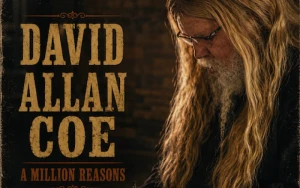
Throughout the 1990s and into the 2000s, David Allan Coe remained active, releasing new material, live albums, spoken-word recordings, and compilations. Between 1999 and 2003, he collaborated with members of the heavy metal band Pantera on the 2005 album Rebel Meets Rebel. Coe also worked with Kid Rock, who invited him to open one of his tours and recorded Coe’s song "Single Father."
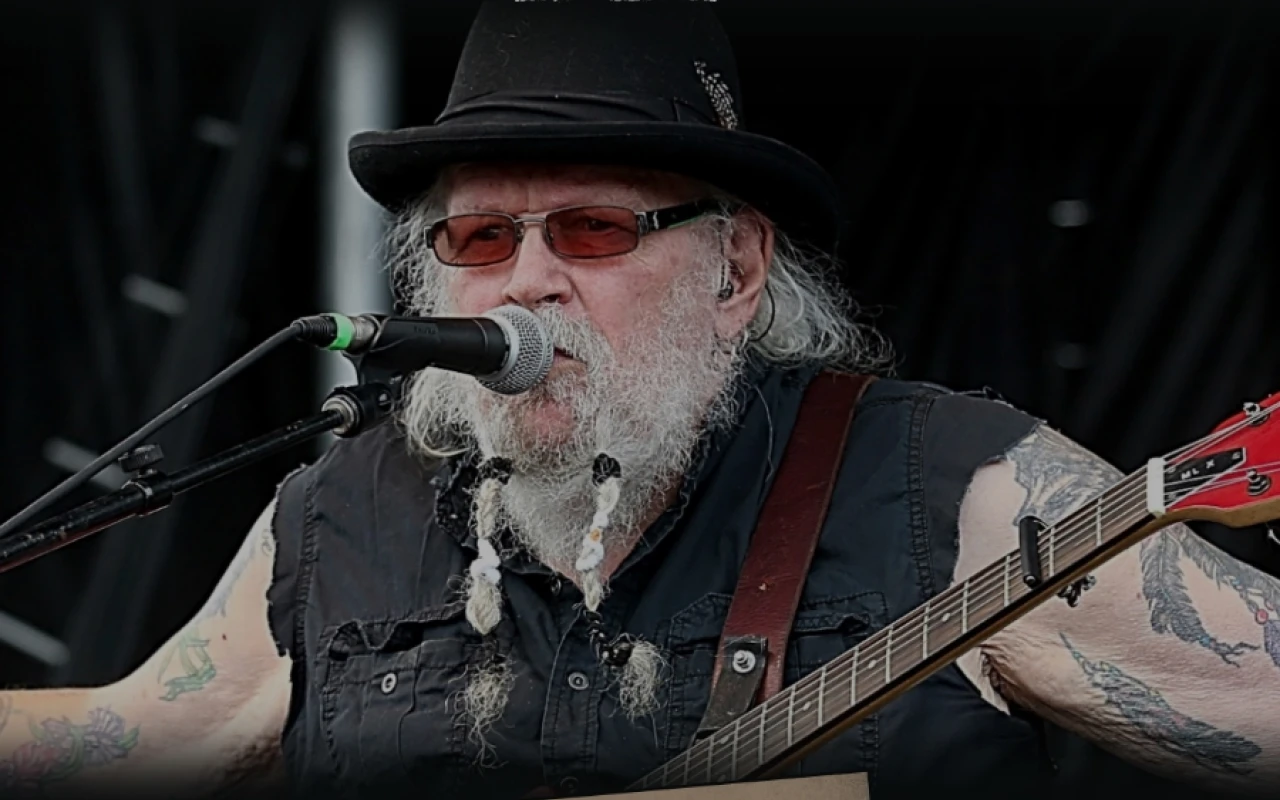
In his later years, Coe continued to perform, often appearing as a striking and somewhat intimidating figure with long hair and a braided beard. His stage presence was marked by his distinctive guitar adorned with a Confederate flag motif and his use of a headset microphone. His live sets mixed classic hits with covers by artists ranging from Kid Rock to Merle Haggard. He was particularly popular at motorcycle rallies, exemplified by his 2001 concert album Live From the Iron Horse Saloon, recorded at the Biketoberfest in Daytona Beach, Florida, near his Ormond Beach home.
Despite facing financial and personal challenges, David Allan Coe left a lasting impact on country music through his unique blend of storytelling, songwriting, and unapologetic outlaw spirit. His contributions to the genre, both celebrated and controversial, have ensured his place as a memorable and influential figure in country music history.