The tragic story of "Beebo" Russell: a Horizon Air worker who stole a $33M plane, flew without training, and ended his life in a shocking 2018 crash.
- April 28, 2026
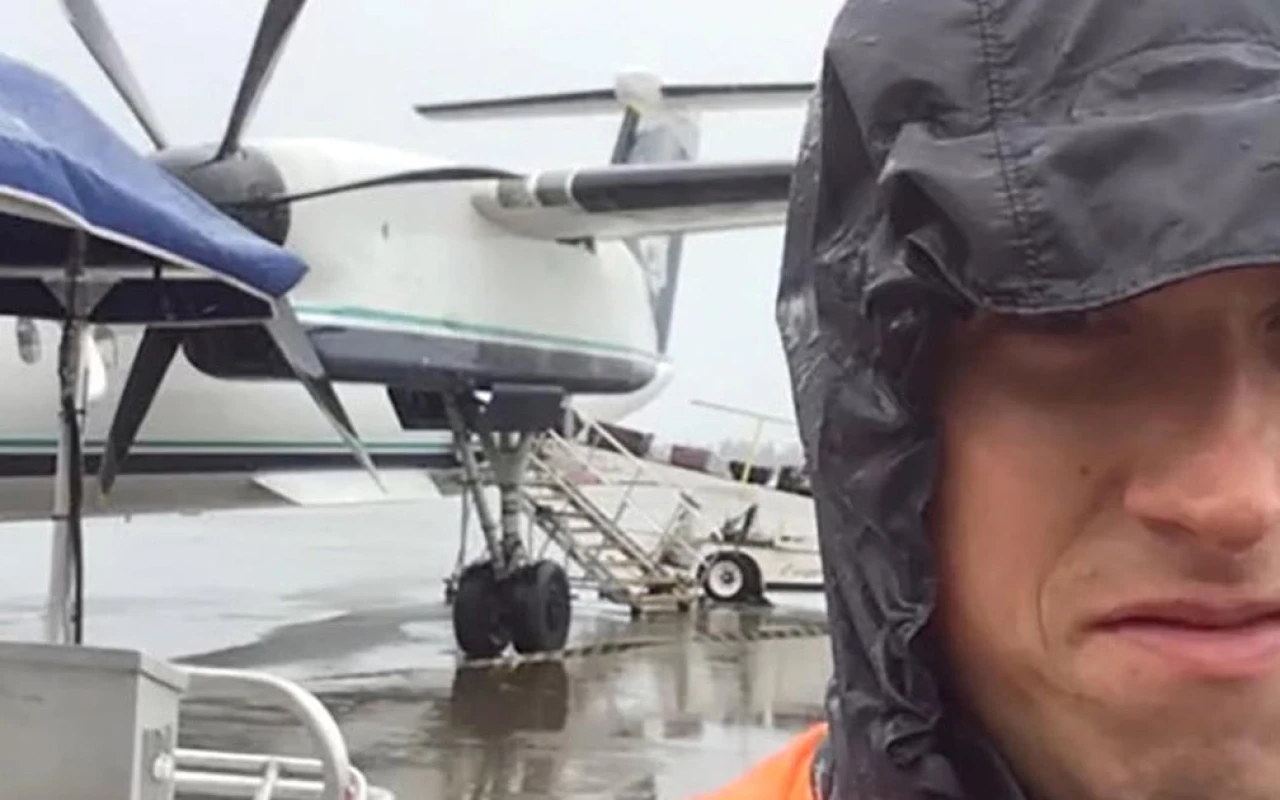
AceShowbiz - Richard Russell is remembered by many as a folk hero, yet to those closest to him, he was simply known as "Beebo." In 2018, at just 28 years old, he shocked the Pacific Northwest by stealing a Bombardier Q400 airplane from Horizon Air, a subsidiary of Alaska Air, where he worked as a ground service agent.
Wearing a shirt emblazoned with the phrase "The sky's no limit," Russell took off in the stolen $33 million aircraft, despite having no training in how to pilot or land the plane. His unauthorized flight lasted several hours, during which he flew over mountains and water, creating a tragic spectacle that ended with a crash on a sparsely populated island.
The crash was not an attempt to land safely; rather, Russell chose death over imprisonment and sought to escape his own mental anguish. His actions and the statements he made to air traffic control during the flight have since become part of a complex narrative that extends beyond the event itself.
Patricia E. Gillespie, director of the documentary #SkyKing, spoke with The Hollywood Reporter about how the story has been misunderstood and politicized, particularly due to one controversial comment where Russell suggested that he was passed over for a promotion because he was "just a white guy."
Gillespie explains that this remark has been twisted in some circles to fuel divisive and harmful rhetoric, overshadowing the deeper issues at play. The film aims to restore humanity to Russell, portraying him as a multifaceted individual rather than a symbol or stereotype.
“He’s a lot of different things to a lot of people,” Gillespie says. “Our documentary tries to emphasize his humanity instead of letting people use him to push their own narratives—some true, some false, some productive, and some dangerous.”
Some viewers have criticized the film, questioning why someone who stole a plane and ended his own life merits a documentary. Gillespie hopes such critics will watch the film with an open mind. "Suicide isn’t the end of pain; it passes on pain to those who love you most," she emphasizes.
The film also challenges how quickly society jumps to sensationalism and political conclusions without understanding the nuances. According to Gillespie, this rush to judgment often obscures critical conversations about class and mental health.
“We live in echo chambers,” she says. “People who grew up working class knew about this story. Those higher up the economic ladder often didn’t. That divide shapes what stories gain attention and how they’re discussed.”
Gillespie notes that the documentary features a family with diverse political views. For example, one of Russell's brothers wears a Trump hat in interviews, yet the family members do not express hate or racism. This complexity contradicts prevailing social media narratives that assume polarized groups cannot find common ground.
“The reality of economic hardship and mental health struggles unites people more than politics divides them,” Gillespie reflects. “If you know what a bread sandwich tastes like, you’re my friend.”
The director also addresses the nature of Russell's mental health crisis. While it’s impossible to diagnose him posthumously, Gillespie acknowledges that depression often conceals the true impact of suicide on loved ones. She hopes that understanding the pain behind the act can foster compassion rather than judgment.
Regarding the specifics of the flight, Russell reportedly knew how to make the plane take off but not how to land it, which some infer was premeditation. Gillespie refrains from speculation, stating that she cannot live inside his mind and prefers to rely only on verifiable facts.
When the plane finally crashed, it was not in the mountains or water where Russell had spent much of his flight, but rather on the side of a sparsely populated island. Official reports describe the crash as a "controlled descent," suggesting that Russell chose a location where fewer people would be harmed.
“He worked at the airport and knew the terrain,” Gillespie says. “I imagine he wanted to die quickly and without causing pain to others.”
The flight ended tragically, but it also opened a window into the intersections of mental health, economic despair, and societal perception. Gillespie hopes that the documentary will encourage viewers to approach such stories with curiosity and empathy, rather than judgment and division.
As the eight-year anniversary of Russell's death approaches, his memory lives on through his story, his family, and the ongoing dialogue about the human struggles that led to his final flight.