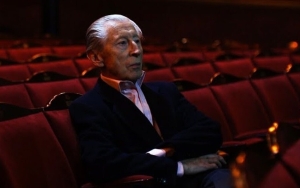
Stanley Kubrick was an American filmmaker and photographer whose meticulous craftsmanship and genre-defying vision established him as one of the most influential directors in cinema history. Born in New York City on July 26, 1928, Kubrick displayed an early aptitude for photography, which led him to work as a photographer for Look magazine in the late 1940s and early 1950s. This formative experience honed his visual storytelling skills, setting the stage for a career that would span decades and produce some of the most iconic films ever made.
Kubrick transitioned to filmmaking in the mid-1950s, making his first major Hollywood film, The Killing, in 1956. He followed this with two collaborations with Kirk Douglas: the anti-war film Paths of Glory (1957) and the historical epic Spartacus (1960). These early works showcased Kubrick’s growing ambition and his ability to blend technical precision with provocative themes. In 1961, Kubrick relocated to England, a move that granted him greater artistic independence. His first productions there were two films featuring Peter Sellers: the comedy-drama Lolita (1962) and the Cold War satire Dr. Strangelove (1964), the latter cementing his reputation as a master of dark humor and political commentary.
A perfectionist who assumed direct control over writing, editing, and production design, Kubrick became famous for his painstaking research and demanding rehearsal process, often requiring dozens of retakes for a single scene. His 1968 science fiction epic 2001: A Space Odyssey revolutionized cinema with its scientific realism and groundbreaking special effects, earning Kubrick his only Academy Award for Best Visual Effects. The film is now widely regarded as one of the greatest ever made. He continued to push boundaries with the brutal dystopian A Clockwork Orange (1971), which sparked intense controversy and led Kubrick to withdraw it from circulation in the UK following a media frenzy. His later works, including the horror masterpiece The Shining (1980), which pioneered the use of the Steadicam for fluid tracking shots, and the Vietnam War film Full Metal Jacket (1987), further solidified his legacy as a visionary filmmaker.
Kubrick’s final film, Eyes Wide Shut, starring Tom Cruise and Nicole Kidman, was released in 1999. Just a few days after hosting a screening for his family and the film’s stars, Kubrick died at his home at Childwickbury Manor in England on March 7, 1999, at the age of 70. Though many of his films were initially met with mixed reviews, they have since undergone critical re-evaluations and are now considered landmarks of cinema. Kubrick’s unparalleled attention to detail, innovative cinematography, and darkly humorous worldview continue to inspire filmmakers and audiences alike, ensuring his place as a towering figure in the history of film.