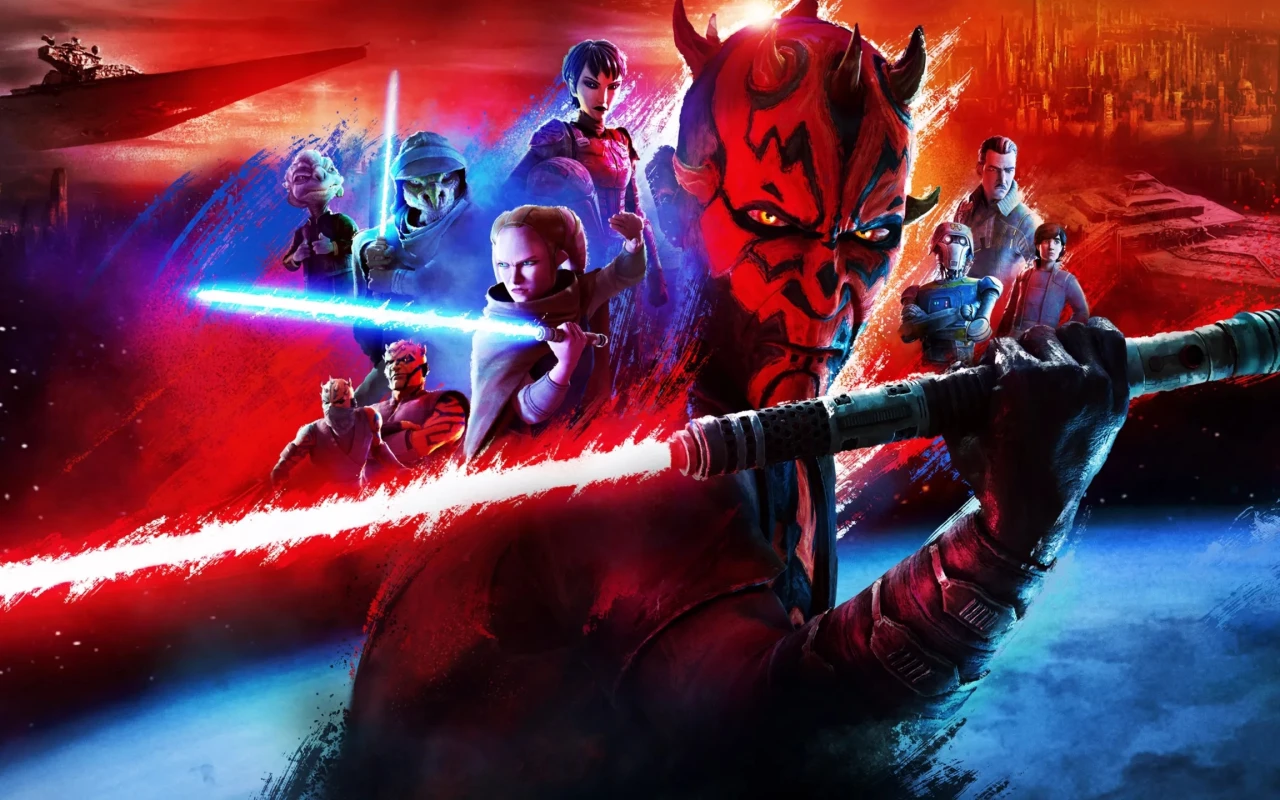
Discover the surprising origin of Star Wars' lightsaber, from its "laser sword" name to its real-world inspiration in Arthurian legend and Excalibur.
- April 11, 2026
AceShowbiz - The lightsaber stands as the most iconic symbol of the Star Wars universe, eclipsing even droids and starships in cultural significance. Originally dubbed "laser swords" by George Lucas, the name was changed to "lightsabers" by Alan Dean Foster, the ghostwriter of the first Star Wars novelization and the 1978 tie-in novel Splinter of the Mind's Eye. Foster’s choice better captured the unique nature of the weapon’s fixed-length glowing blade, a concept Lucas believed audiences might struggle to accept otherwise.
Star Wars’ lightsabers draw inspiration from classic Arthurian legends, with Lucas modeling them after Excalibur, the legendary sword said to glow when drawn. This connection is subtly echoed in the lore of the kyber crystals that power each lightsaber, giving them their distinctive colors. The term “kyber” itself is derived from “Caiburr,” an alternate name for Excalibur, linking the mystical sword origins to the Star Wars mythos. Nearly five decades after the franchise began, the portrayal of lightsabers has never been more visually impressive.
Lucasfilm has continually refined how lightsabers appear on screen. Industrial Light & Magic (ILM), the company responsible for Star Wars’ groundbreaking effects, has recently revolutionized lightsaber technology in live-action productions by integrating high-output LED blades. Unlike the traditional method of adding the glow in post-production, LED-lit sabers emit real light on set, creating a more authentic and natural glow. This advancement allows the environment and characters to interact dynamically with the lightsaber’s light.
However, this approach presents challenges. One is that the intense blue glow can sometimes overpower darker scenes, as seen in the finale of Obi-Wan Kenobi, where the brightness diminished visibility. The other difficulty lies in powering the LED blades. Early designs, such as those used by Ahsoka, featured bulky battery packs that limited mobility. Since then, Lucasfilm has miniaturized these components, enabling actors to move more freely, as demonstrated in the duel scenes of The Acolyte. These duels are widely regarded as the best since the prequel trilogy’s The Phantom Menace. This trend suggests that future series like Ahsoka Season 2 will continue to build on these technical innovations to deliver even more spectacular lightsaber battles.
Yet, if you want to witness lightsaber combat at its absolute finest, live-action isn’t the only place to look. Star Wars’ animated series frequently offer some of the most compelling stories and visual presentations within the canon. While some stylistic choices have divided fans—such as the unusually thin lightsabers in Star Wars Rebels, which paid homage to original Ralph McQuarrie concept art—the latest animated entry, Star Wars Maul - Shadow Lord, arguably showcases lightsabers in their most striking form.
Maul - Shadow Lord has earned praise as one of the best Star Wars TV shows to date. Critics have given it a perfect 100% score on Rotten Tomatoes, complemented by an impressive 95% audience rating. The series explores a fresh narrative centered on Darth Maul and a potential apprentice, weaving a gripping tale that balances the influences of both the dark and light sides of the Force. This fresh approach has resonated with audiences eager for new Star Wars stories.
The artistic style of Maul - Shadow Lord is particularly noteworthy. Utilizing watercolor effects, the animation evokes a visual tone and elegance reminiscent of the acclaimed series Arcane. Such a comparison is high praise, given Arcane’s reputation for stunning artistry. This watercolor aesthetic enhances the depiction of lightsabers, allowing animators to meticulously craft each duel with precise control over lighting and shadows. The result is a vivid portrayal of Maul’s double-bladed lightsaber, emphasizing its ferocity and raw power through fluid, painterly visuals.
One of the show’s standout moments occurs during the opening scenes, where Maul makes a dramatic entrance accompanied by a variation of the iconic "Duel of the Fates" theme. He launches a swift and brutal assault on law enforcement officers on the crime-infested planet Janix. The encounter emphasizes Maul’s lethal skill; the officers stand little chance against the Sith apprentice. The battle’s colors shift dynamically, sometimes reversing to bathe the scene in blood-red hues, heightening the tension and danger.
Star Wars animation typically targets devoted fans, which explains some of the deeper lore references in Maul - Shadow Lord. For example, casual viewers might be puzzled by Darth Maul’s continued existence, given his apparent demise in earlier films. Although Maul made a brief live-action cameo in Solo: A Star Wars Story, it was fleeting enough to be easily overlooked. Despite this, the series does a commendable job of making its story accessible, providing enough context so that new viewers can follow along without extensive prior knowledge.
The exceptional quality of Maul - Shadow Lord could encourage broader audiences to engage with the show, potentially expanding its appeal beyond the core fanbase. With its unique narrative approach, stunning visuals, and masterful lightsaber choreography, the series sets a new standard for Star Wars animation.
Maul - Shadow Lord Season 1 is currently available to stream on Disney+, offering fans and newcomers alike a chance to experience this groundbreaking take on lightsaber combat and Star Wars storytelling.