Grant Gee redefines the music biopic, focusing on jazz legend Bill Evans during a silent, tragic period instead of his fame. A profound portrait of art and l...
- April 2, 2026
AceShowbiz - Grant Gee has long been skeptical of traditional music biopics, a genre he finds often undermines the essence of the musicians they portray. Known for his documentaries on British bands like Meeting People Is Easy (1998) about Radiohead and Joy Division (2007), Gee approaches the relationship between musicians’ lives and their art with deep respect. Yet, he confesses a discomfort watching actors perform as musicians, feeling that these portrayals rarely capture the true spirit of the artists.
For his first feature film, Gee deliberately turned the music biopic formula on its head with Everybody Digs Bill Evans, a film about the legendary jazz pianist Bill Evans during a period when he was unable to play. Instead of focusing on a typical rise-to-fame narrative or on concert performances, the movie centers on a dark chapter in Evans’ life following a personal tragedy.
In 1961, after recording two groundbreaking albums with his original trio—Portrait in Jazz and Explorations, both hailed as some of the greatest jazz albums ever made—Evans faced devastating loss. His bassist and close musical partner, Scott LaFaro, died in a car accident. Unable to perform without LaFaro, Evans canceled his tours and retreated to Florida, seeking solace with his retired parents. During this time, Evans wrestled with his heroin addiction and his struggle to find a reason to play music again.
Gee’s inspiration came from the novel Intermission by Owen Martell, on which the film is based. He was intrigued by the idea of crafting a music biopic “without much music in it,” focusing instead on the silence and emotional void left behind in the wake of loss.
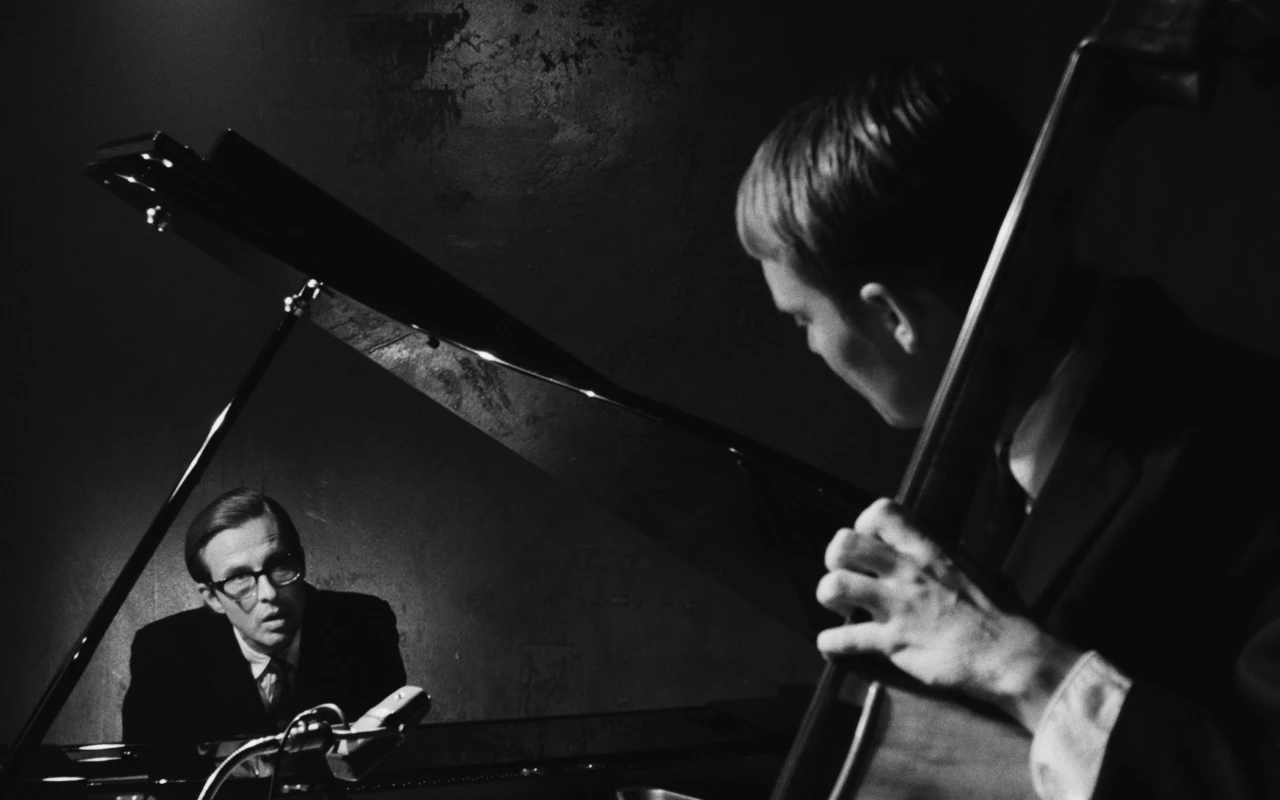
The film stars Norwegian actor Anders Danielsen Lie as Evans, supported by Laurie Metcalf and Bill Pullman as his parents. Lie, himself an accomplished jazz pianist, brings authenticity to the role, especially notable in the film’s opening scene—a four-minute improvised jazz performance capturing the magical interplay between Evans and LaFaro shortly before the bassist’s death.
Gee explains that the jazz musicians performing alongside Lie were initially wary since many actors claiming musical skills often disappoint. Yet, during the recording, Lie’s genuine talent earned their respect after a solo that impressed the band members, affirming the scene’s credibility.
Everybody Digs Bill Evans premiered at the Berlinale, where Gee won the Silver Bear for best director. The film’s narrative dwells on the spaces between music—the silences filled with grief and introspection. Lie’s portrayal of Evans is somber and withdrawn, a man cloaked in cigarette smoke, struggling to process his sorrow.
Gee draws on his personal experiences with musicians to highlight a recurring theme: exceptional talent does not guarantee emotional openness or connection. Reflecting on his previous work with Joy Division, he notes the band members’ inability to understand the depression of their late leader, Ian Curtis, illustrating how creative brilliance often coexists with emotional isolation.
The film weaves in two additional storylines alongside Evans’ journey: that of his brother Henry, portrayed by Barry Ward, a musician who never achieved success and later became a music teacher, and their father, Henry Sr., played by Pullman. Henry Sr.’s cheerful demeanor masks a life of quiet despair, while Henry Jr. embodies both pride and resentment toward his brother. These performances echo the film’s central motif, resembling musicians interpreting the same standard in different keys.
The movie’s core is set in black and white, highlighting the somber tone of 1961. However, Gee incorporates vivid flash-forwards in color to the years 1973, 1979, and 1980, depicting three other deaths that mirror LaFaro’s, culminating in Evans’ own demise. This narrative structure, discovered during editing, reflects a friend’s description of Evans’ life as “the longest suicide in history.”
Gee compares the film’s structure to a music video he directed for Radiohead’s “No Surprises,” which features singer Thom Yorke submerged in water inside a diving helmet. The visual metaphor of sinking and emerging parallels Evans’ emotional journey in the film—submergence in grief followed by tentative re-emergence, ending ambiguously.
Despite the film’s focus on silence and absence, Everybody Digs Bill Evans includes mesmerizing musical moments. The opening jazz session captures a “perfect conversation” between Evans and LaFaro, performed live by Lie and professional jazz musicians. The movie’s final scene features Evans returning to the piano after months of silence, playing Leonard Bernstein’s “Lucky to Be Me” from On the Town. Gee describes this as the film’s “little gag”—after all Evans endured, this final statement reflects a bittersweet acknowledgment of fortune.
The production was handled by Dublin-based Cowtown Pictures and London’s Hot Property, with Mister Smith Entertainment managing world sales. Currently, the film is still seeking distribution in the United States.
Grant Gee’s innovative approach to Everybody Digs Bill Evans challenges the conventions of music biopics by emphasizing emotional truth over musical spectacle. Through quiet reflection, nuanced performances, and authentic jazz musicianship, the film offers a deeply human portrait of a legendary artist grappling with loss, addiction, and the search for meaning beyond the music.