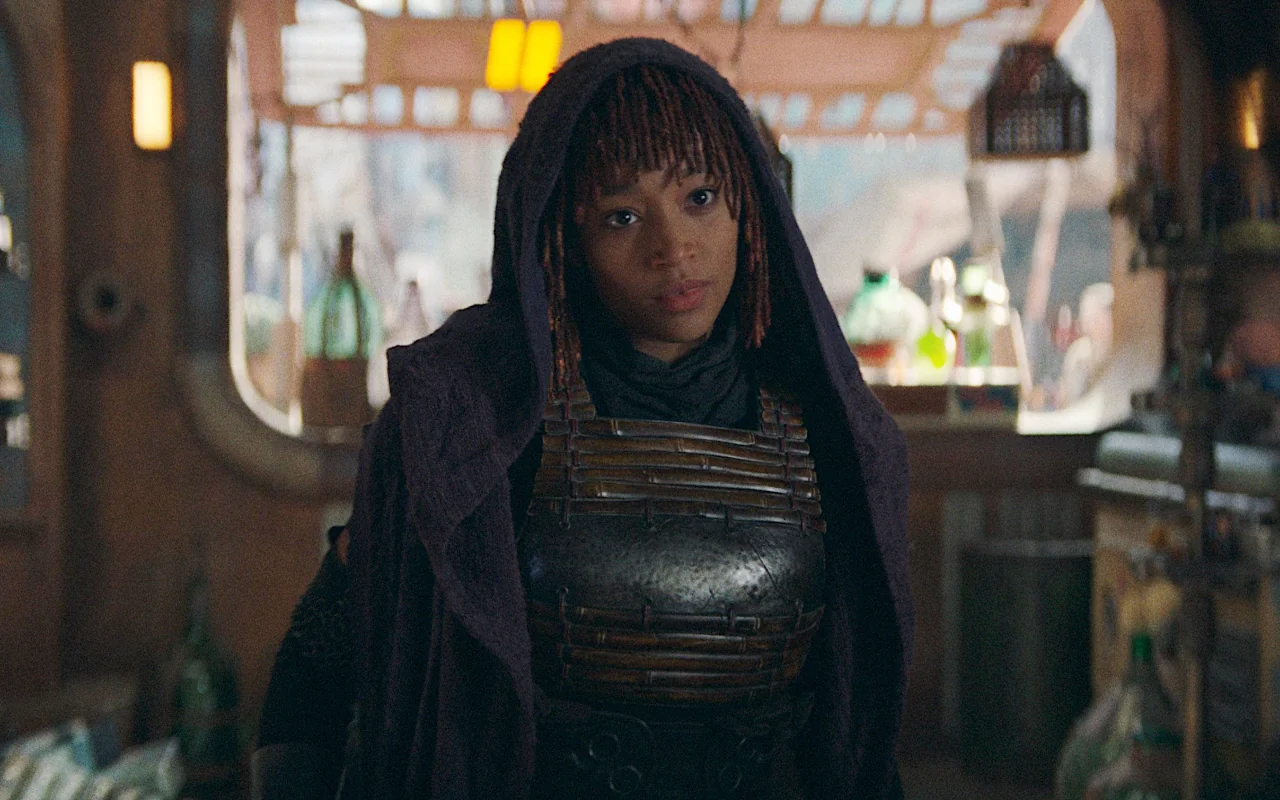
The lead of Disney+'s now-canceled Star Wars spin-off series has spoken out about the 'rampage of hyper-conservative bigotry and vitriol' she and the show faced online.
- August 29, 2024
AceShowbiz - Despite positive critical reception, Disney+ has decided to cancel "The Acolyte" after just one season. Amandla Stenberg, who played twin sisters Osha and Mae in the series, has now revealed that the cancellation came as no surprise to her.
In an Instagram Story, Stenberg stated that she anticipated the backlash the show received due to the presence of actors of color and LGBTQ characters. "There has been a rampage of vitriol that we have faced since the show was even announced, when it was still just a concept and no one had even seen it," she said. "That's when we started experiencing a rampage of, I would say, hyper-conservative bigotry and vitriol, prejudice, hatred, and hateful language towards us."
This online harassment, often referred to as "review-bombing," has become a common tactic to express dissatisfaction with productions that deviate from traditional storylines or include diverse representation. The 2017 "Star Wars" film, "Star Wars: The Last Jedi," also faced a similar backlash.
"It just became inarguable for me, at a certain point, that in order to continue to be myself, I would have to honor my value system by being vocal even in the context of working for Disney," Stenberg said. "It has been an incredible honor and dream for me to be in this universe."
Despite the cancellation, Stenberg expressed gratitude to those fans who supported the show. "I just want to let those people know out there who supported us in that way... despite and in the face of all of the vitriol that we received... that you were deeply loved and appreciated. And it made this job all the worthwhile for me."
"The Acolyte" concluded its season finale in July. The series followed the rise of the Sith a century before the events of "Star Wars: Episode I - The Phantom Menace". Its cancellation has sparked disappointment among some fans, but Stenberg's comments underscore the challenges faced by diverse and inclusive productions in an increasingly polarized online landscape.