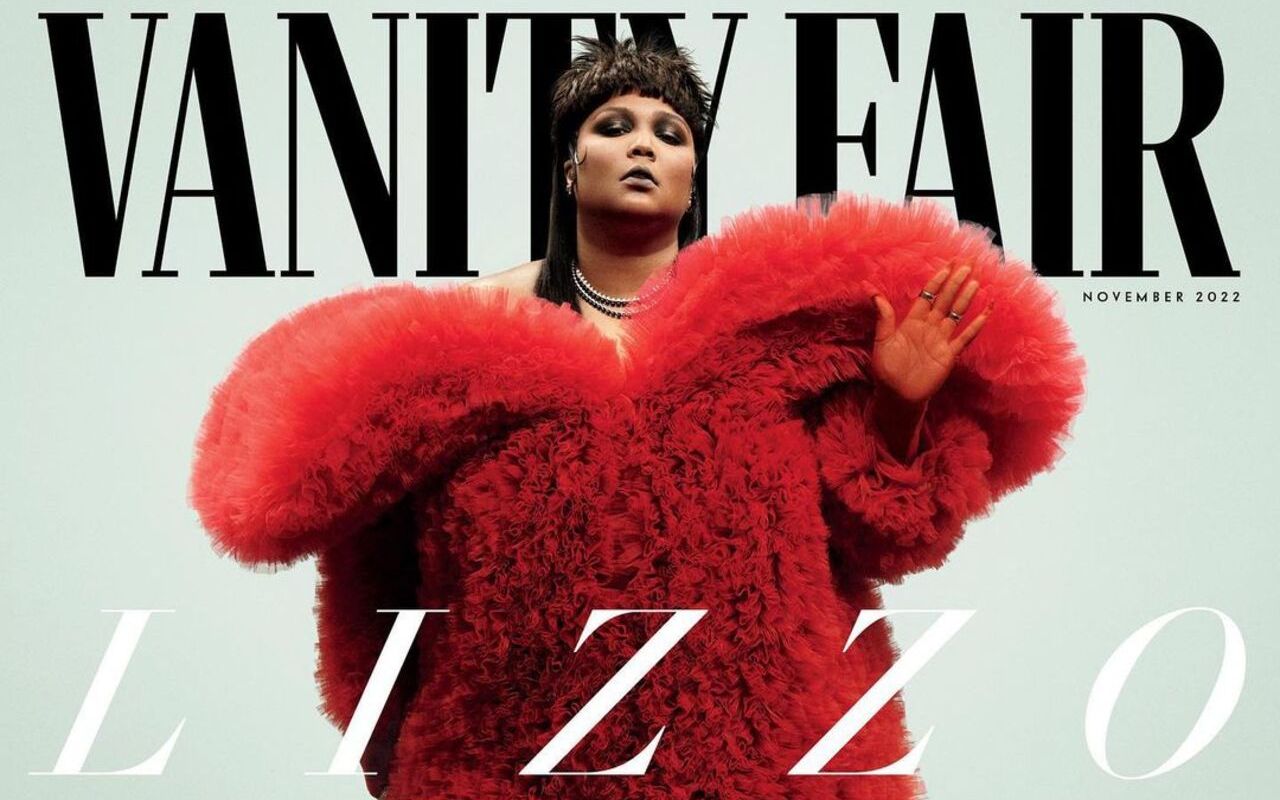
The 'Truth Hurts' hitmaker defends herself over controversial 'Grrrls' lyrics, claiming she 'had never heard' of the phrase being used to ridicule disabled people.
- October 11, 2022
AceShowbiz - Lizzo insists she didn't know that the word sp*z was used as a slur against disabled people. Previously using the word in the lyrics of her song "Grrrls", the 34-year-old pop star - although eventually removing it from the song - explained that it came to her through her own circles and insisted the idea of using a slur would be "unauthentic" to her.
"I'd never heard it used as a slur against disabled people, never ever. The music I make is in the business of feeling good and being authentic to me. Using a slur is unauthentic to me, but I did not know it was a slur," she told Vanity Fair.
"It's a word I've heard a lot, especially in rap songs, and with my black friends and in my black circles, It means to go off, turn up. I used [it as a] verb, not as a noun or adjective. I used it in the way that it's used in the black community. The internet brought it to my attention, but that wouldn't [have been enough] to make me change something."
The "Juice" hitmaker eventually changed the lyrics in her song from "Hold my bag/ Imma sp*z" to "Do you see this s***/ hold me back" and explained that in doing so she is merely "reflecting on the times" as an artist.
She said, "Nina Simone changed lyrics - is she not an artist? Language changes generationally; Nina Simone said you cannot be an artist and not reflect the times. So am I not being an artist and reflecting the times and learning, listening to people, and making a conscious change in the way we treat language, and help people in the way we treat people in the future?"
Meanwhile, Lizzo added that she does not make music "for a white audience" and instead creates her songs from her experience as a black woman. She said, "That is probably the biggest criticism I've received, and it is such a critical conversation when it comes to black artists."
"The thing is, when a black artist reaches a certain level of popularity, it's going to be a predominantly white crowd…I am not making music for white people. I am a black woman, I am making music from my black experience, for me to heal myself [from] the experience we call life."
"We need self-love and self-love anthems more than anybody. So am I making music for that girl right there who looks like me, who grew up in a city where she was underappreciated and picked on and made to feel unbeautiful? Yes. It blows my mind when people say I'm not making music from a black perspective–how could I not do that as a black artist?"
Read "Lizzo Is Here to Talk About All of It - That Flute, That Lyric, Her Man, and More" by Lisa Robinson in Vanity Fair's November issue, and on VanityFair.com