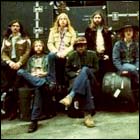
 The Allman Brothers Band forged a monumental legacy as one of the foundational pillars of American rock music, seamlessly blending blues, jazz, and country into a potent, improvisational sound that defined Southern rock and influenced generations of jam bands. Formed in Jacksonville, Florida, in 1969 by brothers Duane Allman (slide and lead guitar) and Gregg Allman (vocals, keyboards), the original lineup also featured guitarist and vocalist Dickey Betts, bassist Berry Oakley, and the pioneering dual-drummer attack of Butch Trucks and Jai Johanny "Jaimoe" Johanson. Relocating to Macon, Georgia, they signed with Capricorn Records and released their self-titled debut in 1969, followed by Idlewild South in 1970, which began to build their reputation for masterful musicianship.
Their commercial and critical breakthrough arrived with the landmark 1971 double live album At Fillmore East, a record that captured the band's electrifying, exploratory live performances on extended tracks like "In Memory of Elizabeth Reed" and "Whipping Post." It cemented their status as premier live performers. Tragedy struck later that year when visionary leader Duane Allman died in a motorcycle accident. The band persevered, releasing the hybrid studio/live album Eat a Peach in 1972, which featured enduring songs like Gregg's "Melissa" and Betts's "Blue Sky." Another devastating loss followed in 1972 when bassist Berry Oakley also died in a motorcycle crash near the site of Duane's accident.
Recruiting bassist Lamar Williams and keyboardist Chuck Leavell, the band achieved its greatest commercial success with 1973's Brothers and Sisters. The album was propelled by Betts's timeless hit single "Ramblin' Man" and the joyous instrumental "Jessica," both of which became permanent fixtures on classic rock radio. Despite this peak, internal strife and substance abuse issues led to the band's initial dissolution in 1976. They reformed briefly with various lineups before breaking up again in 1982.
In 1989, a reformation led by Gregg Allman, Betts, Trucks, and Jaimoe ushered in a prolific and successful second act. The band toured extensively and released new albums, though the late 1990s saw significant turmoil, culminating in the dismissal of Dickey Betts. Stability returned in the 2000s with a celebrated lineup featuring guitarists Warren Haynes and Derek Trucks (nephew of Butch) and bassist Oteil Burbridge. This era was defined by their legendary annual concert residencies at New York City's Beacon Theatre. The Allman Brothers Band performed their final show at the Beacon in October 2014 and formally retired. The band was inducted into the Rock and Roll Hall of Fame in 1995. Founding members Butch Trucks and Gregg Allman both died in 2017, and Dickey Betts died in 2024, leaving Jaimoe as the sole surviving original member. Their influence endures, having been ranked 52nd on Rolling Stone's list of the "100 Greatest Artists of All Time."
⭐
Similar Celebrities




⭐Featured Celebrities