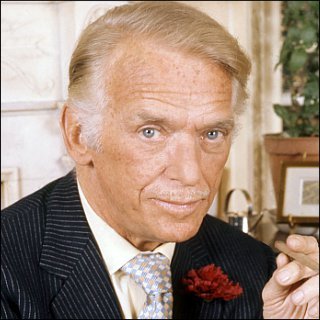
Douglas Fairbanks Jr. was an American actor, decorated naval officer, and producer who carved his own distinguished path during Hollywood's Golden Age, emerging from the long shadow of his legendary father, Douglas Fairbanks, to become a star in his own right. Born Douglas Elton Ulman Fairbanks in New York City, his early life was marked by his parents' divorce, after which he was raised primarily by his mother, Anna Beth Sully. Despite a strained relationship with his famously swashbuckling father in his youth, Fairbanks Jr. would eventually embrace a similar on-screen persona, becoming renowned for his charm and athleticism in adventure films.
His film career began in the silent era as a teenager, with his early work often overshadowed by his famous surname. His first major breakthrough came with a dramatic turn as the gangster Joe Massara in the classic Little Caesar (1931), which showcased his range beyond light comedy. He further solidified his leading man status with a series of successful and critically acclaimed adventure films, most notably The Prisoner of Zenda (1937), Gunga Din (1939), and The Corsican Brothers (1941). His personal life also captured public attention, particularly his first marriage to actress Joan Crawford from 1929 to 1933. He later found lasting happiness with Mary Lee Hartford, to whom he was married from 1939 until her death in 1988.
Fairbanks Jr.'s life took a heroic turn during World War II, when he served with great distinction in the United States Navy. He was instrumental in creating and commanding the "Beach Jumpers," a special warfare unit tasked with tactical deception and psychological operations. His exceptional service earned him some of the nation's and allies' highest honors, including the Silver Star, the Legion of Merit, the French Legion of Honour and Croix de Guerre, and the British Distinguished Service Cross. After the war, he continued to act in films and television, hosted the anthology series Douglas Fairbanks, Jr., Presents, and became a respected international businessman and goodwill ambassador, moving in high society and royal circles.
He remained active in public life and the arts into his later years, marrying Vera Shelton in 1991. Douglas Fairbanks Jr. passed away in 2000 in New York City, leaving behind a legacy defined not only by his cinematic contributions as a charismatic star of swashbucklers and dramas but also by his profound patriotism and exemplary military service. He is remembered as a multifaceted man who successfully blended the worlds of Hollywood glamour, wartime valor, and diplomatic grace.