Decode your cat's weirdest habits — from slow blinks to midnight zoomies. Here's what your cat is actually telling you, and how to respond.
- November 21, 2026
AceShowbiz - Your cat just knocked a glass off the counter while staring directly into your eyes. Then she walked away. If you've ever felt personally attacked by that, you're not alone — and you're also not reading the situation correctly. Cats aren't plotting your downfall. They're communicating in a language that evolved over thousands of years, mostly without humans in the room.
Here's the thing that surprises most cat owners: the average domestic cat has around 20 different vocalizations and dozens of body-language signals, yet most of us only recognize two or three. We miss the rest because we're looking for dog behavior. Cats aren't small dogs with an attitude problem — they're solitary hunters by nature who chose to live with us on their own terms.
Once you learn what those signals actually mean, the weird stuff starts making sense. The counter-pushing, the ankle attacks, the 3 a.m. sprint across your face — all of it has a reason. Let's break down the most common behaviors, what's driving them, and what you can actually do about them.
Why Cats Knock Things Over (And It's Not Spite)
That glass on the counter? Your cat isn't mad at you. She's running an experiment. Cats are tactile hunters, and their paws are packed with nerve endings that function like a second set of eyes. When she bats an object toward the edge, she's testing weight, texture, and movement — the same skills her wild ancestors used to check whether prey was still alive.
There's also an attention component, and it's on you. Behavioral studies on domestic cats have found that they quickly learn which actions produce a human reaction. If knocking a pen off the desk gets you to look up, say something, or stand up, your cat just filed that away as a reliable way to summon you. From her perspective, it works every single time.
So what do you do? The worst move is the dramatic reaction — that's the reward. Instead, remove the temptation where you can (use a covered cup, put breakables away) and give her a better outlet. A puzzle feeder or a few minutes of wand-toy play before you sit down to work redirects that hunting drive onto something that doesn't shatter.
The slow blink is a real thing
When your cat looks at you and slowly closes her eyes, then opens them again, that's not sleepiness — it's a trust signal. Researchers who studied slow blinking found that cats are more likely to approach a person who slow-blinks at them first. Try it: catch her gaze, blink slowly, and wait. If she blinks back, you've just had a genuine conversation.
Midnight Zoomies: Your Cat's Internal Clock Isn't Broken
If your cat turns into a furry pinball at 2 a.m., she's not being difficult — she's following a schedule that's baked into her biology. Cats are crepuscular, meaning they're most active at dawn and dusk. In the wild, those are prime hunting hours. Your indoor cat still has that wiring, and if she's been napping all day while you're at work, she's got a full tank of energy when you're trying to sleep.
The fix is embarrassingly simple, but it requires consistency: play hard in the evening. A vigorous 10 to 15 minutes with a wand toy that mimics prey — darting, hiding, pausing — followed by a small meal hits the natural "hunt, catch, eat, groom, sleep" sequence. Most cats will settle within 20 minutes of that routine.
Don't free-feed if you can avoid it. A cat with a constantly full bowl has no reason to engage with you at mealtime, and you lose one of your best tools for shaping her schedule. Two or three measured meals a day, with the biggest one right after evening play, does more for your sleep than any gadget.
Quick tip: If the zoomies persist despite a solid routine, check for boredom before assuming it's behavioral. A cat tree near a window, a few cardboard boxes, and a rotation of toys can cut nighttime chaos dramatically.
Tail Talk: Reading the Signals Most Owners Miss
The tail is the most honest part of a cat's body. A tail held straight up with a slight curve at the tip is the feline equivalent of a friendly wave — she's happy to see you. A puffed-up tail means she's startled or frightened, and she's trying to look bigger than she is.
The one that trips people up is the fast, whipping tail. Dog owners read that as excitement. In cats, a rapidly swishing tail usually means overstimulation or irritation — she's had enough petting, or something in the environment is bothering her. Keep going and you'll likely get a swat. Slow, gentle swaying is a different story; that's usually focus or mild curiosity.
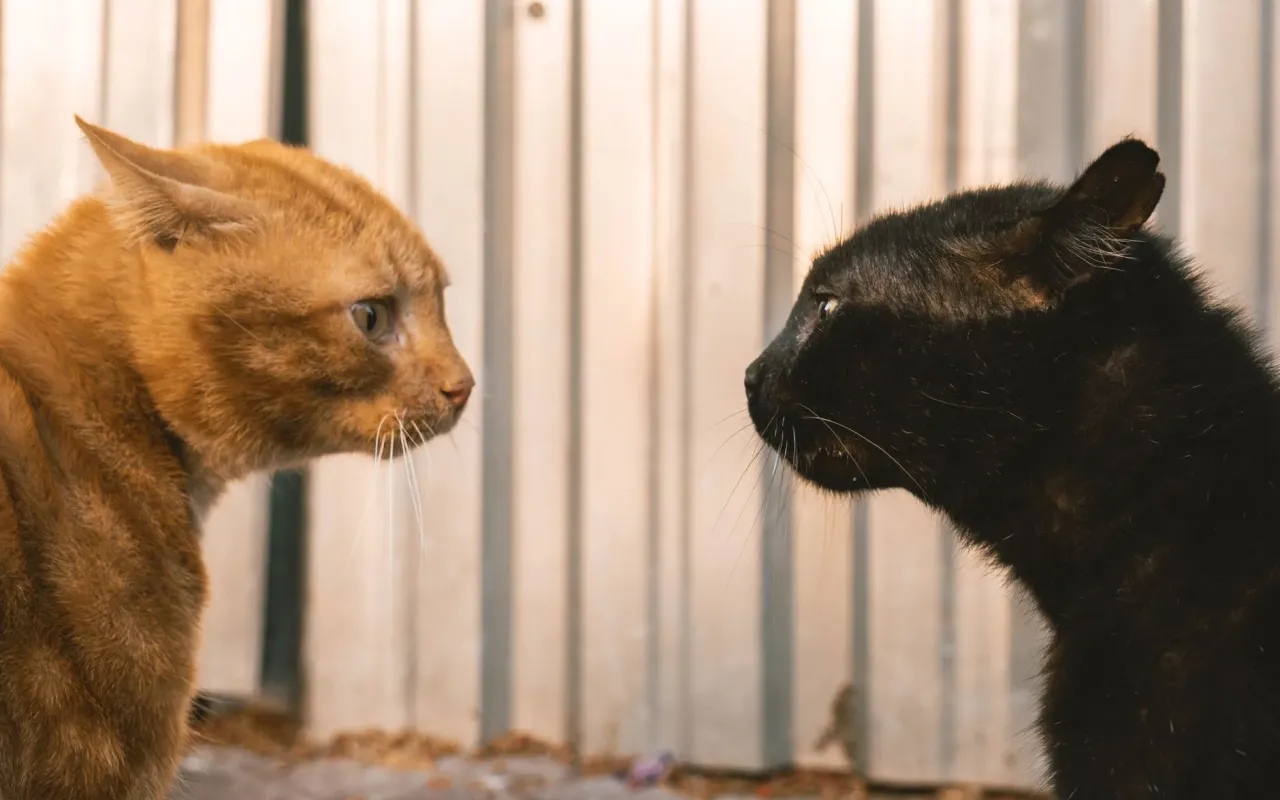
Watch the ears alongside the tail and you get a near-complete picture. Ears forward means relaxed and interested. Ears flattened sideways — sometimes called "airplane ears" — signal fear or defensiveness. Ears rotated back but not flat means she's annoyed but not yet threatened. Learning this combo takes about a week of paying attention and will save you a lot of scratched hands.
What a raised tail actually means when you come home
If your cat trots toward you with her tail straight up, she's greeting you the way she'd greet a familiar cat. It's a small thing, but it's genuine affection. Respond by offering a hand at her nose level and letting her decide whether to rub against it.
Biting During Play: Where the Line Actually Is
There's a real difference between a play bite and a fear bite, and the distinction matters. A play bite comes during wrestling or chasing, is usually inhibited (no broken skin), and your cat's body stays loose. A fear or overstimulation bite comes after warning signals — flattened ears, a twitching tail, dilated pupils — and it hurts.
Most play biting in adult cats traces back to how they were raised. Kittens who were hand-played with instead of toy-played with learn that human skin is a target. If you're dealing with this, the fix is never punishment — it's redirecting every single time. Keep a toy within arm's reach and swap your hand for it the moment teeth come out. Then end the session for a few minutes so she learns that biting ends the fun.
Never use your hands as toys, even gently, even when she's small. A kitten bite is cute; a nine-pound adult cat sinking teeth into your forearm is a different experience entirely, and the habit is much harder to undo than to prevent.
If the biting seems to come out of nowhere, especially during petting, that's overstimulation. Many cats have a threshold — often around 30 to 60 seconds of petting — after which the same touch that was pleasant becomes irritating. Learn her limit and stop before she reaches it.
Hiding, Headbutts, and the Affection You Might Be Missing
A cat who hides all day isn't necessarily sick, but it's worth a vet check first — hiding is one of the earliest signs of pain or illness in cats, who are experts at masking discomfort. If health is ruled out, hiding is usually about territory and safety. New furniture, a moved litter box, a visiting guest, or a loud appliance can all send a cat into hiding for days.
Give her vertical space and a quiet escape route. A covered bed in a low-traffic room or a shelf she can reach without being cornered does more than coaxing her out. Forcing interaction with a hiding cat almost always backfires.
On the flip side, the headbutt — that firm push of her forehead against your chin or hand — is one of the highest compliments a cat can pay you. She's depositing scent from glands on her face, marking you as part of her territory and her social group. The same goes for kneading your lap and the "slow approach with a raised tail." These are not random. They're her saying, in cat, that you're hers.
Actionable takeaway: Spend five minutes a day just observing your cat without interacting. Note her tail position, ear angle, and where she chooses to rest. Within a week you'll start predicting her behavior instead of reacting to it — and the "random" stuff stops feeling random at all.
The bottom line: your cat isn't mysterious or aloof. She's communicating constantly, in a language that's quieter and subtler than a dog's. Learn a handful of signals, respect her limits, and give her a routine that matches her instincts, and the weird behaviors either fade or become genuinely charming. She's been talking this whole time. Now you can hear her.