Fans now create custom birthday songs for their favorite stars, replacing costly billboards as AI makes music production cheap while personal fandom details remain the real work.
- November 18, 2026
The billboard was the old way to say it
For roughly fifteen years, the most visible gesture in fandom has been a purchase. Fan unions buy subway ads in Seoul, take out screens in Times Square, rent highway billboards, and donate to a charity in a singer's name. All of it is expensive. All of it is public.
The logic has been consistent: the message has to be big enough that the star might see it, or at least that the star's team might screenshot it.
Which is why the newest version of that same impulse looks, at first glance, like a step backwards. It is small. It is private. It is usually posted to an account with a few hundred followers. Somebody writes a song for the singer's birthday — lyrics about a debut date, a fandom name, a phrase from an old livestream — and uploads it as a gift.
What actually got cheaper
A finished song used to require four things: an idea, lyrics, an arrangement and a vocal, and a mix. Three of those were expensive enough to put a floor under the price, which is why bespoke music was reserved for weddings and anniversaries.
The pipeline is shorter now. Arrangement, vocal character and delivery have become parameters and a file. What remains genuinely hard is the specific detail — the debut date, the inside joke, the thing only people inside the fandom would recognize. Writing that verse is the work, and it happens to be the one part a fan already knows better than any professional the artist could hire.
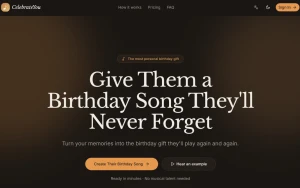
The cost of a finished track collapsed from "book a studio" to "answer a few questions". A tribute that used to require a session musician can now be a custom birthday song assembled from a fan's own memories, delivered the same afternoon, and posted before the day is over.
The demand is all around us
The vocabulary shifted before the product did. In the US, "custom song" runs about 1,600 searches a month and climbed roughly 88% in its most recent quarter. The occasion-specific phrasing, "custom birthday song," holds about 880 a month — and that is where buying intent sits, as opposed to the far larger listen-side phrases that carry a fraction of the commercial value.
Advertising data makes the split unusually visible. Top-of-page bids on buying-side terms land between $2 and $16, while plain birthday-listening phrasing sits at a few cents. Nearly identical traffic; two entirely different intentions behind it.
The clearest signal, though, is what happened to the old vocabulary. "Personalized birthday songs" averaged around a thousand searches a month across 2024 and 2025. In its most recent single month it registered roughly 70. A phrase does not collapse that hard because a product failed. It collapses because people stopped saying it.
Who is actually making them
Three profiles dominate, and they are not the people the industry expects.
The fandom-native writer.
Someone who has been in the community for years, knows the timeline, and can write a verse that lands because it names the right date. Their advantage is not musical training — it is archival memory.
The fan collective.
Accounts that already run birthday projects (the ads, the donations) have started adding a track to the package. For them a song is one more deliverable in a project they were organizing anyway.
The small studio.
Producers who noticed that the fastest-growing order type on their books is not a demo or a beat lease, but a one-off for a person who will never release it.
None of these three is trying to build a business in tribute music. That is precisely why the format is spreading — it costs them almost nothing to add.
Why a song outlives a post
Content about a star has a half-life measured in hours. A fan edit trends, gets reposted, and is gone by the weekend; a birthday hashtag peaks for one day and then falls off a cliff.
A song doesn't work that way. It can be covered, re-edited, used as a soundtrack for someone else's video, sung badly at a fan meet. It becomes a thing that exists outside the day it was made for.
That durability is the whole reason the format is spreading. A project that ends when the birthday ends is a tweet. A project that keeps getting reposted is an artifact.
The legal grey zone nobody is discussing
Fan-made tribute songs live in a strange place. They are not released commercially, they carry no ISRC, they appear on no chart, and they generate no royalty statement — so they are commercially invisible even when tens of thousands of people have heard them.
Two questions follow, and neither has a settled answer. What happens when a tribute leans on a melody or a vocal that sounds like the artist it honors — homage or infringement? And what happens when a platform monetizes a fan project while the fan who wrote the song receives nothing but likes?
Labels have historically tolerated fan projects because they caused no measurable harm. Monetization changes that arithmetic, and the industry has not yet decided how it feels about it.
What the birthday ritual reveals
Fandom's most reliable ritual is not the release, the tour, or the comeback. It is the birthday — because a birthday is the one date that belongs to the person rather than the product. Nothing is being sold. There is nothing to stream, nothing to pre-order, no ticket on sale.
That gap is where fans do their most personal work: the donation, the ad, the cover version, and now the song.
And there is a smaller detail worth noticing. The same technique that makes it easy to write a song for a pop star makes it easier to write one for your mother. The process does not care who the subject is. The specificity does the work either way.
The new sentence
Somewhere in the last two years, "I made you something" stopped meaning a playlist and started meaning a track that did not exist until you asked for it.
Fandom got there first, as it usually does — with a birthday, a deadline, and a chorus that only four hundred people will ever hear.