Skip the generic checklist. Here's what actually matters for winter driving prep, from tire tread depth to the gear that saves you in a ditch.
- November 4, 2026
AceShowbiz - Every November, millions of drivers swear they'll "get the car ready for winter" and then do nothing except toss a scraper in the back seat. Then the first real storm hits, and the highway turns into a parking lot of spinning tires and panicked phone calls. The difference between a stressful winter and a genuinely safe one usually comes down to a few hours of prep done before the snow flies — not during it.
Here's the honest version of winter driving preparation, minus the fluff. Some of it costs money, some of it costs twenty minutes, and all of it is worth doing before the temperature drops below freezing.
Start With Your Tires, Because Nothing Else Matters as Much
Tires are the only thing connecting your 4,000-pound vehicle to the road, and winter exposes every weakness they have. The single most useful measurement you can take this week is tread depth. Grab a quarter, stick it upside down into a groove, and look at Washington's head. If the top of his head is flush with the tread, you're at roughly 4/32 of an inch — and that's the point where wet and snowy traction falls off a cliff. New tires start around 10/32. Below 4/32, you're driving on hope.
All-season tires are fine for mild winters, but if you live somewhere that sees sustained freezing temperatures and regular snow, dedicated winter tires are a genuine safety upgrade, not a marketing gimmick. The rubber compound in winter tires stays flexible below 45°F, while all-seasons harden like hockey pucks. That flexibility is what lets them grip ice and packed snow. Tests consistently show winter tires cutting stopping distances on ice by 30 to 40 percent compared to all-seasons — the difference between stopping short of the car ahead and hitting it.
Don't forget tire pressure. Cold air shrinks the air inside your tires; for every 10°F drop, you lose about 1 PSI. A tire that was perfectly inflated in October can be noticeably low by January, which hurts traction and fuel economy. Check pressures monthly in winter, and check them when the tires are cold — meaning before you've driven more than a mile.
Practical takeaway: Do the quarter test today. If you're anywhere near 4/32, start shopping for tires now, before the pre-storm rush when every shop in town is booked solid.
The Emergency Kit You'll Actually Use (and What to Skip)
Most winter emergency kit lists read like someone's packing for an arctic expedition. You don't need a folding shovel, a flare gun, and three days of freeze-dried meals. You need gear that handles the realistic scenario: you're stuck on a shoulder or in a slow-moving backup for two or three hours, it's dark, and it's 15°F outside.
Start with warmth. A wool blanket or a couple of those foil emergency blankets take up almost no space and can be the difference between uncomfortable and dangerous if your engine quits. Add gloves, a hat, and — this is the one people forget — waterproof boots. Walking to a gas station or flagging down help in sneakers at 20°F is miserable and risky. Keep these items in the car permanently, not in the garage where you'll forget them.
Then handle visibility and communication. A phone charger that works without the engine running (a power bank with a full charge), a flashlight with fresh batteries, and a small bag of sand or kitty litter for traction if you get stuck. Jumper cables or a portable jump starter are worth their weight in gold when your battery gives up at 6 a.m. Finally, keep a folding snow shovel — the compact kind — because digging out a buried wheel takes five minutes with one and an hour with your hands.
Practical takeaway: Pack the kit once, in a single sturdy bag or bin, and leave it in the trunk from November through March. Restock the flashlight batteries and power bank every fall.
Battery, Fluids, and the Under-the-Hood Checks People Skip
Car batteries hate cold. At 0°F, a battery has roughly half the cranking power it has at 80°F, while the engine needs more power to turn over. That math is why so many cars won't start on the coldest morning of the year. If your battery is more than three or four years old, have it tested at an auto parts store — most do it free in about five minutes. Replacing a weak battery on a sunny Saturday beats waiting for a tow truck in a snowbank.
Fluids matter too, and winter changes the rules. Engine coolant should be a proper mix — usually 50/50 antifreeze and water — so it doesn't freeze and crack your engine block. Windshield washer fluid should be rated for below-freezing temperatures; the summer stuff will freeze on your windshield and smear into an opaque mess exactly when you need to see. Top off with a winter-rated fluid that protects down to at least -20°F.
Oil is the third piece. If you're due for an oil change, get it before winter, and consider whether your manual recommends a lower-viscosity oil for cold starts. Thick, cold oil makes your engine work harder on every single start. And check your belts and hoses for cracks — cold makes old rubber brittle, and a snapped belt in a blizzard is a bad day.
Practical takeaway: Book a pre-winter service in October or early November. Shops fill up fast once the first forecast mentions snow, and prices and wait times both climb.
Driving Technique: The Habits That Keep You Out of the Ditch
Preparation only gets you so far. How you drive on snow and ice determines the rest. The core principle is simple: do everything more slowly and more smoothly. Accelerate gently, brake early, and steer with small, deliberate inputs. Sudden moves break traction, and once you're sliding, your steering wheel stops doing what you expect it to do.
Double your following distance. The three-second rule becomes six to eight seconds in winter conditions, because stopping distances on snow can double or triple. That gap is your buffer against the driver ahead who brakes suddenly, and it's also your room to react if you start to slide. On ice, look and steer where you want to go rather than staring at what you're trying to avoid — your hands tend to follow your eyes.
Know your car's systems. If you have anti-lock brakes, don't pump the pedal in a panic stop; press firmly and let the system do its job, even if you feel the pulsing. If you have all-wheel drive, remember it helps you accelerate but does nothing for stopping or steering — AWD cars slide off the road just as easily as anything else once momentum takes over. And if you start to skid, ease off the gas and steer gently in the direction you want the front of the car to go. Slamming the brakes usually makes it worse.
Practical takeaway: Find an empty, snow-covered parking lot and practice a few gentle stops and turns. Ten minutes of low-speed practice teaches you more about how your car behaves than any article can.
Before You Leave: The Two-Minute Routine
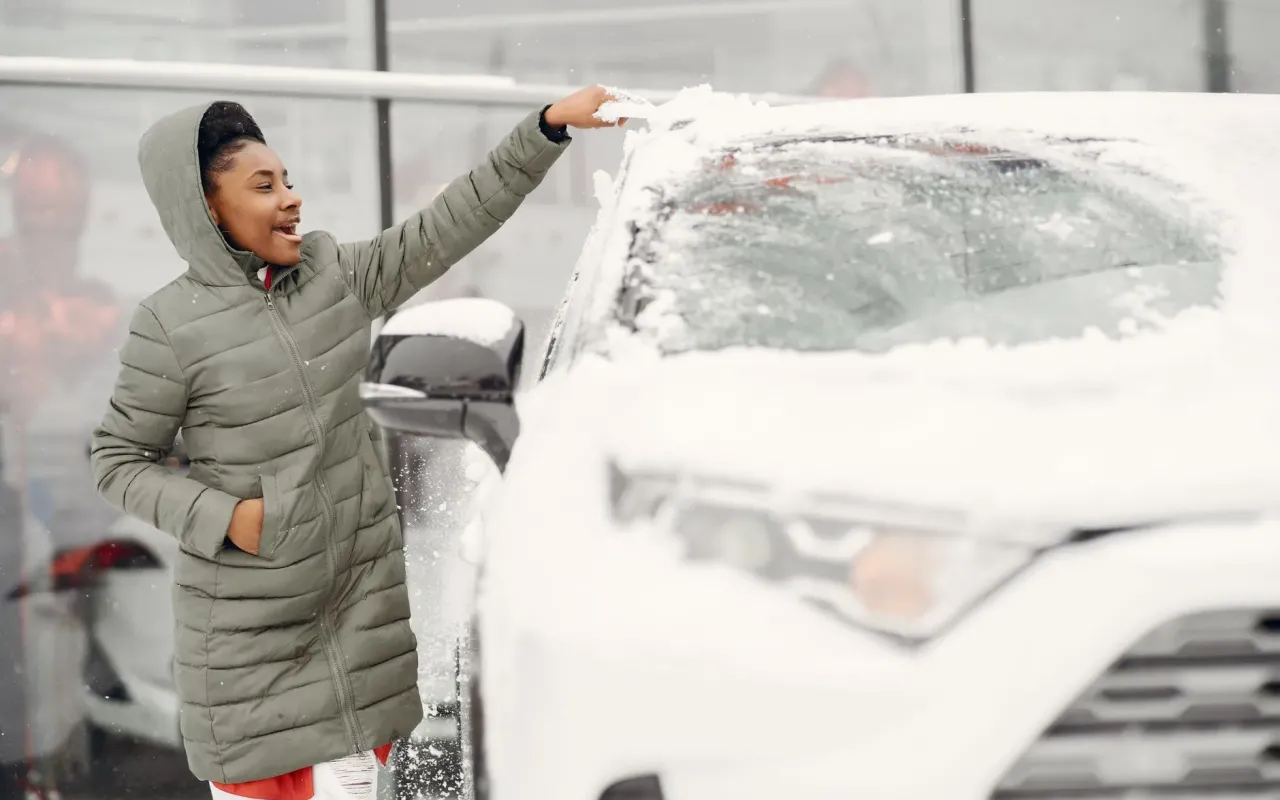
Most winter driving problems start before the car moves. Clear all your windows completely — not just a peephole in the windshield. Snow left on the roof will slide forward onto your windshield the first time you brake hard, and ice flying off at highway speed is a hazard to everyone behind you. Budget an extra ten minutes on snowy mornings so you're not scraping a tiny patch and squinting through it.
Check the forecast and road conditions before you commit to a trip. Most states run road-condition websites and 511 phone lines that tell you exactly where the plows are and which routes are trouble. If a winter storm warning is in effect and your trip isn't necessary, staying home is a legitimate and smart decision. No errand is worth a highway pileup.
Finally, tell someone your route and expected arrival time on longer trips, and keep your phone charged. If something goes wrong, staying with your vehicle is almost always safer than walking for help — your car is visible, sheltered, and easier for rescuers to find. Run the engine periodically for warmth, but make sure the tailpipe isn't buried in snow, since a blocked exhaust can push carbon monoxide into the cabin.
Practical takeaway: Build a two-minute pre-drive habit: full window clear, phone charged, route checked. It's the cheapest safety upgrade you'll ever make.
Winter driving doesn't have to be a gamble. A few hours of prep in the fall — tires, battery, fluids, a real emergency kit, and a handful of smarter driving habits — turns the season from something you dread into something you handle. Do the work now, while the weather is still on your side.