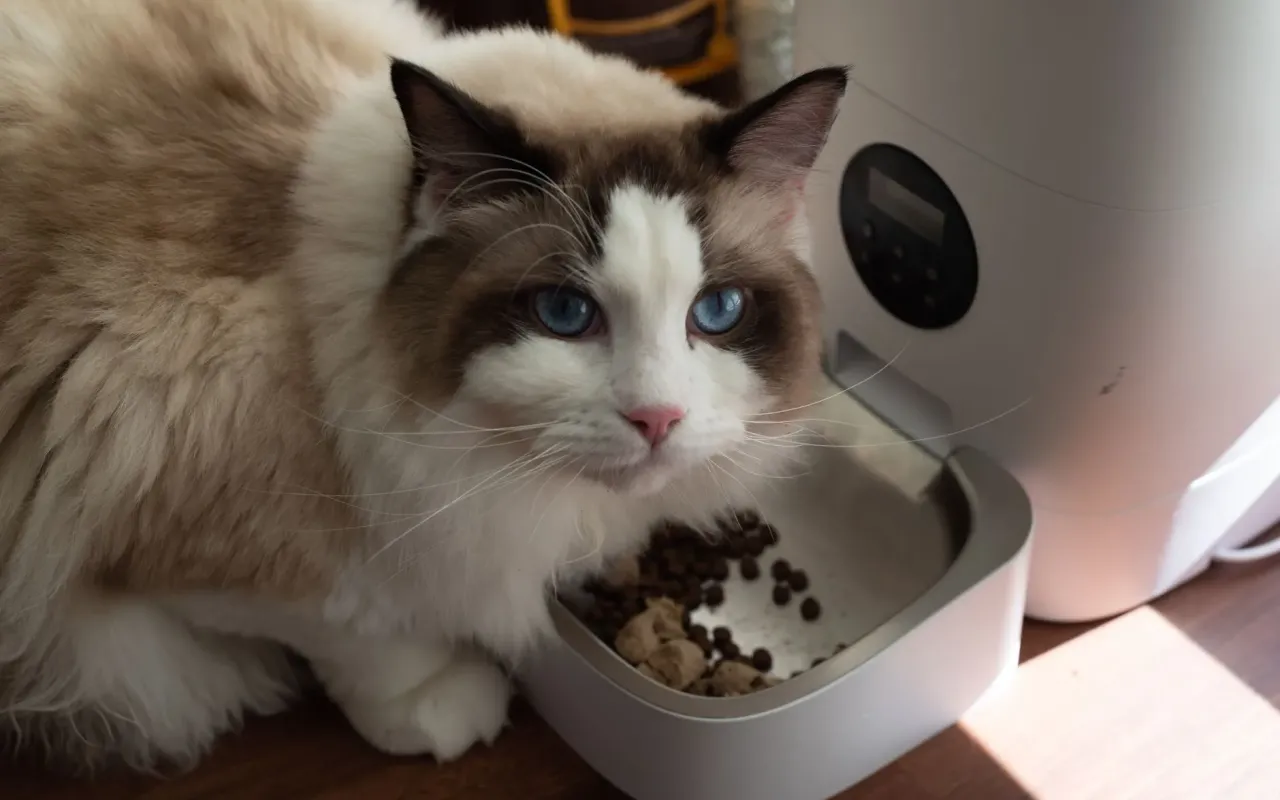
Thinking about an automatic cat feeder? We break down the real pros, cons, and hidden pitfalls of popular models for busy cat owners.
- June 28, 2026
The 5 AM Wake-Up Call That Changed My Mind
For three straight months, my cat, Mochi, woke me up at exactly 5:17 AM. Not by meowing politely. By knocking my phone off the nightstand, then sitting on my face. I tried everything: ignoring her, feeding her later, even buying a white noise machine. Nothing worked. She was training me, not the other way around.
That's when I started researching automatic feeders. I figured one gadget could save my sleep schedule and stop Mochi from becoming a tiny, furry tyrant. But I quickly learned that not all feeders are created equal. Some are lifesavers. Others are expensive paperweights that will leave your cat hungry and you frustrated.
If you're a busy person with a cat who acts like they're perpetually starving, you need to know what actually works. Here's the honest, no-nonsense breakdown of automatic cat feeders—the pros, the cons, and the models that are worth your money.
The Real Reason You Need an Automatic Feeder (It's Not Just Laziness)
Let's clear this up right now: buying an automatic feeder doesn't mean you're a bad cat owner. It means you're a realistic one. Cats thrive on routine, and life doesn't always cooperate. Maybe you work 12-hour shifts, travel for weekends, or just want to sleep past sunrise without being assaulted by a paw to the eye.
Automatic feeders solve a specific problem: consistent portion control and timing. A 2021 study from the Journal of Feline Medicine and Surgery found that cats fed on a strict schedule had lower stress markers and healthier body weights than those fed randomly. The feeder becomes the enforcer of that schedule, not you.
Practical tip: If your cat is prone to weight gain or has a medical condition like diabetes, an automatic feeder can be a literal lifesaver. It delivers exact portions at exact times, removing the temptation to "just give them a little extra" because they look cute.
When You Should NOT Buy One
Automatic feeders aren't for everyone. If your cat is on a prescription diet that needs to be mixed with water or medication, skip the feeder. Wet food feeders do exist, but they're finicky and require refrigeration. Also, if you work from home and have a flexible schedule, you might not need one. The feeder is a tool, not a replacement for bonding with your cat.
Gravity Feeders vs. Programmable Feeders: The Great Divide
When you start shopping, you'll hit two main categories: gravity feeders and programmable feeders. They sound similar, but they're wildly different in practice.
Gravity feeders are the simplest. You dump a bag of kibble into a hopper, and gravity slowly releases food into a bowl as your cat eats. They're cheap (usually under $30) and require zero setup. But here's the catch: they have no timer, no portion control, and no way to stop your cat from eating the entire week's worth of food in one sitting. If you have a cat who self-regulates, great. If you have a food-obsessed cat like mine, you'll be dealing with a vomiting, bloated disaster by day two.
Programmable feeders are the smarter choice for most cat owners. These let you set specific meal times and portion sizes—usually down to 1/8 cup increments. You can schedule up to 6 meals a day, which mimics a cat's natural grazing pattern. The best models have backup battery systems in case of power outages and locking mechanisms to prevent smart cats from prying the lid open.
Practical tip: If your cat is a grazer (eats small amounts throughout the day), a programmable feeder with multiple small meals works best. If your cat is a gobbler (inhales food), you need a feeder with a slow-feed bowl attachment or one that dispenses kibble one piece at a time.
Pros of Automatic Feeders: What Actually Works
Let's start with the good stuff. When an automatic feeder works well, it's transformative for both you and your cat.
You reclaim your sleep and sanity. This is the #1 reason people buy them. Instead of waking up at 6 AM because your cat has decided breakfast is non-negotiable, you set the feeder for 7 AM. The feeder becomes the bad guy. Your cat learns that the machine, not you, controls the food. After about a week, Mochi stopped waking me up entirely. She now sits in front of the feeder at 6:58 AM, waiting patiently.
Portion control becomes effortless. Overfeeding is the #1 cause of feline obesity, which affects nearly 60% of domestic cats in the U.S., according to the Association for Pet Obesity Prevention. With a programmable feeder, you set the exact amount per meal and never second-guess yourself. No more "just a little extra" because they gave you the sad eyes.
Travel becomes less stressful. If you're gone for a weekend, you don't need to beg a friend to come over twice a day. The feeder handles it. Just make sure to test it for a few days before you leave so you know it works. I learned this the hard way when my first feeder jammed on day one of a trip, and my cat went 18 hours without food. (She forgave me. Barely.)
Cons of Automatic Feeders: The Ugly Truth
Now for the downsides. If you buy a cheap or poorly designed feeder, you'll regret it. Here's what can go wrong.
Jamming is the #1 killer of automatic feeders. Most feeders use a rotating auger or paddle to push kibble out. If your kibble is oddly shaped, too large, or too dusty, it will jam. This happened to me with a popular $40 model. I came home to find Mochi sitting next to an empty bowl, staring at the feeder like it had personally betrayed her. The fix? Buy a feeder with a wide dispensing chute and use kibble that's uniform in size (like Hill's Science Diet or Purina Pro Plan). Avoid irregular shapes like freeze-dried raw nuggets.
Battery life is often terrible. Many feeders claim to run on batteries for weeks, but in reality, they die in 3-5 days if you use the Wi-Fi feature or have frequent dispensing. Always buy a feeder that can run on AC power with batteries as a backup only. I recommend the PetSafe Healthy Pet Simply Feed, which uses D-cell batteries that last up to 6 months. Yes, they're huge. Yes, it's worth it.
Smart cats will outsmart the feeder. Some cats learn to paw at the lid, press buttons, or even tip the whole unit over. I've seen videos of cats rolling feeders across the floor to get kibble to fall out. If your cat is clever (and most are), you need a feeder with a locking lid and a weighted base. The WOPET automatic feeder has a lock that requires two hands to open. Your cat has paws, not hands. That's the only advantage you have.
How to Choose the Right Feeder for Your Cat
Not all feeders are created equal, and your cat's personality matters more than the brand name. Here's a quick framework to help you decide.
For the food-obsessed gobbler: Look for a feeder with a slow-feed function or a spiral dispensing mechanism. The Cat Mate C5000 has a rotating tray that opens one compartment at a time, forcing your cat to eat only what's available. It also works with wet food, which is rare. Just be prepared to refrigerate the unused compartments.
For the picky or anxious cat: Some cats are scared of mechanical noises. The sound of a motor whirring can send them hiding under the bed. Look for a feeder with a silent motor or a "quiet mode." The HoneyGuaridan feeder is known for being nearly silent, and it has a stainless steel bowl (plastic bowls can cause feline acne).
For the multi-cat household: If you have more than one cat, you need a feeder that can be set to different portions for different cats—or you need multiple feeders. The SureFeed Microchip Feeder is expensive ($150+) but worth every penny. It only opens for the specific cat whose microchip or collar tag is registered. No more food stealing, no more resource guarding.
Setting Up Your Feeder: Avoid These 3 Mistakes
Even the best feeder will fail if you set it up wrong. Here are the three most common mistakes I see new owners make.
Mistake #1: Not transitioning your cat. You can't just swap from hand-feeding to machine-feeding overnight. Your cat will be confused and possibly scared. Start by placing the feeder on the floor without food for 2-3 days. Let your cat sniff it, rub against it, and get used to it. Then put a few pieces of kibble inside and let the feeder dispense them manually. Finally, set a single meal time. This gradual process takes about a week but prevents stress-induced vomiting or refusal to eat.
Mistake #2: Ignoring the cleaning instructions. Kibble dust and oil accumulate inside the hopper over time. If you don't clean the feeder every 2-4 weeks, bacteria can grow. I've seen feeders develop mold in the auger mechanism. Always disassemble the feeder and wash the parts with warm, soapy water. The best feeders have dishwasher-safe components. The PetSafe feeder is a pain to clean manually; the WOPET is easier because the hopper detaches completely.
Mistake #3: Not testing before you rely on it. Run the feeder for a full 48-hour cycle while you're home. Watch for jams, battery drain, or weird noises. If it fails while you're home, you can fix it. If it fails while you're on a work trip, your cat pays the price. I learned this the hard way, as I mentioned. Don't be like me.
What About Wet Food Feeders?
Wet food feeders exist, but they're a different beast entirely. Most use ice packs to keep the food cold, but those only last 6-8 hours. If you're gone for a full day, the food can spoil. The Cat Mate C5000 is one of the few reliable options, but it requires you to pre-portion the food into compartments and freeze them. It's not a set-it-and-forget-it solution.
If your cat eats wet food, consider a hybrid approach: use an automatic feeder for dry food during the day, and feed wet food yourself in the morning and evening. This gives your cat the hydration benefits of wet food without the risk of spoiled meals.
Final Verdict: Is It Worth It?
After testing four different feeders over the past year, here's my honest take: an automatic feeder is worth buying if you value consistency and your own sleep. The right model can reduce stress for both you and your cat, prevent overeating, and give you freedom to leave the house without guilt.
But don't cheap out. A $25 gravity feeder will cause more problems than it solves. Spend $50-$100 on a programmable model from a reputable brand like PetSafe, WOPET, or SureFeed. Read reviews, check for jamming complaints, and always have a backup plan (like a neighbor with a key).
Mochi now eats at 7 AM, 12 PM, and 7 PM. She stopped waking me up. She stopped knocking things off counters. She even seems calmer, because she knows exactly when food will arrive. The feeder became the structure she needed—and the peace I needed.
Your cat might not need a feeder. But if they're training you, it's time to flip the script.