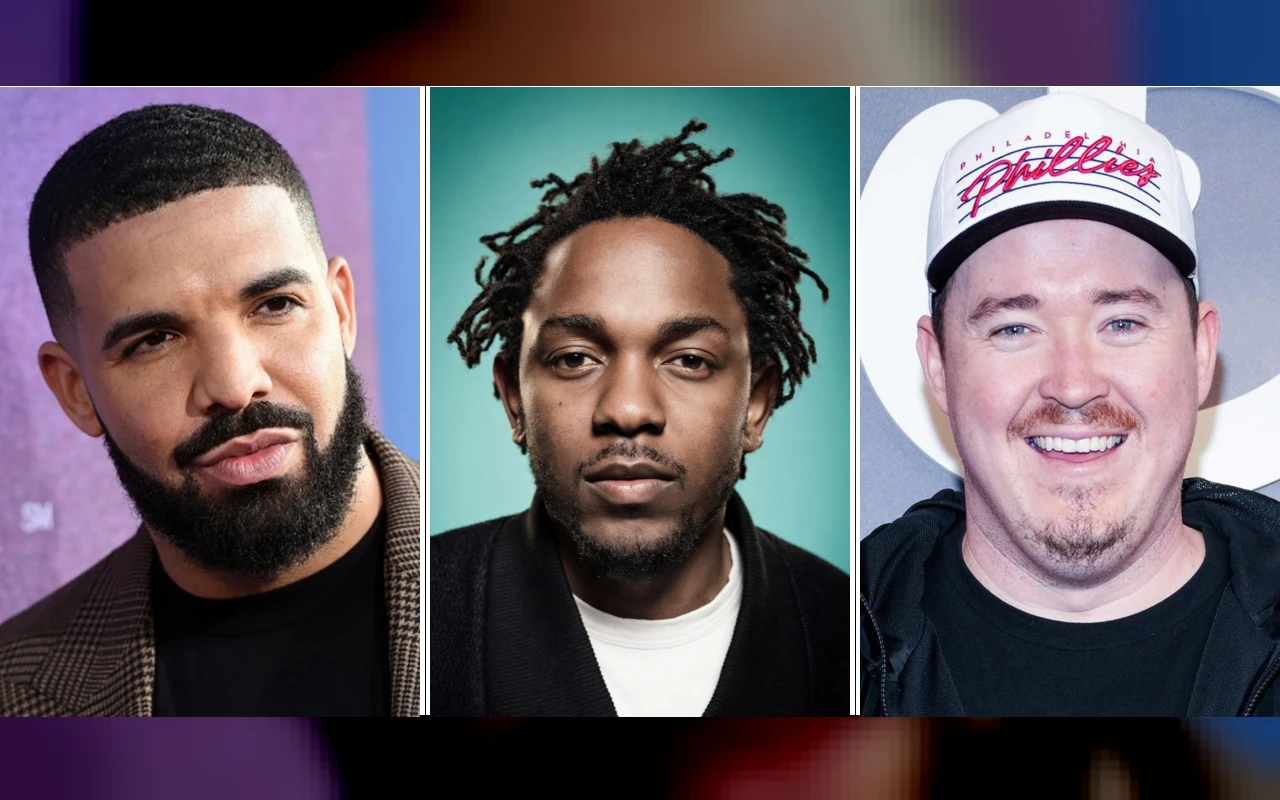
In August 2024, Drake dropped 100GB of content after Kendrick Lamar’s diss, aiming to overwhelm and reshape public perception.
- May 16, 2026
AceShowbiz - In August 2024, just months after the release of Kendrick Lamar’s diss track "Not Like Us," Drake attempted to shift attention away from his public setback by unleashing an enormous volume of content online. This unprecedented data release amounted to 100 gigabytes, featuring a new EP, private conversations with other celebrities, and behind-the-scenes footage of recording sessions for fan-favorite songs. However, this deluge of material demanded that fans invest significant time sifting through the extensive archive to uncover worthwhile content.
The intention behind this overwhelming drop was not to directly counter any specific narrative but to complicate the discourse by sheer volume. Unable to convince the public that he had emerged victorious in his feud with Kendrick, Drake aimed instead to saturate the space with so much content that listeners would become uncertain about their perceptions of him. Ultimately, this initial effort failed to regain full public intrigue, as Kendrick Lamar continued to bask in the aftermath of his diss, marked by a Super Bowl performance and multiple Grammy wins over the following year.
Nonetheless, this early experiment foreshadowed a broader marketing approach that Drake would refine. The tactic, often described as "flooding the zone," is a modern propaganda strategy credited largely to MAGA strategist Steve Bannon. It operates on the premise that dominating public attention in the digital age doesn’t require positive messaging but instead relies on sheer volume—releasing so many conflicting or confusing messages that the audience becomes overwhelmed and unsure what to focus on.
After witnessing how effectively this approach was employed during the Trump administration, Drake returned to this strategy with greater precision on May 15, 2025. On that day, he dropped not one but three albums simultaneously: the highly anticipated Iceman, alongside surprise releases Habibti and Maid of Honour. This triple release totaled 43 new tracks spanning nearly two and a half hours of music.
But the flood didn’t stop there. The album launch coincided with the fourth episode of Drake’s Iceman livestream series on YouTube, where the music was premiered. Accompanying the release were 14 new music videos, one notably featuring a controversial cameo by comedian Shane Gillis in the video for the track "Dust." Further fueling the buzz was the unconventional rollout method: Drake hid the release date of Iceman inside a large block of ice in his hometown of Toronto, sparking public excitement and media coverage.
The strategy’s goal was clear—to reestablish Drake as the dominant figure in music conversation. Since tracks from Iceman began leaking on May 14, online discussions have exploded. Fans and critics alike dissected lyrics where Drake took jabs at rivals such as Kendrick Lamar, Rick Ross, A$AP Rocky, LeBron James, and J. Cole. This chatter generated curiosity, inevitably driving streams and engagement.
However, for listeners seeking to critically evaluate the artistic quality of these three albums, the sheer volume presents a challenge. Ideally, Drake would use this body of work to prove his ongoing relevance and ability to create chart-topping hits, regardless of his status as a cultural punchline. Whether he succeeded remains a subject of debate.
On Maid of Honour and Habibti, Drake revisits musical styles that previously brought him acclaim, such as the dance rhythms reminiscent of Honestly, Nevermind and the R&B nuances of More Life. While some melodies lack the memorable catchiness of his past work and certain vocal performances can feel grating, there are undeniable highlights scattered across the 25 songs—for example, the house music outro on "Cheetah Print," featuring Sexy Redd, which provides a magnetic moment for fans.
Traditional expectations might suggest that Drake should use these albums to directly address his critics and reassert his credibility in rap. Yet, by flooding the zone, his responses do not need to be flawless or fully coherent. On the track "Make Them Remember," for instance, he critiques LeBron James by saying he built his career by "switching teams up," a weak jab given that Drake himself has been criticized for shifting between various regional musical styles. Questions also linger around claims made on "Make Them Pay," such as whether Kendrick Lamar’s "100 million streams" have indeed disappeared—an assertion that remains unverified.
Moreover, despite Drake’s lyrical emphasis on remembering those who stayed neutral during his feud with Kendrick Lamar, the album features a guest appearance by 21 Savage, who notably refrained from taking sides. Individually, these contradictions may seem significant, but collectively, they blend into the noise created by the overwhelming amount of material.
The average listener is unlikely to scrutinize every claim or inconsistency. Instead, the glut of content itself becomes a strategic distraction, blurring clear narratives and forcing audiences to navigate a confusing landscape of messages.
Interestingly, the impact of this flooding tactic extended beyond music circles. On a Friday morning, the official White House X (formerly Twitter) account posted an edited version of Iceman’s album cover. The original image depicts a diamond-studded silver glove, reminiscent of Michael Jackson’s iconic glove. In contrast, the White House’s version replaced it with a glittering MAGA chain, an odd choice given that the album lacks any political themes and that Drake, a Canadian artist, has no known affiliation with the MAGA movement.
Despite its illogical nature, the post generated significant discussion. It momentarily diverted public attention from ongoing political controversies, exemplifying the power of flooding the zone to distract and overwhelm. When so much content floods the digital space, individual messages lose meaning, and the focus shifts to the sheer volume rather than substance.
Drake’s 2025 triple album release and accompanying media blitz demonstrate a sophisticated use of this modern strategy. Whether the tactic enhances or diminishes his artistic legacy is yet to be determined, but the approach undeniably reshapes how artists engage with audiences in an era saturated by information and competing narratives.