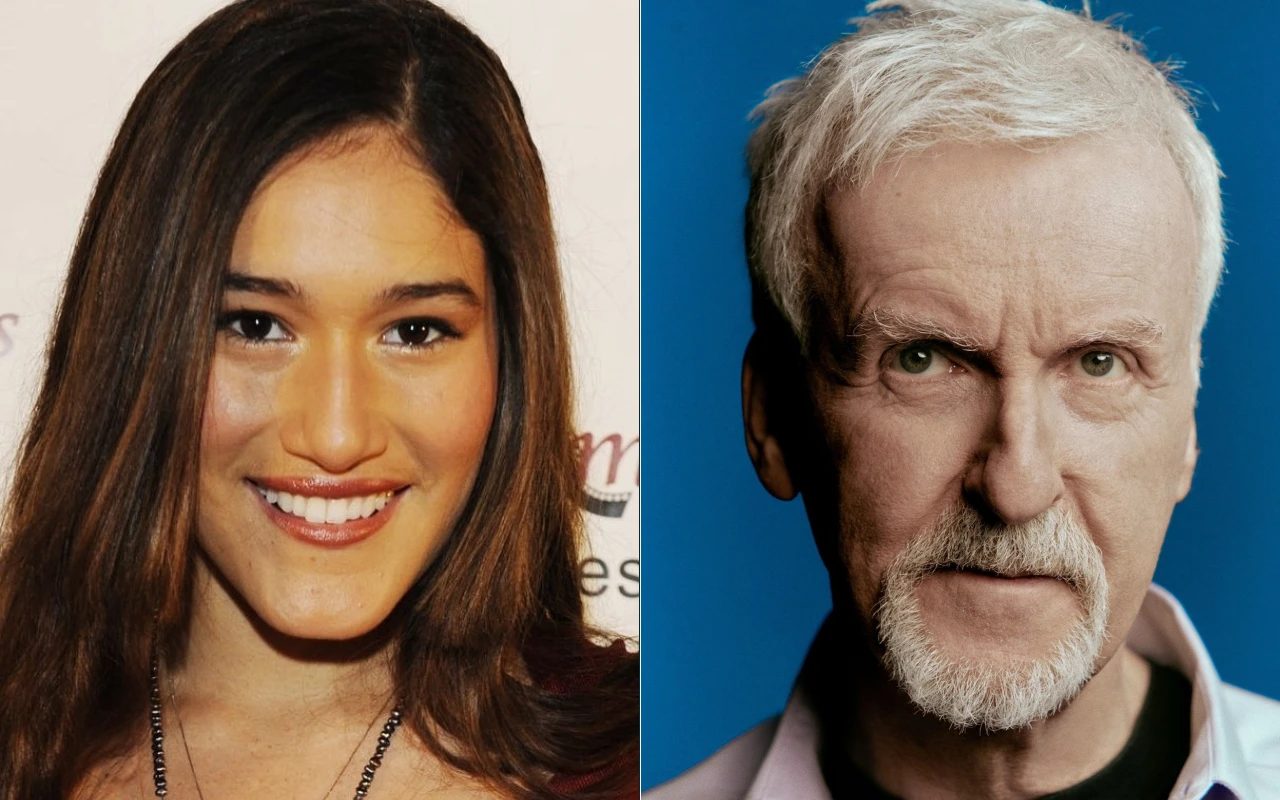
Q'orianka Kilcher sues James Cameron and Disney, alleging her face was used without permission or payment to create Neytiri in Avatar.
- May 9, 2026
AceShowbiz - Q'orianka Kilcher, known for her role in Yellowstone, has initiated legal action against filmmaker James Cameron and The Walt Disney Company. The lawsuit alleges unauthorized use of her facial likeness in the blockbuster film Avatar without her permission or any form of compensation.
The complaint, filed on a recent Tuesday and reviewed by The Hollywood Reporter, states that Cameron drew direct inspiration from Kilcher’s facial features after viewing her performance in Terrence Malick’s 2005 film The New World. At the time, Kilcher was just 14 years old. According to the suit, Cameron then directed his design team to use her face as the foundation for the character Neytiri in Avatar.
Central to the lawsuit is a YouTube video dated April 24, in which Cameron discusses his Tech Noir museum exhibit in Paris. In the video, the director recounts how he crafted Neytiri's design, specifically noting that he noticed Kilcher’s appearance in The New World and used her facial structure as a model for the character.
In the video, Cameron states, “This is actually her lower face,” referring to Kilcher’s features. The filmmaker also recounts a story that Kilcher references in her lawsuit: a personal encounter in which Cameron gifted her a signed sketch of Neytiri, acknowledging her as the character’s inspiration.
The lawsuit outlines that Kilcher first met Cameron in March 2010 at an environmental charity event shortly after the 2009 release of the original Avatar. At this event, Cameron expressed admiration for Kilcher’s activism and mentioned he had “something for you.” Following this, Kilcher and her mother visited Cameron’s office to receive what the filing describes as a “surprise gift.”
Although Cameron was not present during the office visit, his assistant presented Kilcher with a sketch of Neytiri personally drawn and signed by the director of Titanic. Alongside the sketch was a handwritten note that read, “Your beauty was my early inspiration for Neytiri. Too bad you were shooting another movie. Next time.”
In a press statement, Kilcher explained her initial reaction to receiving the sketch: “I believed it was a personal gesture, at most a loose inspiration tied to casting and my activism.” She continued, “Millions of people opened their hearts to Avatar because they believed in its message and I was one of them. I never imagined that someone I trusted would systematically use my face as part of an elaborate design process and integrate it into a production pipeline without my knowledge or consent. That crosses a major line. This act is deeply wrong.”
The legal complaint emphasizes how Cameron, described as one of Hollywood’s most influential filmmakers, allegedly exploited a young Indigenous girl’s biometric identity and cultural heritage to build a hugely successful film franchise. The suit asserts that Kilcher’s facial features were digitally extracted and replicated as biometric data at age 14, then commercially used in Avatar without her knowledge or approval.
The suit clarifies that it does not aim to restrict artistic expression or speech. Instead, it seeks restitution for what it terms the unlawful appropriation of Kilcher’s physical likeness, which was used as a commercial asset generating billions in revenue.
Kilcher is pursuing multiple remedies, including compensatory and punitive damages, disgorgement of profits linked to the use of her likeness, injunctive relief, and a corrective public disclosure acknowledging the unauthorized use of her image.
Arnold P. Peter, lead attorney from Peter Law Group representing Kilcher, stated, “What Cameron did was not inspiration, it was extraction. He took the unique biometric facial features of a 14-year-old Indigenous girl, ran them through an industrial production process, and generated billions of dollars in profit without ever once asking her permission. That is not filmmaking. That is theft.”
As of the article’s publication, The Hollywood Reporter has reached out to both Cameron and Disney for comment but has not received a response.
This lawsuit highlights complex issues surrounding biometric likeness rights, Indigenous representation, and the boundaries of artistic inspiration in the entertainment industry. The outcome may have significant implications for how studios and filmmakers approach the use of real individuals’ physical traits in character design and digital production pipelines.
The case is ongoing, with the involved parties yet to reach a resolution. The legal community and fans alike will be watching closely as this matter unfolds.