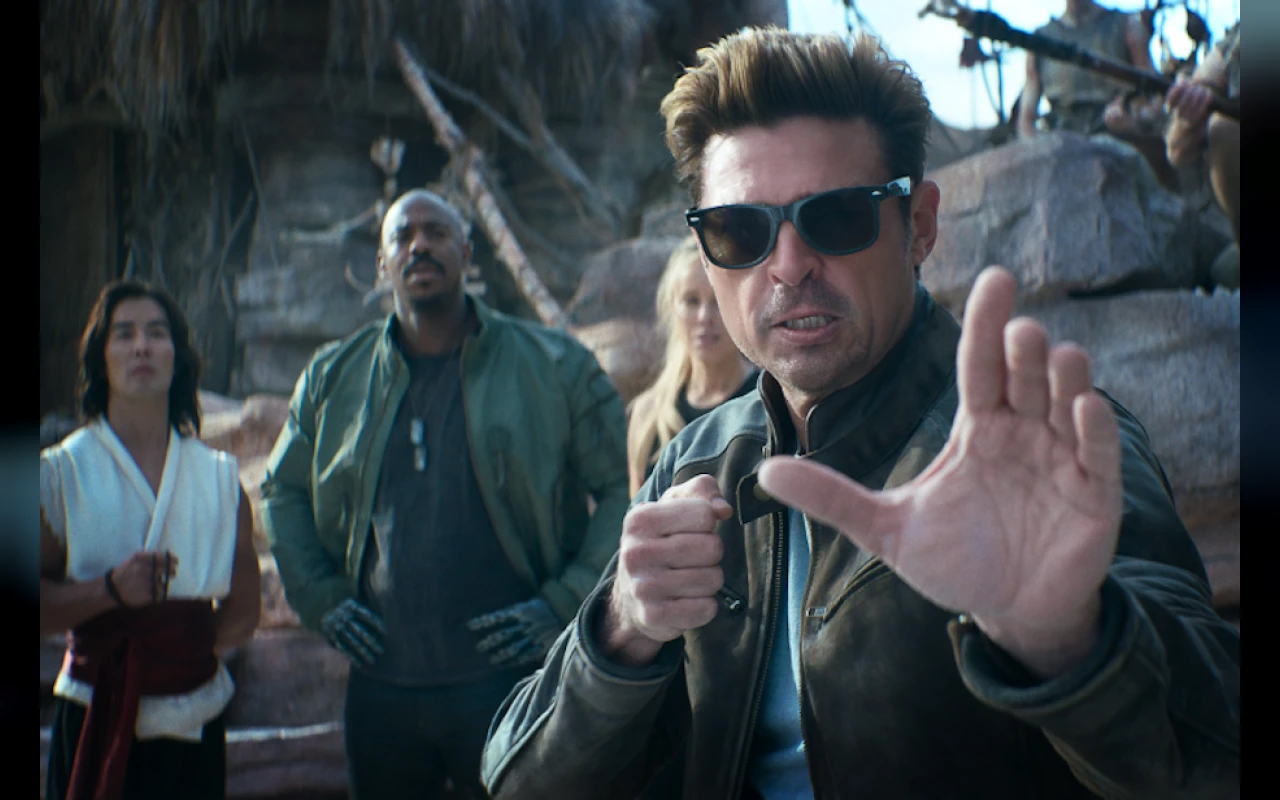
Mortal Kombat II blends brutal fights with surprising humor, revisiting the iconic tournament’s legacy in a dynamic martial arts spectacle.
- May 7, 2026
AceShowbiz - Mortal Kombat II continues the saga of the iconic fighting tournament with a mix of intense battles and surprising humor. The film builds on the legacy of Ed Boon and John Tobias' original "Mortal Kombat," which was once a groundbreaking arcade game known for its realistic visuals and graphic violence. Though the franchise has lost some of its initial cultural shock value over the years, this sequel strives to recapture attention through a dynamic martial arts spectacle.
The original "Mortal Kombat" revolutionized the fighting game genre by blending relative visual realism with brutal, sometimes shocking violence. It also sparked controversy among conservative groups at the time, who blamed video games like it for negatively influencing youth. However, as time passed, the franchise's impact faded into the background, becoming one of many long-running video game adaptations, with its realistic edge replaced by CGI avatars and less groundbreaking gore.
Despite this, the aura of importance around the "Mortal Kombat" brand persists, especially evident in the tone of the recent films. Director Simon McQuoid’s entries treat their characters and conflicts with a weighty seriousness that borders on the melodramatic. This self-seriousness is so pronounced that it invites a playful counterbalance, notably through casting two Han Solos, including Karl Urban, who bring a cheeky energy that lightens the mood.
The premise of Mortal Kombat II centers on an interdimensional tournament pitting Earth against the sinister Outworld. Earth's champions are fighting to prevent Outworld's domination through consecutive tournament victories, as losing means total conquest. The film assumes that if Earth were to win, they might take over Outworld, though this possibility is never explored. The filmmakers humorously imagine a Starbucks-filled wasteland replacing Outworld’s desolate landscapes.
The previous movie focused on magic tattoos as a means of selecting Earth's fighters, a concept dropped in this sequel for being too far-fetched even by "Mortal Kombat" standards. Now, as the tournament looms, Earth's team—comprising Liu Kang (Ludi Lin), Sonya Blade (Jessica McNamee), Jax (Mehcad Brooks), and Cole Young (Lewis Tan)—needs one more fighter. They recruit the former action star Johnny Cage (Karl Urban), who must rise to the occasion after initially showing reluctance.
The storyline echoes the vibe of "Galaxy Quest" mixed with martial arts action, but Johnny Cage’s introduction injects much-needed levity. Unlike the other heroes, he is less heroic and more self-interested at first, providing a relatable arc as he grows into his role. Karl Urban skillfully balances humor and sincerity, making Johnny Cage a standout character who breaks up the film’s otherwise earnest tone.
Throughout the film, Earth's champions battle Outworld villains including the imposing warlord Shao Khan (Martyn Ford), his undead wife Sindel (Ana Thu Nguyen), and his adopted daughter Kitana (Adeline Rudolph). The family dynamics in Outworld are as deadly as they are dysfunctional, turning brutal combat into a twisted form of family bonding.
Between these clashes, both realms engage in scheming to tip the balance in their favor. Shao Khan’s fusion with a magical amulet grants him immortality, raising questions about the tournament’s rules. The film does not address why an immortal being competes under mortal rules or why Shao Khan bothers with the contest if he can cheat to gain power. This lack of clear governance in the tournament’s structure undercuts the stakes somewhat, leaving viewers to suspend disbelief about the plot’s internal logic.
The franchise’s hallmark theme that death is significant and final is somewhat undercut in Mortal Kombat II. Characters frequently return as undead versions of themselves, and the Netherworld is portrayed as a casual hangout spot for deceased fighters. The film even features extended ghost-on-ghost combat, which diminishes the impact of mortal peril central to the series. This approach leaves the concept of mortality feeling less meaningful than expected for a franchise called "Mortal Kombat."
Despite these narrative shortcomings, the movie largely succeeds due to its brisk pacing and energetic performances. Director Simon McQuoid keeps the story moving quickly enough that viewers are less inclined to dwell on plot holes. Karl Urban injects a palpable "why am I here?" vibe that enlivens scenes with the more stoic heroes, while the villainous side benefits from the presence of the cocky and irreverent Kano (Josh Lawson), who doesn’t take the storyline too seriously either. This balance between gravitas and humor prevents the film from becoming unbearably solemn or irritatingly flippant.
The fight scenes deliver solid action, although none quite match the iconic Johnny Cage versus Scorpion duel from Paul W.S. Anderson’s original "Mortal Kombat" film. Nevertheless, these battles are intermittently thrilling and feature the franchise’s trademark graphic violence, including moments where characters’ skulls are gruesomely shattered. For those nostalgic for the series’ violent spectacle, these sequences provide satisfying excitement.
Unlike the early '90s conservative critics who condemned the original game’s violence, modern audiences may find the brutality here more cartoonish than disturbing. This tonal shift reduces the real-world stakes of the violence, fitting with the film’s blend of seriousness and self-awareness.
While Mortal Kombat may no longer hold the cultural significance it once did, this sequel distinguishes itself from many video game adaptations by delivering a coherent story with genuine stakes and character conflict. It respects its fans enough to provide meaningful drama alongside the expected action and gore.
Although not the best film in the "Mortal Kombat" franchise, Mortal Kombat II arguably earns its place as a solid follow-up, marked clearly by its number “2” in the title. Its combination of martial arts spectacle, humor, and earnest performances—particularly from Karl Urban—makes it an entertaining addition to the series.