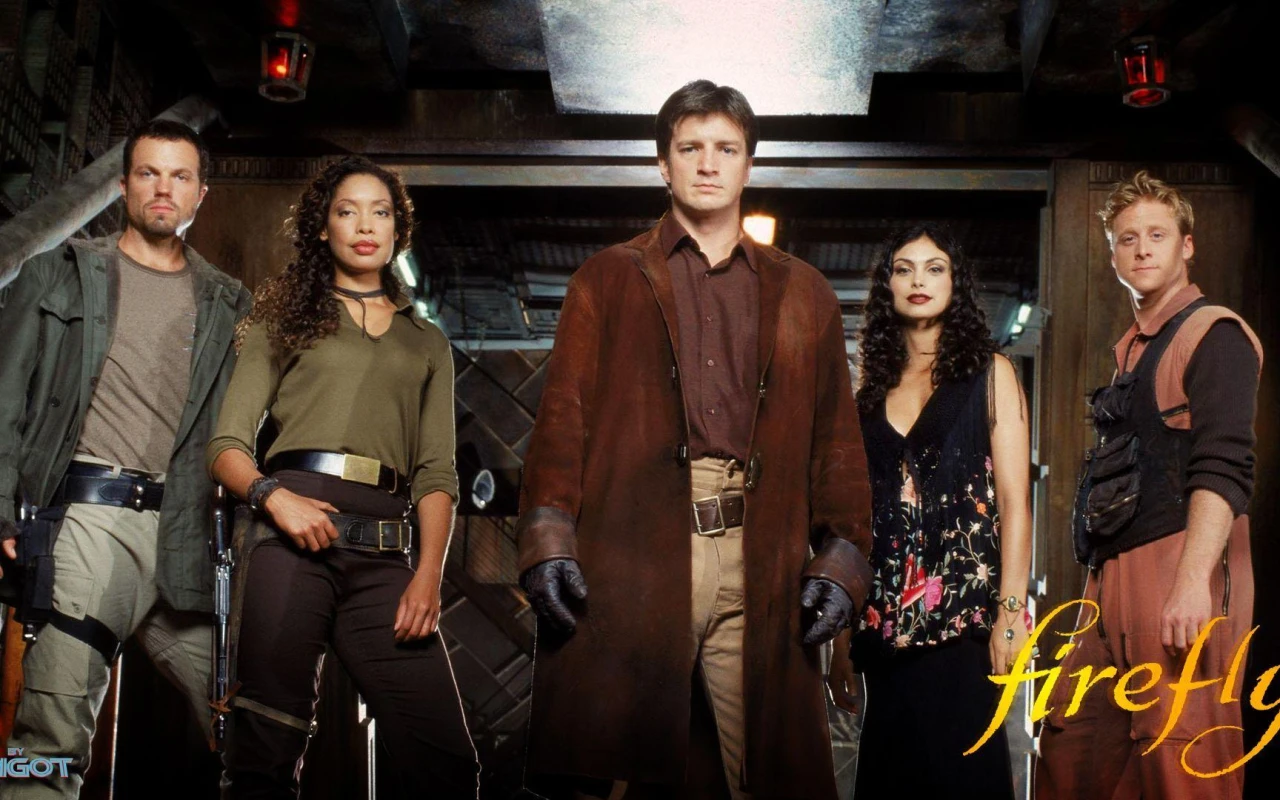
Nathan Fillion reveals an animated Firefly sequel series set between the original show and Serenity, with Joss Whedon's blessing.
- May 4, 2026
AceShowbiz - Earlier this month, Firefly actor Nathan Fillion appeared at Awesome Con in Washington, D.C., alongside much of the original cast to reveal plans for an animated continuation of the cult-favorite series. This new project is set between the original 2002 television series and the 2005 film Serenity, bridging the gap in the storyline with a fresh animated series. Fillion confirmed that he had the blessing of the show’s original creator, Joss Whedon, before moving forward with production.
The animated series is being developed under Fillion’s production company, Collision33, in partnership with 20th Television Animation. Writing and producing duties are led by Tara Butters, known for her work on Agent Carter and Dollhouse, and Marc Guggenheim, who has credits including Arrow and The Flash. A full script is reportedly already completed. For the animation, the project has enlisted the talents of ShadowMachine, an acclaimed studio with Oscar and Emmy accolades, famous for producing Guillermo del Toro’s Pinocchio.
While this announcement excites many fans, the new animated season must confront a complex issue: the fractured and sometimes contradictory canon of the Firefly universe. This challenge echoes problems faced by other franchises such as Star Wars, where multiple continuities have created confusion over what stories are officially part of the narrative.
When Fox canceled Firefly after airing only 11 of its 14 produced episodes, it left the series without an official conclusion. However, the universe continued to expand through various licensed materials. Starting in 2005, Dark Horse Comics published a series of canonical comics, including Serenity: Those Left Behind, which acted as a direct narrative bridge between the television show and the feature film.
In 2018, Titan Books launched a line of authorized Firefly novels with Joss Whedon serving as executive editor, further expanding the story. The same year, Boom! Studios took over the comic license from Dark Horse and began an ongoing series that was intended to continue the storyline established by both the TV series and the earlier comics. Unfortunately, Boom! Studios’ run appeared to diverge from the continuity previously set by Dark Horse, adding to the confusion about what constitutes canonical material.
The result is a patchwork of stories from different publishers, some conflicting with each other, which the upcoming animated series now has to navigate. This situation is reminiscent of the issues encountered by the Star Wars Expanded Universe before Disney’s acquisition of Lucasfilm.
For nearly 40 years, Star Wars accumulated a vast array of licensed fiction—novels, video games, comics, and reference guides—that expanded the lore beyond the films. These materials operated under a tiered system of canon overseen by Lucasfilm’s licensing division, which placed the films at the highest level, followed by novels, then games. When contradictions arose, the higher-tier material took precedence.
However, as the volume of stories grew, maintaining a coherent continuity became increasingly difficult. The prequel trilogy, for example, immediately clashed with many previously published novels. By the time Disney began developing The Force Awakens, the Expanded Universe had become so entangled that the filmmakers faced the daunting task of reconciling decades of material.
In April 2014, Lucasfilm resolved this by reclassifying the Expanded Universe as Star Wars Legends, effectively creating a separate continuity that was acknowledged but no longer considered official canon. This decision allowed new creators freedom to build fresh stories without being bound by the extensive prior material. Select elements from Legends could still be referenced or adapted if they suited the new narratives.
Firefly faces a similar dilemma. The new animated series is set in a timeframe already explored by previous licensed works, particularly the Dark Horse miniseries Serenity: Those Left Behind. That miniseries was carefully crafted to address character exits and plot threads left open by the original show, such as Inara’s departure from the crew and Shepherd Book’s decision to leave the ship.
Because the animated show will occupy that same narrative space, it must either respect those existing story elements, contradict them outright, or clarify that those prior works are no longer binding. Showrunners Guggenheim and Butters, both experienced in managing complex franchise storytelling, are well-equipped to handle continuity challenges. However, the issue ultimately requires a formal decision about which parts of the Firefly extended universe remain canonical and which can be reimagined.
Without a clear institutional stance, the series risks inheriting nearly two decades of conflicting storylines before a single episode airs, potentially alienating fans and complicating storytelling.
The question remains: will the new Firefly animated series be able to reconcile the tangled history of its expanded universe, or will it follow the path of Star Wars by creating a new, streamlined continuity? Fans are encouraged to share their thoughts and join the discussion in the ComicBook Forum.
As the series moves forward, it also opens the door to speculation on how characters might return or be reintroduced without disrupting established film continuity.
In summary, while the upcoming Firefly animated season promises to reignite interest in the beloved series with strong creative talent and a respected animation studio behind it, its success will depend heavily on how it manages the complex legacy of the franchise’s extended canon. The balance between respecting past stories and forging new paths will be critical to delivering a cohesive and satisfying continuation for fans old and new alike.