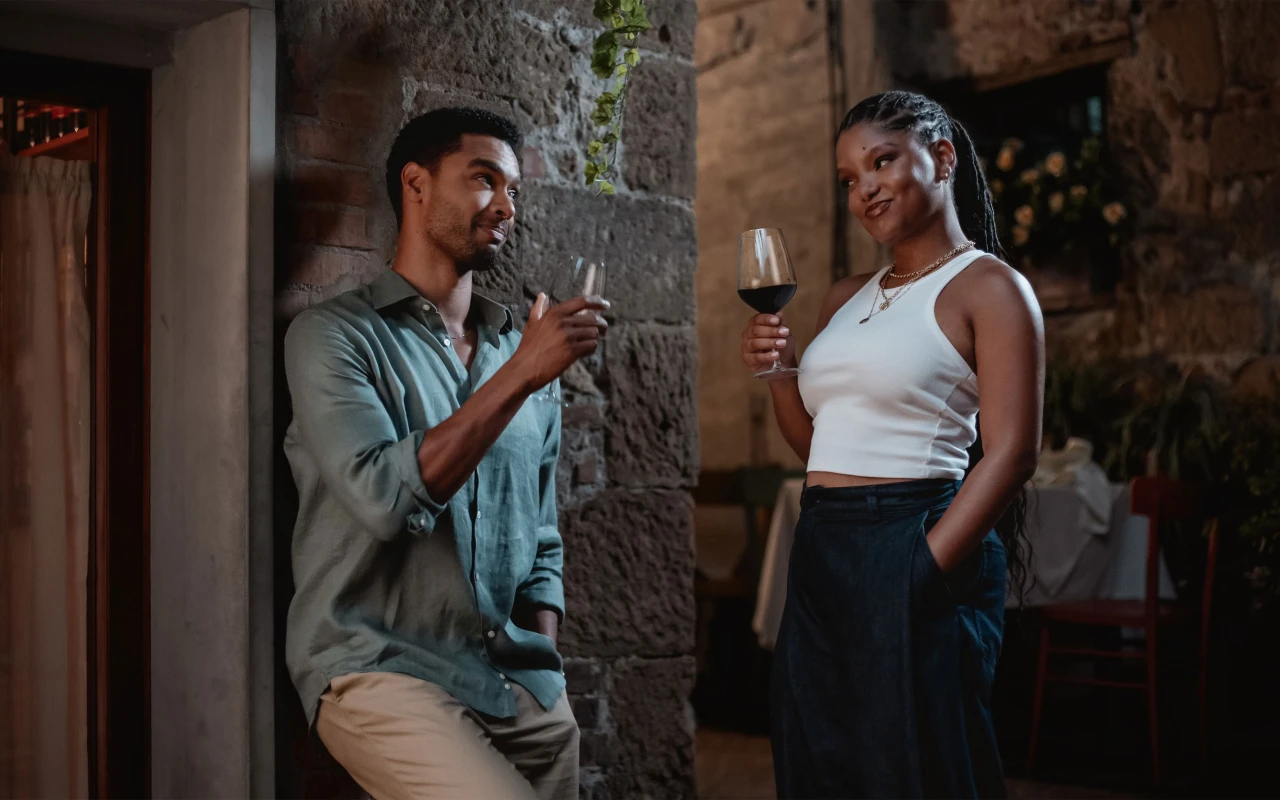
You, Me & Tuscany stars Halle Bailey & Regé-Jean Page. This rom-com's success is a pivotal moment for Black-led stories in Hollywood.
- April 13, 2026
AceShowbiz - You, Me & Tuscany, Universal’s latest romantic comedy, carries more than just hopes for box office returns—it symbolizes a critical moment for Black creatives in Hollywood. Despite not involving everyone who feels the pressure, many believe their future opportunities hinge on how well this film performs.
Directed by Kat Coiro, You, Me & Tuscany stars Halle Bailey as a chef who secretly moves into a vacant villa in Italy and falls for the cousin of the property’s owner, played by Regé-Jean Page. Critics, including The Hollywood Reporter, have called the film an “appealing” escapist fantasy. Industry projections suggest it could open close to $10 million at the box office.
The excitement over the film’s theatrical release is significant because romantic comedies featuring Black leads have been scarce on the big screen. In fact, fans noted that the last such film to enjoy a theatrical release was 2012’s Think Like a Man. The conversation around You, Me & Tuscany has sparked debate about whether Hollywood executives will use its box office performance as a benchmark for approving future Black-led romantic comedies.
Filmmaker Nina Lee recently shared on social media that studios are waiting to see how You, Me & Tuscany does before greenlighting other projects. She revealed, “Met with a studio about my already shot romcom and they won't buy it until they see how You, Me & Tuscany does.” This highlights the precarious position many Black creatives face, where one film’s success or failure can influence the fate of many others.
Will Packer, the producer behind You, Me & Tuscany, as well as hits like Think Like a Man, Girls Trip, and Ride Along, explained to The Hollywood Reporter that the challenge extends beyond racial representation. He pointed out that romantic comedies themselves have often been categorized as better suited for streaming platforms like Netflix or TV movies on Lifetime, rather than theatrical releases.
“Make no mistake: I remember the golden era of rom-coms, and even Black rom-coms—Love & Basketball, The Best Man, Think Like a Man, Brown Sugar, Two Can Play That Game, you name it,” Packer said. “Audiences were showing up in theaters and enjoying those movies. So people do have to understand that Hollywood is a reactive industry, and there is an opportunity to say that this type of film—with these type of leads, with the audience that enjoys these types of films—are profitable and worth making, and Hollywood will make more of them.”
Meanwhile, Nina Lee’s own film, That's Her, which is set to premiere next month at the American Black Film Festival in Miami, was self-financed by DeWayne Colley (known as content creator Kountry Wayne). Lee emphasized that while rising filmmakers are encouraged to independently produce their projects, the path forward after shooting is unclear.
“I've just been really frustrated because, whether you're Black or a woman, the notes that people are always telling us is, 'If no studio wants to pick up your script, shoot it yourself,'” Lee said. “With That's Her, that's what we did, but the conversation has to go further than just shooting it yourself. What happens after that? Everyone's like, 'Shoot it yourself, and the studios will come,' and that's not what happened. I still think it's going to happen, but we have to change the advice that we're giving people. Shooting it yourself isn't enough anymore.”
Adding to the conversation, Brandy Monk-Payton, a professor of communication and media studies at Fordham University and contributor to the book Watching While Black Rebooted, pointed out that Hollywood continuously needs reminders about the buying power of underrepresented groups. She cited recent theatrical successes featuring Black leads, such as Sinners, which earned recognition at the box office and the Academy Awards, and the Keke Palmer-led comedy One of Them Days, which already has a sequel in development.
“There's absolutely this burden of representation that you put all of this weight and pressure on one movie vehicle in order to provide the conditions of possibility for others,” Monk-Payton said. “This is something that is very familiar to Black creatives, where they feel as though their hopes, dreams and aspirations are riding on a singular project.”
Despite some social media backlash accusing Lee of making the discussion about herself, she expressed gratitude for the support from fellow filmmakers who appreciated hearing her perspective. “It was never my intention for it to leave my small niche Twitter community,” she said. “But I've spoken to Will Packer and a few other people, and they all are thankful for the conversation that this is starting. I've just got to find relief in that and keep it moving.”
In sum, You, Me & Tuscany represents more than just a new rom-com on the market; it is a potential turning point for Black-led romantic films. Its commercial performance could influence whether studios continue to invest in this genre with Black talent, impacting countless creatives waiting in the wings. As the industry watches closely, the film’s reception will likely reverberate far beyond its initial box office numbers, shaping opportunities for years to come.