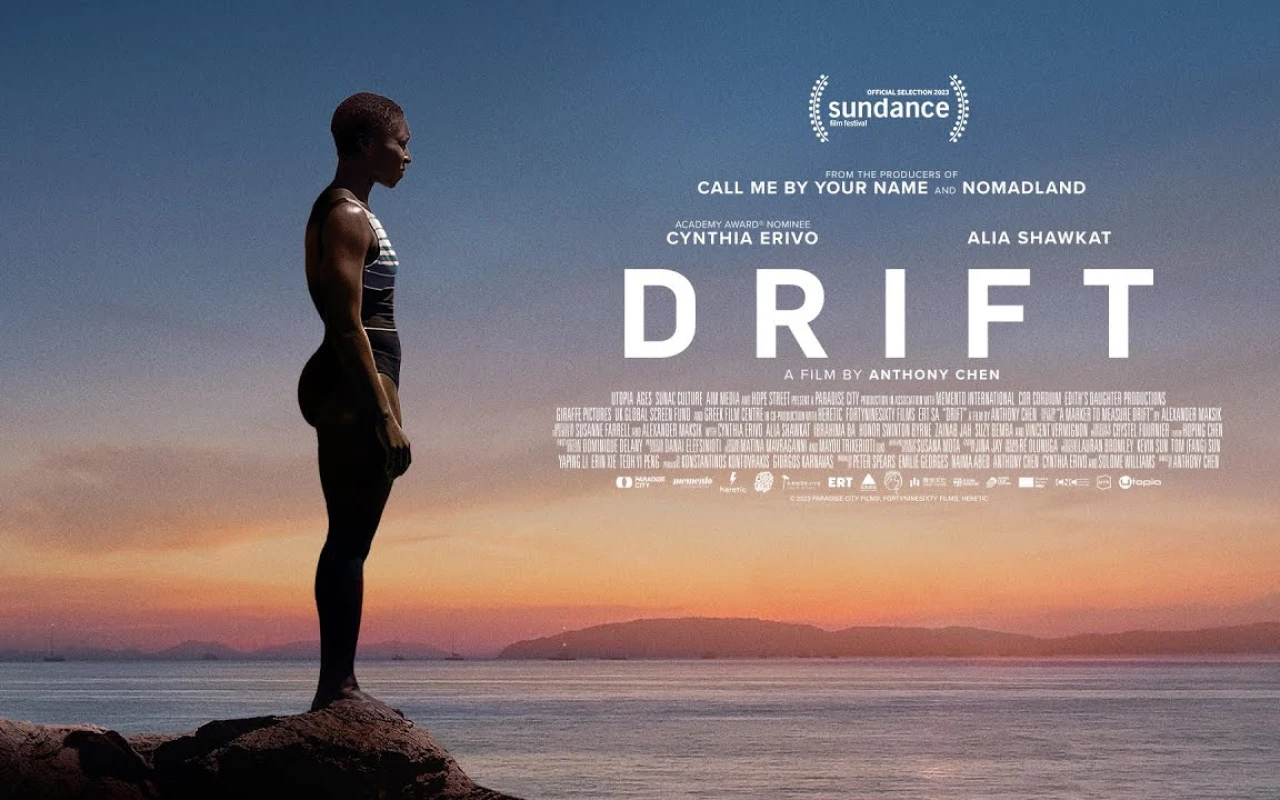
Witness the daring climbs and legal battles of free solo skyscraper climber Isaac Wright in the documentary Drift. A true story more gripping than fiction.
- April 9, 2026
AceShowbiz - Drift is a gripping documentary that follows the extraordinary life of Isaac Wright, a daring free solo skyscraper climber and photographer known as Drift. The film delves into Wright’s audacious exploits of scaling towering urban structures without safety equipment, capturing breathtaking photographs from dizzying heights. Beyond the adrenaline-fueled visuals, the documentary explores the complex personal and legal challenges Wright faces as a young artist pushing the limits.
Directed by Deon Taylor, Drift feels like the prelude to a future biopic, a notion openly discussed by Wright’s own legal team within the film. Midway through the documentary, one of Wright’s lawyers recounts telling the police officer Jeff Ruberg—Wright’s chief adversary—that when the inevitable biopic is made, Ruberg will be cast as the villain, without the charm or nuance of a Hollywood antihero. This moment is left deliberately ambiguous, hinting that it may have affected Wright’s fate in court, a storytelling choice that adds a subtle layer of narrative intrigue.
The film benefits from Wright’s naturally engaging personality. His photogenic smile and laid-back demeanor make him an instantly likable protagonist, adept at presenting himself confidently but without arrogance, whether in front of his own camera or the documentary crew. Wright’s story is compelling not only for the physical risks he takes but also for the broader cultural and legal battles that unfold around his art and lifestyle.
Drift premiered as part of the Documentary Spotlight at the SXSW Film Festival, offering audiences a nearly two-hour runtime to experience Wright’s high-stakes world. The screenplay, crafted by Kaitlin McLaughlin, Martin Biehn, and Kevin Hibbard, interweaves Wright’s backstory with heart-stopping footage that he often shoots himself. The film’s editors, Biehn and Hibbard, expertly balance the narrative, shifting between the man’s personal history and the breathtaking audacity of his climbs.
Wright’s journey is emblematic of a modern success story, combining social media savvy, unique artistic vision, and entrepreneurial innovation. He leverages his climbing, photography, and drone piloting skills into a lucrative art career that includes the creation and sale of non-fungible tokens (NFTs). This aspect of Wright’s life positions Drift as a contemporary Horatio Alger tale—an inspiring narrative of rags to riches through talent and hustle, resonating with a generation unfamiliar with the original 19th-century figure.
The film does not shy away from the physical danger inherent in Wright’s pursuits. His signature stunt involves scaling iconic buildings without any harness or ropes, reaching dizzying heights that exceed a thousand feet. From these precarious perches, he photographs his feet clad in Vans sneakers, with the tiny cars below emphasizing his vertiginous position. This imagery is not only thrilling but also deeply unsettling for viewers prone to acrophobia; the documentary advises caution for those sensitive to heights.
Wright’s methods for accessing these skyscraper summits are as unconventional as his art. He employs self-taught lockpicking skills or enters through unsecured doors, never seeking permission from building managers. This modus operandi inevitably leads to confrontations with the police, resulting in pursuits across state lines and eventual incarceration—in Arizona first, then his home state of Ohio. The legal battles unfold against the backdrop of 2020-21, a period deeply marked by the death of George Floyd and heightened tensions between law enforcement and Black communities.
The documentary explores how Wright’s biracial identity and military veteran status complicate these encounters. While his veteran background sometimes engenders public sympathy due to his PTSD recovery, it also raises law enforcement concerns about his familiarity with weapons. This duality adds depth to the narrative, illustrating the nuanced challenges he faces beyond his artistic ambitions.
The cultural divide between Wright’s avant-garde art practice and the police’s suspicion leads to significant misunderstandings. The film is decidedly sympathetic to Wright, and it notably excludes the perspective of officer Ruberg, who declined to participate. This one-sidedness leaves some critical questions unaddressed, such as the potential catastrophic consequences if Wright were ever to fall from such heights. The filmmakers do not dwell on this possibility, but it may linger uneasily in viewers’ minds amid the thrill of the climbs.
Despite these complexities, Drift offers a riveting look at an unconventional artist whose life teeters on the edge of danger and creativity. If the coming biopic materializes and follows the documentary’s conclusion, audiences can expect a taut, action-driven drama centered on an underdog hero who defies norms and inspires with his fearless approach to art and life.
The film credits reveal a collaborative effort behind the scenes, including production companies Hidden Empire Film Group and EverWonder, with Deon Taylor also serving as a producer alongside Roxanne Avent Taylor and Kaitlin McLaughlin. Isaac Wright contributes as an executive producer, supported by a team including Andrew Bourke and Amanda Spain. The cinematography is led by Ronan Kileen, with Wright himself handling some climbing and aerial shots. The sound design and musical score, crafted by Gary Lionelli, Lucio Westmoreland, and Hit Boy, complement the film’s intense atmosphere.
Drift runs for 1 hour and 47 minutes and was showcased at SXSW, where it earned attention for its innovative storytelling and compelling subject matter. It invites audiences to contemplate the intersections of risk, art, race, and justice through the lens of a young man literally scaling society’s heights and legal boundaries.