A darkly humorous, lurid murder mystery with unreliable narrators. Is it a cold procedural or a tender character study? Featuring Jason Bateman, David Harbou...
- March 17, 2026
AceShowbiz - DTF St. Louis defies easy categorization, balancing between a ruthless modern noir in the vein of "Double Indemnity" and a nuanced, empathetic exploration of love, friendship, and human complexity.
By the time viewers reach Chapter Four of this engrossing murder mystery—the episode HBO screened for critics in its seven-episode season—it’s still unclear whether the story is a cold procedural or a tender character study. The narrative unfolds through two unreliable narrators recounting events to two detectives who seem ill-equipped to piece the puzzle together. Each new detail, or perhaps each deception, reshapes the story in unexpected ways.
Whatever it ultimately proves to be, DTF St. Louis is simultaneously darkly humorous, lurid, and unnervingly compassionate. The veteran cast, including Jason Bateman, David Harbour, and Linda Cardellini, deliver performances unlike any previously seen from them, continually reinventing their characters with each episode. Creator, writer, and director Steven Conrad showcases his deft storytelling skills while capturing the anxieties of middle age and Middle America with sharp precision.
Conrad’s work here also reveals a surprisingly risqué sensibility. Known primarily for sentimental films like "The Pursuit of Happyness," "The Secret Life of Walter Mitty," and "Wonder," Conrad’s script for DTF St. Louis is far more explicit and laden with an off-the-charts TMI factor. This raw openness may spark many a “can you believe that?” conversation in office break rooms. Yet the show’s greatest accomplishment lies in its nonjudgmental portrayal of varied sexual desires and emotional needs—except, of course, those that may lead to murder. That line has yet to be crossed.
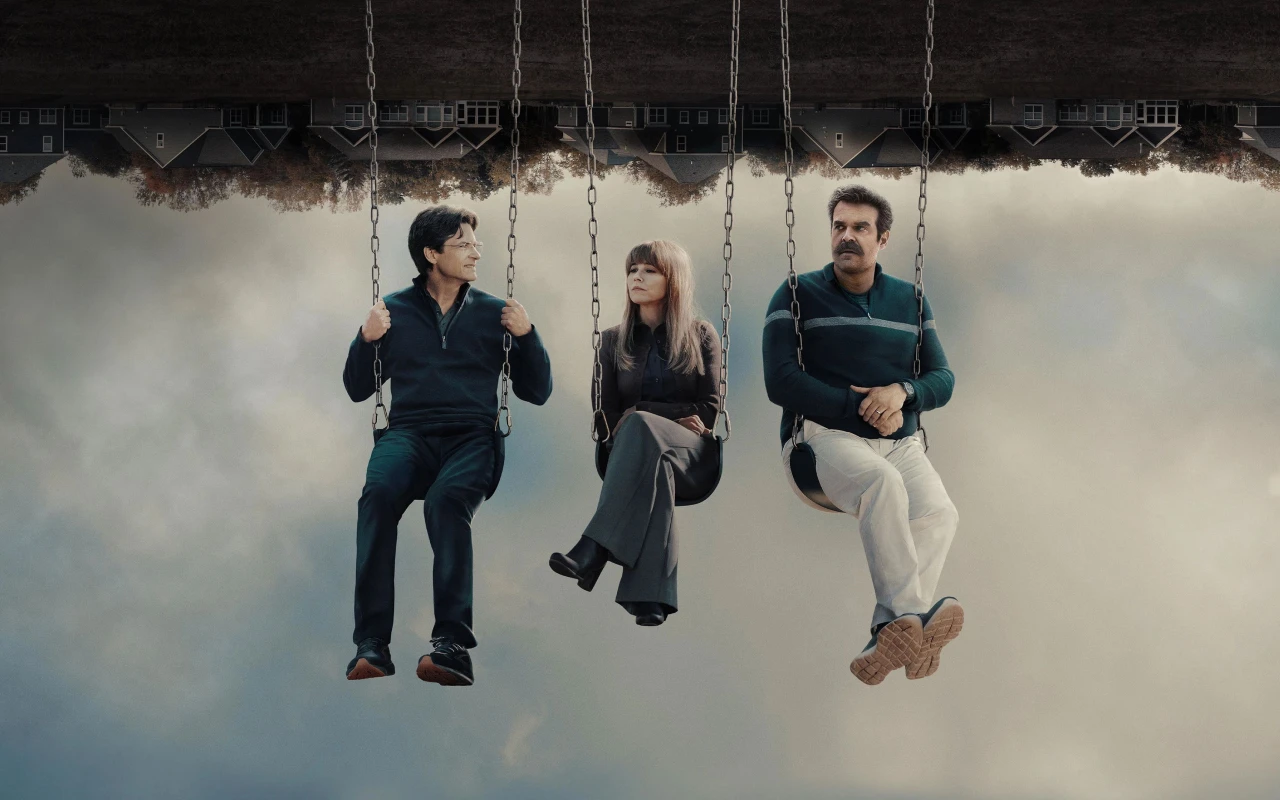
The show’s title acronym refers to a dating app geared toward married Missourians seeking casual affairs without commitments. Bateman plays Clark Forrest, a local TV weather forecaster with a conventional family: a wife, two daughters, and a backyard swing set perfectly positioned for him to spy on his attractive neighbor sunbathing beyond the hedge. (An interesting tidbit: Conrad also wrote the Nicolas Cage film “The Weatherman.”)
Clark forms an unlikely friendship with Floyd, his on-air sign language interpreter, portrayed by David Harbour. Floyd is an overweight, financially strapped man with a surly stepson and a curved penis resulting from a past injury yet to be fully explained. Despite his quirks and insecurities, Floyd clings to his love for Batman comics and clearly feels outmatched in his marriage to Carol, played by Linda Cardellini. Carol, often clad in the baseball umpire gear she wears as a side job to supplement the household income, contrasts sharply with Floyd’s low self-esteem and body image challenges.
Clark and Carol’s relationship begins at a cornhole party (the lawn game, not the euphemism). She quickly embraces the idea of an affair, especially one catering to Clark’s very specific and unusual fetish fantasies. Clark, it turns out, is a submissive who rides a recumbent tricycle, a suggestive symbol of his cuckold fantasies. But, like much about Clark, this presentation is deceptive. Bateman gives Clark a layered performance, combining soft-spoken politeness with a loquaciousness that expertly manipulates others to get what he wants.
Carol’s character likely fits the archetype of a femme fatale, and Cardellini captures her with a deadpan humor that is often hilarious. Yet beneath the surface lie authentic frustrations and affections that make her far more than a simple seductress. The dynamic of control in their illicit relationship remains ambiguous, but it’s clear both actors are delivering some of their most controlled and cunning performances to date. Hearing the character utter phrases like “Pop boners” adds a layer of unexpected humor and charm.
Despite her affair with Clark, Carol’s feelings for Floyd remain intact, and she openly expresses her desire to save her marriage. She also repeatedly drops veiled hints about Floyd’s need for a life insurance policy and the necessity of secrecy. Perhaps as a distraction from the affair—or a means of leverage—Clark signs Floyd up for the DTF St. Louis app, leading Floyd into surprising encounters that ultimately culminate in his poisoning during an early morning meetup.
Floyd’s misfortunes often place him in painfully humiliating situations. While it might be tempting to speculate about the source of the show’s darker undertones—such as whether British singer Lily Allen had any input—Harbour delivers a performance that reveals the many layers of this troubled but beautiful soul. His portrayal is devoid of vanity and seeks to uncover the good within Floyd, making this the most genuinely heartwarming element of DTF St. Louis.
The law enforcement side of the story features county detective Don Homer, played by Richard Jenkins. Homer is a grizzled veteran who believes he’s seen it all but becomes visibly flustered when sexual escapades enter the conversation. Joy Sunday portrays Jodie Plumb, a suburban investigator with a strong grasp of human sexuality who frequently has to counteract Homer’s paternalistic assumptions. Both detectives bring a dry humor to their roles without playing for easy laughs, lending their crime-solving efforts a subtle but effective comedic edge.
Visually, Conrad displays his skill as a stylist and director. He encourages the cast to adopt unusual physical postures and employs off-kilter camera angles that reflect the show’s unsettling atmosphere. The St. Louis sheriff’s station is depicted as a brutalist architectural marvel, featuring rocklike furniture in a stark lobby and interrogation rooms painted a dreary green that evokes a sense of despair.
Yet it’s the emotional resonance that Conrad truly splashes across the screen. Despite the scheming, cheating, and infidelity, Clark and Carol repeatedly insist they loved Floyd more than they ever will one another. Bateman and Cardellini sell every line—whether it’s a lie or heartfelt confession—with conviction, while Harbour continues to deepen our affection for Floyd with each appearance.
After viewing more than half the season, however, viewers remain unsure what to trust or what will happen next. In a TV landscape crowded with domestic crime dramas vying to keep audiences guessing, Conrad disarms with ease, then toys with our anxieties through provocative, amusing, and wide-ranging plot twists.
DTF St. Louis is a show that challenges the mind as much as it engages the heart. It might just leave you both smarter and more emotionally fulfilled.
DTF St. Louis will premiere on Sunday on HBO and HBO Max.