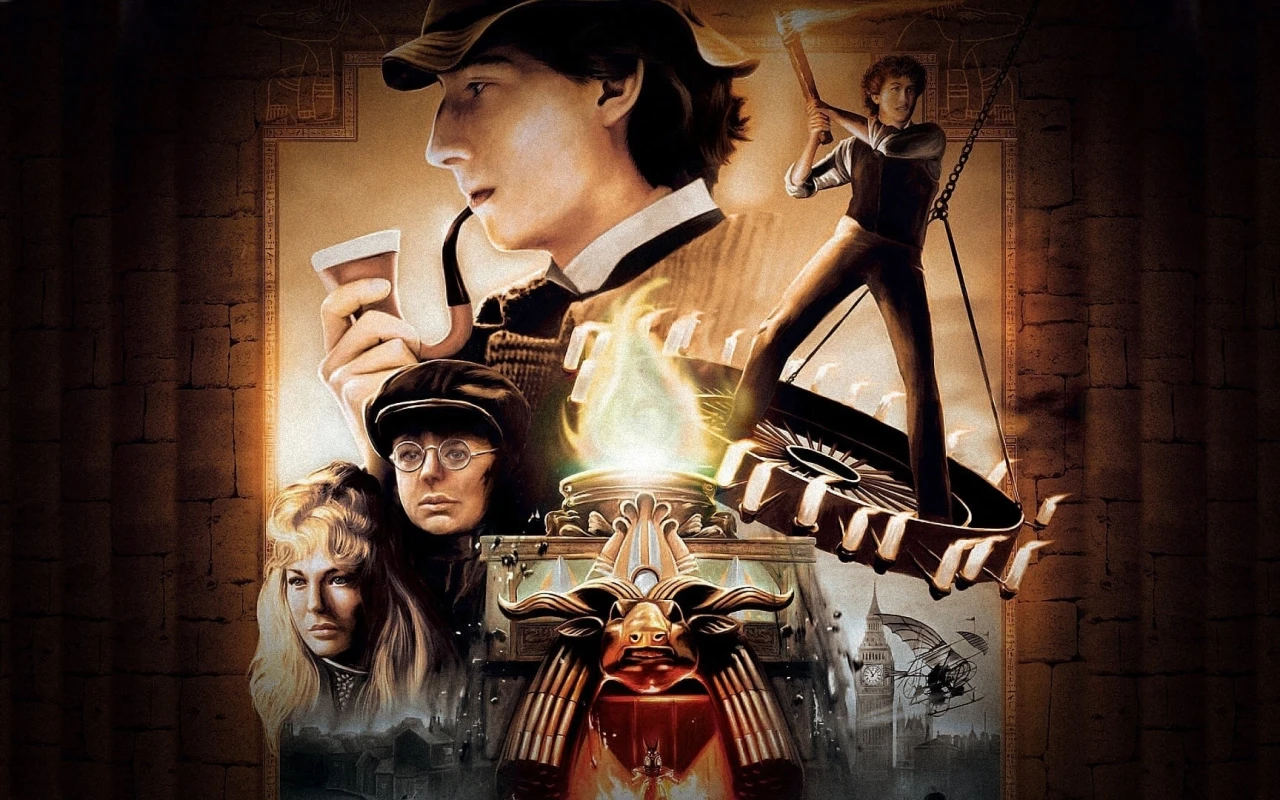
Explore the untold origin of Sherlock Holmes and Moriarty as university rivals in a bold new series that redefines their legendary enmity.
- March 9, 2026
AceShowbiz - Young Sherlock reinvents the classic Sherlock Holmes tale by exploring the origins of both Sherlock Holmes and his infamous adversary, James Moriarty. Now, 133 years after the debut of "The Adventure of the Final Problem," which introduced Moriarty as Holmes' ultimate nemesis and was meant to conclude the detective’s story, Guy Ritchie takes a bold new approach that expands the canon in fresh and unexpected ways.
Since their creation by Sir Arthur Conan Doyle, Sherlock Holmes and James Moriarty have been reinterpreted across countless adaptations. However, Young Sherlock stands apart by focusing on an origin story that delves into their early years, presenting Sherlock and James as university acquaintances forging a complex relationship at Oxford University. This unique setup sets the stage for a narrative that diverges from traditional depictions.
The series begins with a deeply personal case for Sherlock, as he investigates a series of murders connected to a dark family secret. The Holmes family had believed their younger sister Beatrice to be dead under tragic circumstances, an event that fractured the family. The shocking truth reveals that their father, Silas Holmes, faked Beatrice’s death, turning himself into Sherlock’s first true adversary. This revelation introduces a villain who foreshadows the later menace of Moriarty, as Silas regards James as a figure destined for greatness.
Why Silas Holmes Faked Beatrice’s Death
Facing financial difficulties, Silas orchestrated Beatrice’s disappearance to seize control over his wife Cordelia’s fortune during her period of mourning. Cordelia was led to believe she had gone mad from grief and was confined to an asylum under constant supervision, protecting Silas’ financial interests. Meanwhile, Beatrice was placed with an adoptive family. Despite the deception, Silas kept some connection to Beatrice by sending her a birthday gift every year.
This yearly gift became the catalyst for Beatrice’s eventual discovery of her true origins. Upon finding her father, she exhibited the same sharp intelligence that defined her brothers. Silas welcomed her into his criminal operations, nurturing her ambition and encouraging her to discard notions of loyalty and patriotism. Tensions escalated as Silas planned to sell a lethal nerve agent, and Beatrice started to see through her father’s manipulations, mirroring the cunning and ruthlessness that define the Holmes family’s darker legacy.
Silas’ Final Scheme and Death
Unlike the traditional U.K.-based setting of Conan Doyle’s stories, Young Sherlock spans the globe, culminating in a climactic showdown where Sherlock and his allies destroy Silas’ laboratory. The father’s escape attempt leads to a tense confrontation over a lake, evoking the iconic struggle between Holmes and Moriarty at the Reichenbach Falls in the original story.
In a dramatic moment, Sherlock intervenes to shield Silas from being killed by the vengeful Shou’an and Beatrice. However, Silas overpowers Sherlock and plunges to his death off the cliff’s edge. His death appears to be a deliberate choice—preferring to die on his own terms rather than at the hands of his enemies. Before dying, Silas leaves a cryptic clue for Sherlock, pointing to a hidden key that hints at further secrets within his legacy.
Unbeknownst to Silas, James Moriarty has already secured the nerve agent formula from the lab before its destruction. Sherlock deduces this, setting up an inevitable confrontation between the two that likely drives the narrative toward a second season.
The Battle for Silas Holmes’ Legacy
At its heart, Young Sherlock revolves around a three-way conflict among Sherlock, Beatrice, and James Moriarty, each vying to claim Silas Holmes’ legacy. Silas envisioned Beatrice as his successor, intending for her to become second-in-command of his criminal empire. Yet, when Silas extends the same offer to Sherlock, acknowledging his intelligence and insight, Beatrice’s fury erupts.
Neither Sherlock nor Beatrice ultimately desires to inherit Silas’ corrupt empire. Beatrice rejects the legacy upon realizing its hollow nature, while Sherlock distances himself from it entirely. However, the true heir to Silas’ empire emerges as James Moriarty, a brilliant Irishman whose intellectual parity with Sherlock is matched only by his lack of morality.
Throughout Young Sherlock, James’ darker side gradually emerges. He tempts Sherlock with his dangerous philosophy but often masks his true intentions as jest. A turning point occurs during a violent encounter in France, where Moriarty kills for the first time and discovers he enjoys the act, solidifying his descent into the violent path chosen by Silas.
In a disturbing twist, Moriarty also becomes romantically involved with Beatrice, suggesting she might become his first lieutenant and further entwining the Holmes family’s fractured legacy with his own rise to power.
Mirroring the Original Final Problem
The final episode of Young Sherlock deliberately mirrors the famous scene from "The Adventure of the Final Problem," where Sherlock Holmes and James Moriarty struggle at the top of the Reichenbach Falls and apparently fall to their deaths. Ritchie’s retelling reframes this iconic moment as Sherlock’s last battle with his father Silas, marking the ultimate destruction of Silas’ legacy.
This reinterpretation raises intriguing questions about the true nature of the original final confrontation. Although Sherlock survives the Reichenbach Falls—an outcome Conan Doyle later explained in "The Adventure of the Empty House"—we only have Sherlock’s account of events. The parallels in Young Sherlock imply Moriarty might have chosen death to disgrace himself rather than be defeated, or alternatively, that Moriarty became an even darker figure than Silas, willing to pursue vengeance against someone he once cared about until his last breath.
Young Sherlock stands out as a distinctive adaptation of the Sherlock Holmes mythology. It serves as an origin story not only for Sherlock but also for Moriarty, skillfully weaving in the themes and tensions of "The Adventure of the Final Problem" while adding profound depth to Conan Doyle’s brief narrative written 133 years ago.
This ambitious retelling is a remarkable achievement, offering fresh perspectives on classic characters and setting the stage for further exploration of the Holmes family saga. Fans and newcomers alike can look forward to what Guy Ritchie has planned next for this gripping series.
Did you enjoy Young Sherlock? Share your thoughts and join the conversation now in the ComicBook Forum!