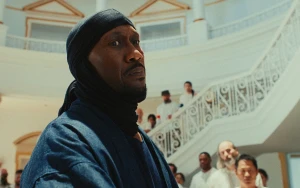
Edgar Wright adapts Stephen King's The Running Man. Can the new film critique dystopian TV violence without becoming the very spectacle it condemns?
- November 12, 2025
AceShowbiz - The new adaptation of Stephen King's 1982 dystopian novel, The Running Man, directed by Edgar Wright, confronts an inherent challenge in its big-screen translation. Set in a future America where television serves as a powerful tool of social control, the narrative explores an oppressive society where lower-class citizens volunteer for dangerous, degrading game shows for financial gain. This spectacle encourages the middle and upper classes to dehumanize the contestants, keeping the populace distracted with violent entertainment. While the book effectively explores the bleak implications of this distraction, a film must visually depict this violence. This creates a tension: should filmmakers lean into the critique, making viewers squirm with guilt, or soften the edges to provide an entertaining experience as the hero fights the system?
Director Edgar Wright, who sought to adapt Stephen King's novel more faithfully than the 1987 Arnold Schwarzenegger film, is a consummate entertainer. Partnering with rising star Glen Powell, who plays protagonist Ben Richards, the filmmakers ultimately chose the latter path, crafting a version of The Running Man that is as guilt-free as possible. How an audience responds to this choice will largely shape their experience, but for much of its runtime, the movie proves irresistibly fun. This project marks a significant stride for Glen Powell, confirming his ascent into the blockbuster big leagues.
Since his memorable role in Top Gun: Maverick, Glen Powell, often considered a protégé of Tom Cruise, has been building towards a leading action role. The Running Man capitalizes fully on his magnetic screen presence. While King's Ben Richards is characterized by a potent rage, Powell embraces this intensity, yet imbues it with a captivating charm. He excels as an action star, convincingly performing stunts, while simultaneously maintaining the crucial underdog quality that makes audiences root for him to overcome impossible odds. This portrayal stands in stark contrast to the inherent invincibility often associated with Arnold Schwarzenegger, explaining why the original 1980s adaptation largely abandoned the everyman element of the character.
Ultimately, Edgar Wright's vision for The Running Man delivers on its promise of high-stakes entertainment. It's a film that, despite its weighty source material, prioritizes the thrill of the chase and the charisma of its lead. Glen Powell truly lives up to his burgeoning movie star status, anchoring a spectacle that, while perhaps softening King's sharper edges, offers a compelling and enjoyable cinematic experience. The success of this adaptation lies in its ability to balance critical commentary with pure popcorn thrills, a tightrope walk that Wright and Powell navigate with considerable skill.