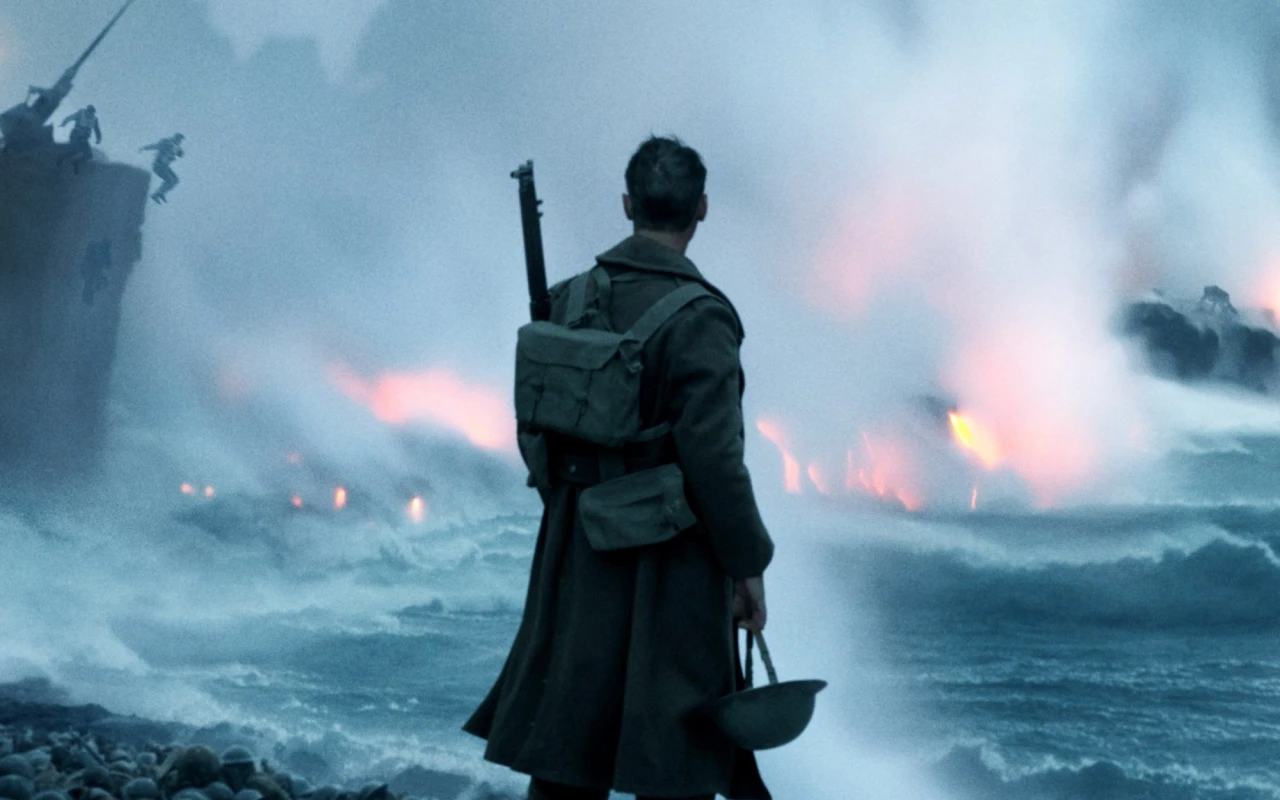
Uncover Christopher Nolan's surprising inspiration for "Dunkirk": the action classic "Speed." Learn how its pacing influenced his WWII epic.
- October 26, 2025
AceShowbiz - Oscar-winning filmmaker Christopher Nolan, renowned for his intricate narratives and masterful suspense, drew inspiration from an unexpected source for his critically acclaimed World War II epic, Dunkirk. While many might anticipate other war films or historical dramas, Nolan revealed that the classic 1994 action movie Speed played a significant role in shaping the iconic film's intense pacing and structure. This surprising connection emerged during a collaboration with the British Film Institute Southbank, where Nolan curated a list of films that profoundly influenced his approach to the harrowing tale of the Dunkirk evacuation. Despite Speed never being considered a "prestige film", its undeniable impact on the action genre and its unique tension clearly resonated with the visionary director.
Nolan himself categorized Jan de Bont's action-thriller Speed as a "ticking-clock nail-biter," a description that perfectly encapsulates its relentless suspense. It's this breakneck, suspenseful pacing that Nolan sought to emulate in Dunkirk, creating an almost unbearable sense of urgency for the audience. Upon re-watching Speed, the influence becomes strikingly clear. The Keanu Reeves-led blockbuster remains a highly influential example of taut action filmmaking, a quality Dunkirk shares in its escalating, crescendoing sequences. The premise of Speed is famously simple yet effective: LAPD officer Jack Traven (played by Keanu Reeves) must save a busload of innocent passengers after it's rigged with a bomb by the deranged ex-police officer Howard Payne (Dennis Hopper). The bomb is set to detonate if the bus drops below 50 miles per hour, turning the entire journey into a desperate race against time and the speedometer, with Payne monitoring every move.
Directed by Jan de Bont, who honed his craft as the cinematographer for seminal action films like Die Hard, Speed is a masterclass in maintaining high-octane excitement from start to finish. Its sustained, thrilling rhythm is a rare feat in cinema, and it’s a characteristic that Nolan has consistently demonstrated in his own filmography. Both Dunkirk and his recent biographical drama Oppenheimer stand as prime examples of Nolan's prowess in crafting effective, tension-driven pacing, where every moment feels critical. While Dunkirk skillfully juggles multiple interwoven narratives – across the land, sea, and air – its underlying structure echoes the relentless, escalating tension found within Speed’s singular, high-stakes scenario. The film's ability to create a palpable sense of urgency and dread, mirroring the real-life evacuation, owes a surprising and profound debt to the fast-moving bus and its ticking bomb, proving that inspiration can come from the most unexpected corners of cinematic history.