
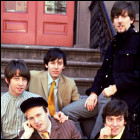
Emerging from the vibrant music scene of early 1960s Manchester, The Hollies established themselves as one of Britain's most enduring and melodically gifted rock and pop bands. Founded in 1962 by childhood friends and vocalists Allan Clarke and Graham Nash, the group quickly distinguished itself with a bright, jangling guitar sound and a seamless, inventive three-part vocal harmony style that became their signature. Alongside lead guitarist Tony Hicks, bassist Eric Haydock, and drummer Don Rathbone (soon replaced by Bobby Elliott), they became a staple of the British Invasion, crafting a remarkable string of hits that showcased their impeccable pop craftsmanship.
The band's initial success was concentrated in the United Kingdom and Europe, where a series of energetic singles like "Just One Look" and "Here I Go Again" in 1964 paved the way for their first UK number one, "I'm Alive," in 1965. Their breakthrough in the United States came with the timeless "Bus Stop" in 1966, a song that perfectly encapsulated their harmonic brilliance and catchy songwriting. This transatlantic success was followed by a golden period of classic hits including "Stop Stop Stop," "On a Carousel," and the exotic-tinged "Carrie Anne," which featured Nash's distinctive lead vocal. In 1968, seeking a more serious artistic direction, Graham Nash departed the band and found monumental success with the supergroup Crosby, Stills & Nash. He was replaced by guitarist and singer Terry Sylvester, and the Hollies continued their hit-making trajectory.
The post-Nash era proved the band's resilience and adaptability. They achieved profound success with the orchestral ballad "He Ain't Heavy, He's My Brother" in 1969, a song that would later top the UK charts upon its 1988 re-release. The early 1970s saw them adapt to changing musical tastes, scoring a massive hit with the gritty, Creedence Clearwater Revival-inspired rocker "Long Cool Woman in a Black Dress," featuring Allan Clarke on lead vocal. Their final major international hit came with the lush, melancholic "The Air That I Breathe" in 1974. Despite numerous personnel changes over the decades, with Allan Clarke and Tony Hicks serving as the consistent creative core, The Hollies never officially disbanded, continuing to record and tour for a dedicated global audience.
In recognition of their immense contribution to popular music, which includes over 30 UK chart singles and 21 US Billboard Hot 100 entries, The Hollies were rightfully inducted into the Rock and Roll Hall of Fame in 2010. They remain one of the few surviving British groups from the beat era, alongside acts like The Rolling Stones, to maintain an active touring lineup, a testament to the timeless appeal of their harmonies and an extraordinary catalogue of songs that define an era.