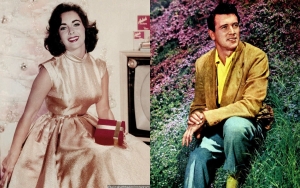
Rock Hudson, born Roy Harold Scherer Jr. on November 17, 1925, in Winnetka, Illinois, rose from humble beginnings to become one of the most iconic and beloved stars of Hollywood's Golden Age. His journey to stardom was not immediate; after serving in the United States Navy during World War II, he moved to Los Angeles with dreams of acting. There, he struggled to find work until he was discovered by talent agent Henry Willson, who gave him the stage name Rock Hudson and helped him refine his rugged, masculine image. Hudson's early film roles were minor, but his breakthrough came when he starred in Magnificent Obsession in 1954, a romantic drama that showcased his dramatic range and established him as a leading man. This success was quickly followed by All That Heaven Allows in 1955 and the epic Giant in 1956, the latter of which earned him an Academy Award nomination for Best Actor and solidified his status as a major star.
Throughout the late 1950s and early 1960s, Hudson became synonymous with romantic comedy, particularly through his iconic on-screen partnership with Doris Day. The trio of films they made together—Pillow Talk (1959), Lover Come Back (1961), and Send Me No Flowers (1964)—were massive box office hits and remain classics of the genre. During this era, Hudson also demonstrated his versatility by taking on more serious roles in films like Seconds (1966), a psychological thriller, and war epics such as Tobruk (1967) and Ice Station Zebra (1968). As the 1960s drew to a close, Hudson grew dissatisfied with the quality of scripts he was being offered. To regain creative control, he founded his own production companies, first 7 Pictures Corporation and later Gibraltar Pictures, allowing him to select projects that better suited his evolving interests.
In the 1970s, Hudson successfully transitioned to television, headlining the popular mystery series McMillan & Wife from 1971 to 1977. The show, in which he played San Francisco police commissioner Stewart McMillan, was a ratings success and introduced him to a new generation of viewers. His final acting role was a guest appearance on the fifth season of the primetime soap opera Dynasty in 1984, playing a character named Daniel Reece. However, his health soon began to decline. In 1984, Hudson was diagnosed with AIDS, a disease that was then little understood and highly stigmatized. The following year, he became one of the first major public figures to disclose his diagnosis, a courageous act that brought unprecedented attention to the AIDS crisis. Rock Hudson passed away on October 2, 1985, at the age of 59, becoming the first major American celebrity to die from an AIDS-related illness. Throughout his career, he was known for his professionalism and charm, but his private life was marked by a deep secret: although he was discreet, it was widely known among his Hollywood peers that he was gay. His legacy endures not only through his filmography but also through his role in changing public perception of the AIDS epidemic.