Robert Zemeckis
Robert Lee Zemeckis, born on May 14, 1951, in Chicago, Illinois, is a visionary American filmmaker whose career has been defined by a relentless pursuit of technological innovation in service of compelling storytelling. Often referred to as Bob Zemeckis, he is one of the most commercially and critically successful directors of his generation, earning two Academy Awards for Best Director and Best Picture for his landmark film Forrest Gump, as well as a Golden Globe Award. His work, which frequently explores themes of time, destiny, and human connection, has left an indelible mark on popular culture.
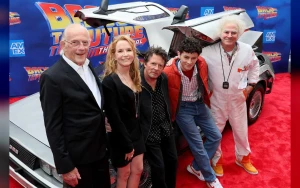
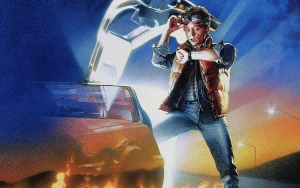
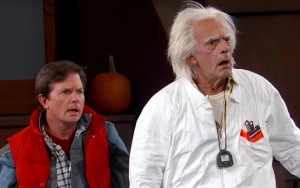
Zemeckis first demonstrated his filmmaking talent while studying at the University of Southern California, where his short film A Field of Honor won a Student Academy Award, making him one of the few individuals to win Academy honors for both student and professional work. He began his professional career collaborating with writing partner Bob Gale on comedies like I Wanna Hold Your Hand and Used Cars, but it was his partnership with producer Steven Spielberg that helped launch him to prominence. His breakthrough came with the sci-fi comedy Back to the Future in 1985, a film that became a global phenomenon and spawned two sequels. He then revolutionized animation and live-action integration with Who Framed Roger Rabbit in 1988, a technical marvel that seamlessly blended cartoon characters with the real world.
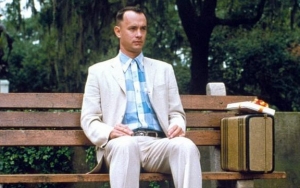
The 1990s solidified Zemeckis as a master of both spectacle and heart. His 1994 film Forrest Gump, starring Tom Hanks, won six Academy Awards, including Best Picture and Best Director for Zemeckis. The film’s innovative use of visual effects to insert its protagonist into historical footage was groundbreaking. He followed this with the cerebral science fiction film Contact in 1997, based on the novel by Carl Sagan, and the gripping survival drama Cast Away in 2000, another collaboration with Tom Hanks that showcased his ability to tell intimate stories on a grand scale. Zemeckis then entered a period of intense exploration into motion capture technology, directing the all-digital animated films The Polar Express in 2004, Beowulf in 2007, and A Christmas Carol in 2009, each pushing the boundaries of performance capture.
In more recent years, Zemeckis has returned to live-action filmmaking with a diverse array of projects, including the aviation drama Flight in 2012, the high-wire thriller The Walk in 2015, and the World War II romance Allied in 2016. He also directed the drama Welcome to Marwen in 2018. Throughout his career, he has maintained a long and fruitful collaboration with composer Alan Silvestri, who has scored nearly all of his films since 1984. Zemeckis continues to work in the industry, directing and producing films that challenge both technical and narrative conventions, ensuring his legacy as a pioneer who has consistently blended cutting-edge visual effects with timeless, human stories.