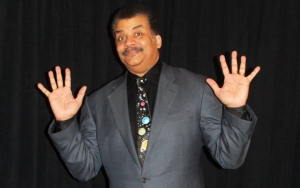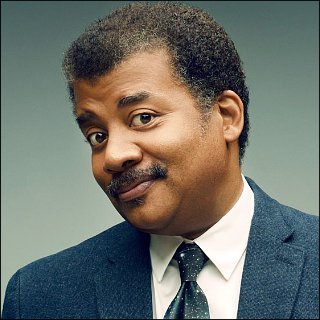
Neil deGrasse Tyson
- Attended Riverdale Kingsbridge Academy
- Attended The Bronx High School of Science
Neil deGrasse Tyson is an American astrophysicist, author, and science communicator renowned for his ability to make complex scientific concepts accessible to the general public. Born on October 5, 1958, in New York City, Tyson has become a prominent figure in popular science, especially through his hosting of the weekly podcast StarTalk and the acclaimed television series Cosmos: A Spacetime Odyssey. His engaging personality and insightful commentary have earned him a significant following and recognition as a leading voice in contemporary science.
Tyson's early life laid the foundation for his illustrious career. He attended Harvard University, where he received his bachelor's degree in physics, followed by a master's degree in astronomy from the University of Texas at Austin. He completed his Ph.D. in astrophysics at Columbia University. Tyson's academic journey included a postdoctoral research position at Princeton University from 1991 to 1994, where he further honed his expertise in astrophysics. His role at Princeton was pivotal in shaping his future as a science communicator.
In 1994, Tyson joined the Hayden Planetarium as a staff scientist and began a remarkable ascent within the institution. He became the director of the planetarium in 1996, overseeing a $210 million reconstruction project that culminated in the grand reopening of the facility in 2000. Under his leadership, the planetarium not only became a hub for astronomical research but also a beacon for public engagement with science. In 1997, he founded the Department of Astrophysics at the American Museum of Natural History, where he has remained a research associate since 2003.
Tyson’s contributions to science communication extend beyond his administrative roles. Between 1995 and 2005, he penned a monthly essay for the "Universe" column in Natural History magazine, some of which were later compiled in his bestselling books, including Death by Black Hole (2007) and Astrophysics for People in a Hurry (2017). He also wrote a popular monthly column for StarDate magazine under the pen name "Merlin," with material from this column appearing in the books Merlin's Tour of the Universe (1998) and Just Visiting This Planet (1998).
Tyson's influence in the scientific community has been recognized through numerous awards and honors. He served on the 2001 government commission on the future of the U.S. aerospace industry and was a member of the 2004 Moon, Mars and Beyond commission. His efforts in promoting science literacy earned him the NASA Distinguished Public Service Medal in 2004 and the Public Welfare Medal from the U.S. National Academy of Sciences in 2015.
From 2006 to 2011, Tyson hosted the television show NOVA ScienceNow on PBS, further solidifying his role as a public intellectual. In 2014, he took on the monumental task of hosting Cosmos: A Spacetime Odyssey, a sequel to Carl Sagan's iconic series Cosmos: A Personal Voyage. Tyson's modern take on Sagan's vision captivated audiences and brought a new generation into the wonders of the cosmos.
Today, Neil deGrasse Tyson continues to inspire millions through his work in science communication, engaging lectures, and various media appearances. He remains an advocate for scientific literacy and a passionate promoter of the wonders of the universe, ensuring that the mysteries of science remain accessible to all.