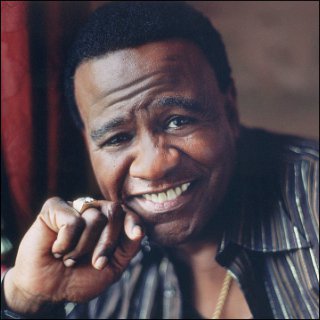
Leon Spinks, who passed away on February 5, 2021, at the age of 67, remains one of the most unforgettable and tragic figures in the history of heavyweight boxing. Born on July 11, 1953, in St. Louis, Missouri, Spinks carved his name into sports lore with a single, monumental upset that stunned the world. In only his eighth professional fight, he defeated the legendary Muhammad Ali to capture the undisputed heavyweight championship in 1978, a victory widely regarded as one of the biggest upsets in boxing history. His gap-toothed grin, a result of losing his front teeth during his fighting career, became an iconic image that symbolized both his everyman charm and the brutal toll of the sport.
Spinks’s path to the top of the boxing world was forged in the amateur ranks, where he excelled as a light heavyweight. He won a bronze medal at the inaugural 1974 World Championships and followed that with a silver at the 1975 Pan American Games. His crowning amateur achievement came at the 1976 Summer Olympics in Montreal, where he won the gold medal in the light heavyweight division, competing alongside his brother, Michael Spinks, who also took home gold in the middleweight class. Their sibling double-gold performance remains a celebrated moment in Olympic history. During this period, Spinks also served in the United States Marine Corps from 1973 to 1976, rising to the rank of corporal while stationed at Marine Corps Base Camp Lejeune in North Carolina, where he was a key member of the Marine Corps Boxing Team.
Turning professional in 1977, Spinks’s meteoric rise was unprecedented. After just seven professional bouts, he faced Muhammad Ali in Las Vegas on February 15, 1978, and won the undisputed heavyweight title via a split decision, a shocking result that shook the boxing establishment. However, his reign was short-lived and fraught with controversy. He was stripped of the WBC title for agreeing to an immediate rematch with Ali that the organization did not sanction. Seven months later, in September 1978, Ali regained the title with a unanimous decision victory over Spinks. The loss marked the beginning of a precipitous decline for Spinks, whose career was plagued by personal struggles and a chaotic lifestyle that overshadowed his immense natural talent.
Despite his fall from the top, Spinks continued to fight for over a decade, though with diminishing returns. He challenged for the WBC heavyweight title again in 1981, but was stopped by Larry Holmes via a third-round TKO. In 1986, he moved down in weight to challenge for the WBA cruiserweight title, but was again defeated, this time by Dwight Muhammad Qawi via a sixth-round TKO. Beyond the ring, Spinks briefly dabbled in professional wrestling, competing primarily for Frontier Martial-Arts Wrestling (FMW) between 1986 and 1993, where he even held the FMW Brass Knuckles Heavyweight Championship in 1992. While his post-championship career never recaptured the magic of his youth, Leon Spinks’s place in boxing history is secure, remembered as a man who achieved the ultimate dream only to see it slip away, leaving behind a legacy defined by one glorious night and the cautionary tale of what followed.
⭐
Similar Celebrities



📷
Recent Photos

ZZ Ward
The Art of Elysium Presents Stevie Wonder's HEAVEN - Celebrating The 10th Anniversary
Jan 7, 2017

ZZ Ward
2014 ESPYS Awards - Arrivals
Jul 16, 2014

ZZ Ward
2014 ESPYS Awards - Arrivals
Jul 16, 2014

ZZ Ward
2014 ESPYS Awards - Arrivals
Jul 16, 2014

Esther Zynn
Nickelodeon's 2016 Kids' Choice Awards - Arrivals
Mar 12, 2016

Esther Zynn
Nickelodeon's 2016 Kids' Choice Awards - Arrivals
Mar 12, 2016





⭐Featured Celebrities